Lawmakers get update on Hawaiʻi biosecurity plan, first industry partnership in development
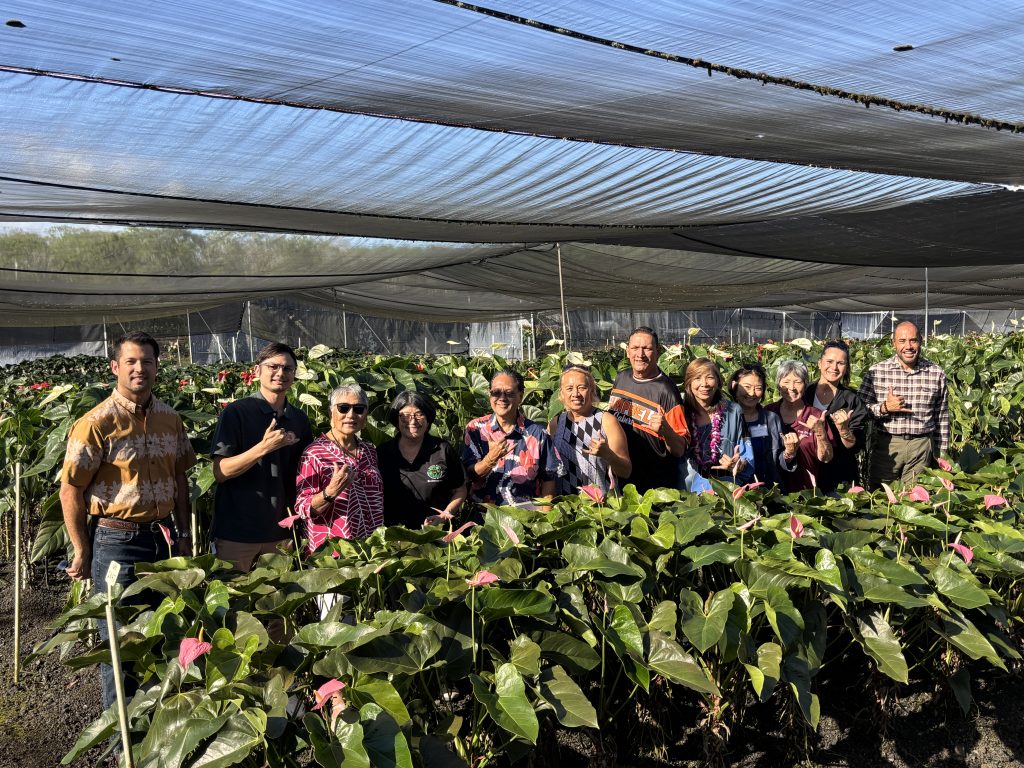
The Senate Committee on Ways and Means received an update from the Department of Agriculture and Biosecurity (DAB) on efforts to bolster Hawaiʻi’s biosecurity network to protect local agriculture, people and natural resources from pests and invasive species.
The briefing at Green Point Nursery in Hilo included representatives from multiple state agencies working under Act 236 (2025), which directs the creation of a coordinated biosecurity system. Discussions focused on the delivery of pest management plans and a biosecurity dashboard, declaration of biosecurity emergencies and developments of transitional facilities.
The department also discussed progress toward establishing Government-Industry Agreements—public-private partnerships that share decision-making and costs to advance biosecurity. DAB said it is exploring a partnership with the Hawaiʻi Floriculture and Nursery Association to create what would be the state’s first such agreement for biosecurity.
“Nurseries are a cornerstone of Hilo’s economy, and their success depends on our ability to keep pests like the little fire ant in check,” said Sen. Lorraine R. Inouye, who chairs the Senate Committee on Water and Land, in a public release Thursday. “The collaboration between DAB and the Hawaiʻi Floriculture and Nursery Association is the kind of proactive partnership we need to keep our growers resilient and our communities safe.”
Recent legislation, Act 231 (2024) and Act 236 (2025), appropriated $10 million supporting biosecurity initiatives and authorized Hawaiʻi to emulate its network after New Zealand’s system, considered one of the world’s most effective.
Sponsored Content