Hawaiian Moment: ‘There is life in the water from the clouds’
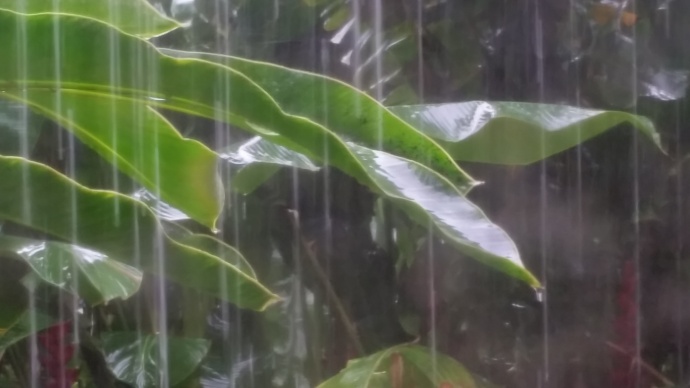
ʻOlelo noʻeau: “Ola I ka wai a ka ʻōpua.” There is life in the water from the clouds.
Our kūpuna had an intimate relationship with the elements. They were keen observers of their environment, with all of its life-giving and life-taking forces. They had a nuanced understanding of the rains of their home. They knew that one place could have several different rains and that each rain was distinguishable from another. They knew when a particular rain would fall, its color, duration, intensity, the path it would take, the sound it made on the trees, the scent it carried, and the effect it had on people.
We must always remember and appreciate ua (rain) as it is the source of wai – fresh water.

Some rain terms have recognizable Polynesian counterparts and are probably ancient and connects Hawaiians with their south pacific cousins. New Zealanders have “Kohu” which is like a fog, mist, or haze and is similar to our “Ohu”, “Rotu” is a heavy rain that lasts for days is similar to our “Loku”, and ʻTūāua” is a rain shower similar to our “Kuāua”. Other rain names may be more contemporary, as Thomas Maunupau suggests about the Hāleuʻole rain of East Maui, which is known for catching people off guard.
Some rains were named after people. The Waʻahila rain of Nuʻuanu was named after a chiefess who excelled in hula.
Some rains were used for their literal or figurative meaning. Kīlaueasʻs ʻAwaʻawa rain, whose name can mean “grief” or “hardship.”
Many rain names refer to native vegetation, mostly lehua and hala trees. Some describe the rainʻs interaction with these plants, like the kīkēhala (to break open hala fruit).
Rains of the same name can occur in different places.
Some rains may act differently at certain times or may indicate a certain season.
Rains have divine and mythical sources. Almost all the major akua are associated with rain.
Rains are a source of pride for oneʻs homeland. To know oneʻs home is to know its stories and legends, its famous aliʻi, its landmarks, and its rains.
Some rains were interpreted as signs. The “koko” rain could mark the birth of an important chief. Rain or rainbows might indicate the presence of a deity. Rain at a personʻs death or funeral was considered tears of the gods.
Rains are plentiful in Hawaiian poetry. Mist settling onto a mountain peak might express the joy and thrill of lovemaking. Some rains represented growth, life, good fortune, or beauty.

Rain names are a convergence of past, present, and future, and in using them, we will summon knowledge of our kūpuna, joining them in calling out to the lands on which the rains reside, calling on ourselves to rise to a higher consciousness, and calling to the future, where new life will continue to be born.
Rain for Moaliʻi ahupuaʻa which includes Aloha Mixed Plate, Old Lāhainā Lūʻau, and Star Noodle is Paʻūpili. Paʻūpili means “to soak pili grass”.
Rain for Olowalu ahupuaʻa which includes Leodaʻs Kitchen and Pie Shop is Papāwai. Papāwai means “water that echos.”
Do you know the name of the rain where your live? Find out in the book,”Hānau Ka Ua” by Collette Akana.
Sponsored Content