


New report shows Maui County generates $103.7M in annual farm sales
Maui County produces about $103.7 million in agricultural goods each year, according to a new Farm Flavor analysis that ranks agricultural output across nearly 3,000 US counties and all 50 states.
Using the latest available USDA Census of Agriculture data, the report identifies where agricultural market value is concentrated nationwide and provides detailed profiles of local farming economies. The annual farm sales encompasses both crops and livestock.
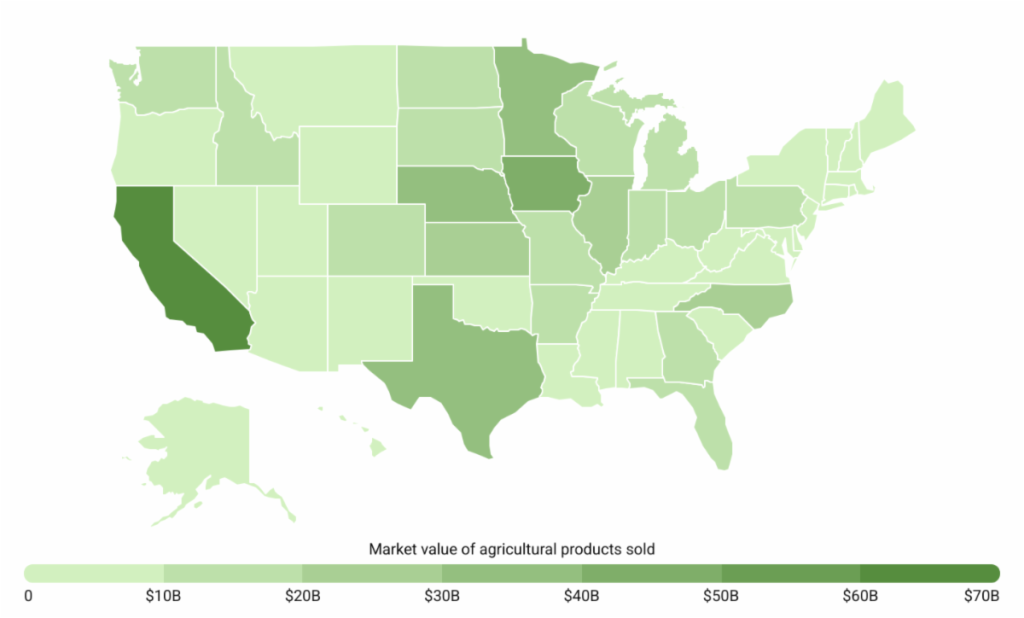
The data shows that while agriculture represents a modest share of jobs in Maui County (1.4%), it occupies more than a third (34.4%) of local land area. Maui County ranks 1,436 out of 2,943 counties nationwide in terms of total market value of agricultural products sold, per the report.
At the state level, Hawaiʻi ranks 46th out of 50, generating $744.4 million in agricultural sales. About 25.6% of the state’s land area is devoted to agriculture, while just over 1% of Hawaiʻi’s population works in the sector.
Maui County Agricultural Snapshot
- Market value of agricultural products sold: $103,746,033
- Most valuable products: Fruits, tree nuts and berries
- Crop sales: $97.7 million
- Livestock and animal product sales: $6.05 million
- Number of farms: 1,405
- Agricultural share of total land area: 34.4%
- Agriculture share of county employment: 1.4%
For reference, the statistics for the entire United States are as follows:
- Market value of agricultural products sold: $599,995,091,745
- Most valuable agricultural products: Grains, oilseeds, dry beans, dry peas
- Crop sales: $310,033,985,236
- Livestock and other animal product sales: $289,961,105,404
- Number of farms: 1,900,487
- Agriculture share of total land area: 38.9%
- Agriculture share of total employment: 1.2%
National trends show more output over time
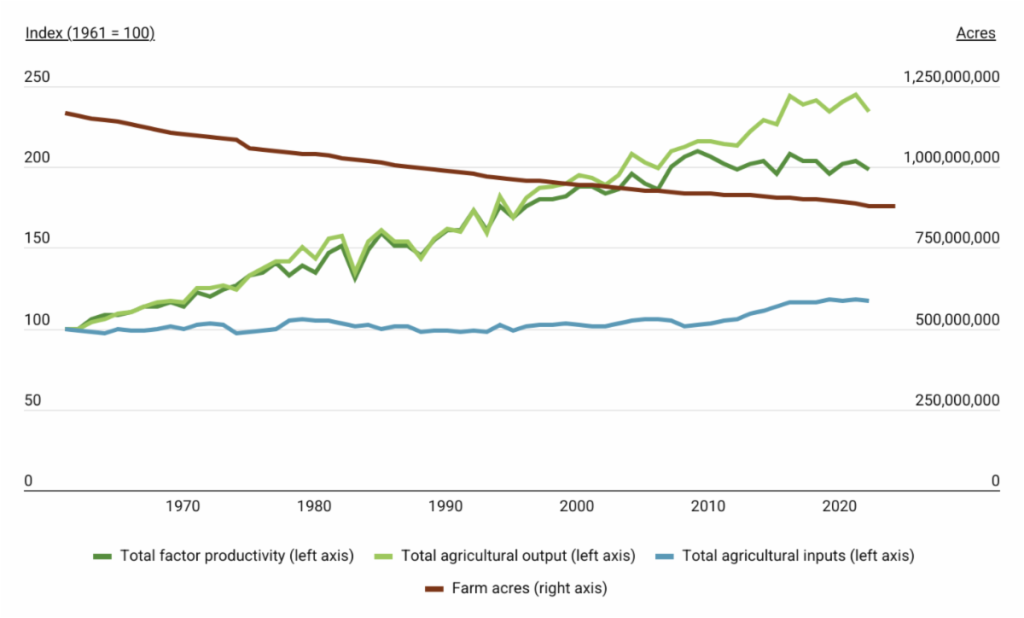
Since the mid-20th century, US agriculture has undergone a quiet revolution: farm output has more than doubled even as the total use of inputs – such as land, labor, capital and intermediate inputs like fertilizer – has remained largely unchanged, the report said.
The growth in productivity is the result of sustained investment in agricultural research, technological innovation, improved crop and livestock genetics, and more efficient farm management practices. Today’s farms often rely on precision agriculture tools such as GPS-guided tractors, drones for crop monitoring and AI-powered software to optimize planting, irrigation and harvest decisions.
Between 1961 and 2022, total agricultural output increased by nearly 2.5 times, while total inputs rose by just 17%. As a result, total factor productivity – a measure of output relative to input – has steadily climbed, indicating that American farmers are producing more food with fewer additional resources. These gains have helped meet the demands of a growing population while keeping food relatively affordable – even as total farmland has declined by roughly 25% over the same period.
The analysis draws on data from multiple federal sources, including:
- USDA Census of Agriculture
- USDA Economic Research Service
- US Census Bureau American Community Survey
- Bureau of Labor Statistics Consumer Price Index
A full national report includes county-by-county rankings and agricultural profiles, and is available at FarmFlavor.com.
Sponsored Content