

HVO: Kīlauea eruptive episode ended; next activity could be weeks away
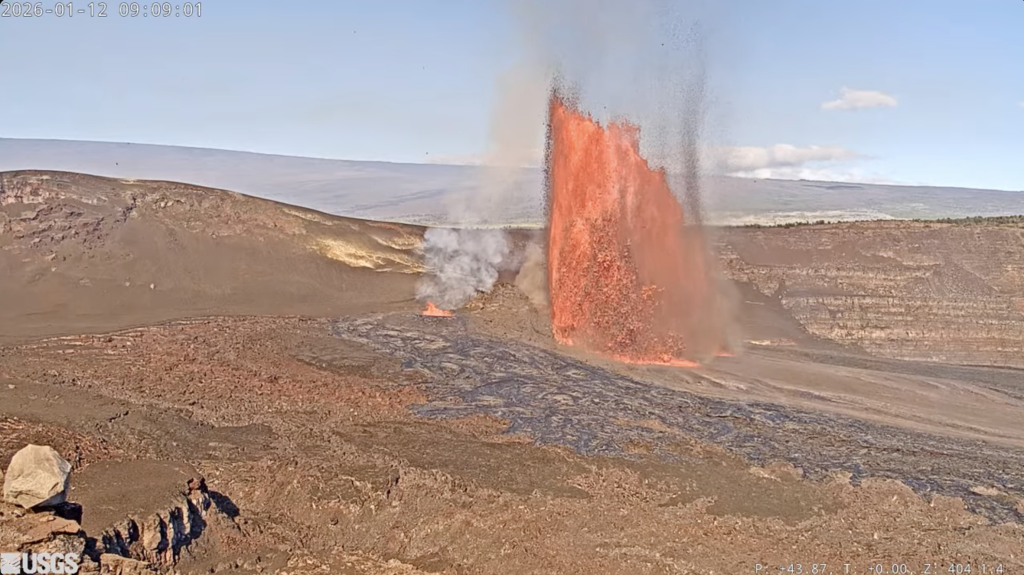
Kīlauea is not erupting following the end of yesterday’s lava fountaining episode, according to a 9:14 a.m. Tuesday update from the US Geological Survey.
Episode 40 of the ongoing summit eruption began at 8:34 a.m. Monday, Jan. 12, and ended about 9.7 hours later at 6:04 p.m. Lava fountains from the north vent reached heights of up to 800 feet before activity subsided, according to officials at the Hawaiian Volcano Observatory.
HVO scientists said the onset of the next lava fountain episode is likely about two weeks away, though more time and data are needed to forecast.
Summit observations
Overnight webcam views showed lava flows from the episode continuing to move slowly across the floor of Halemaʻumaʻu crater, particularly near the eruptive vents. Incandescence remained visible in both the north and south vents, and low-level movement is expected to continue for several days.
HVO scientists recorded about 22 small earthquakes beneath the summit region early Tuesday morning. The quakes were shallow and not associated with changes in other monitoring data. Scientists said the activity is likely related to re-pressurization of the magma system following the end of episode 40. Instruments also showed renewed ground inflation after the episode ended.
Sulfur dioxide emissions have declined significantly since lava fountaining stopped, though gas output is still estimated at between 1,000 and 5,000 tons per day, a range typical during eruptive pauses. Seismic activity and ground deformation remain low along Kīlauea’s East Rift Zone and Southwest Rift Zone.
HVO said that the rapid rebound of inflationary tilt and presence of low-level volcanic tremor after episode 40 indicate that another lava fountaining episode is likely to occur.
Kīlauea has been erupting episodically since Dec. 23, 2024, primarily from two vents within Halemaʻumaʻu. Individual eruptive episodes typically last less than 12 hours and are separated by periods of relative quiet.
HVO continues to monitor the volcano closely and is coordinating with Hawaiʻi Volcanoes National Park and Hawaiʻi County Civil Defense. The eruption remains confined to a closed area of the park.
Officials cautioned that volcanic hazards persist, including elevated volcanic gas levels, falling tephra near vents, and hot lava flows within Halemaʻumaʻu crater. The summit caldera and surrounding areas remain closed to the public due to ongoing risks from ground instability, rockfalls and volcanic emissions.
For a timeline of eruptive episodes since Dec. 23, 2024, visit Kīlauea’s page on the USGS website.
Sponsored Content