Update: Lava geysers reach up to 1,200 feet during Episode 42 of the Kīlauea volcano; now paused
Update:
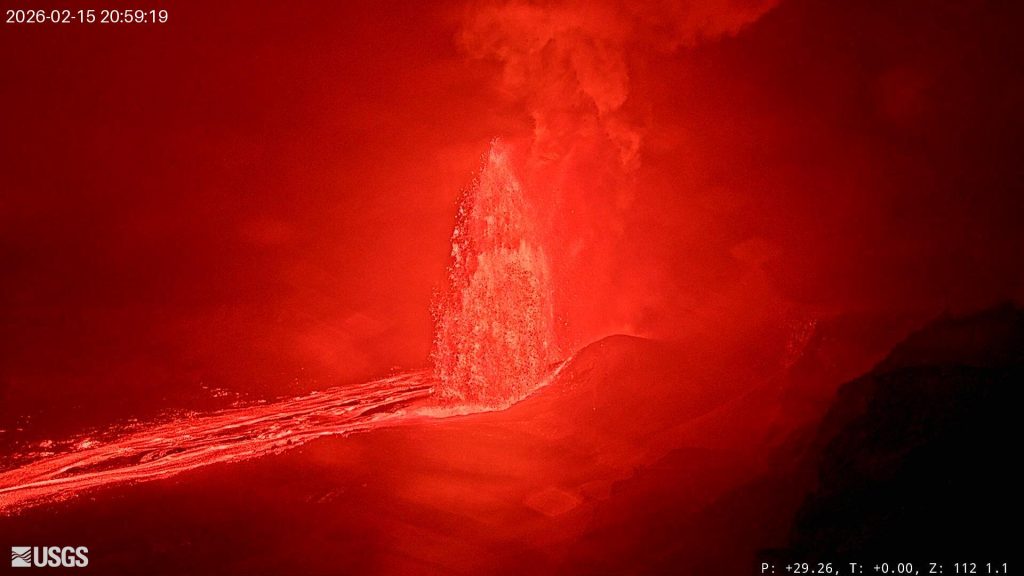
Episode 42 of the ongoing Halemaʻumaʻu eruption ended at 11:38 p.m. on Feb. 15, 2026, and the ongoing Halemaʻumaʻu eruption is currently paused.
Episode 42 ended after 9 hours and 48 minutes with both the north and south vents active for most of the eruption. The highest peak or instantaneous effusion rate of 1000 cubic yards per second occurred around 3 p.m. on Feb. 15. An estimated 15 million cubic yards of lava erupted and covered about 50% of Halemaʻumaʻu crater floor.
Previous Post:
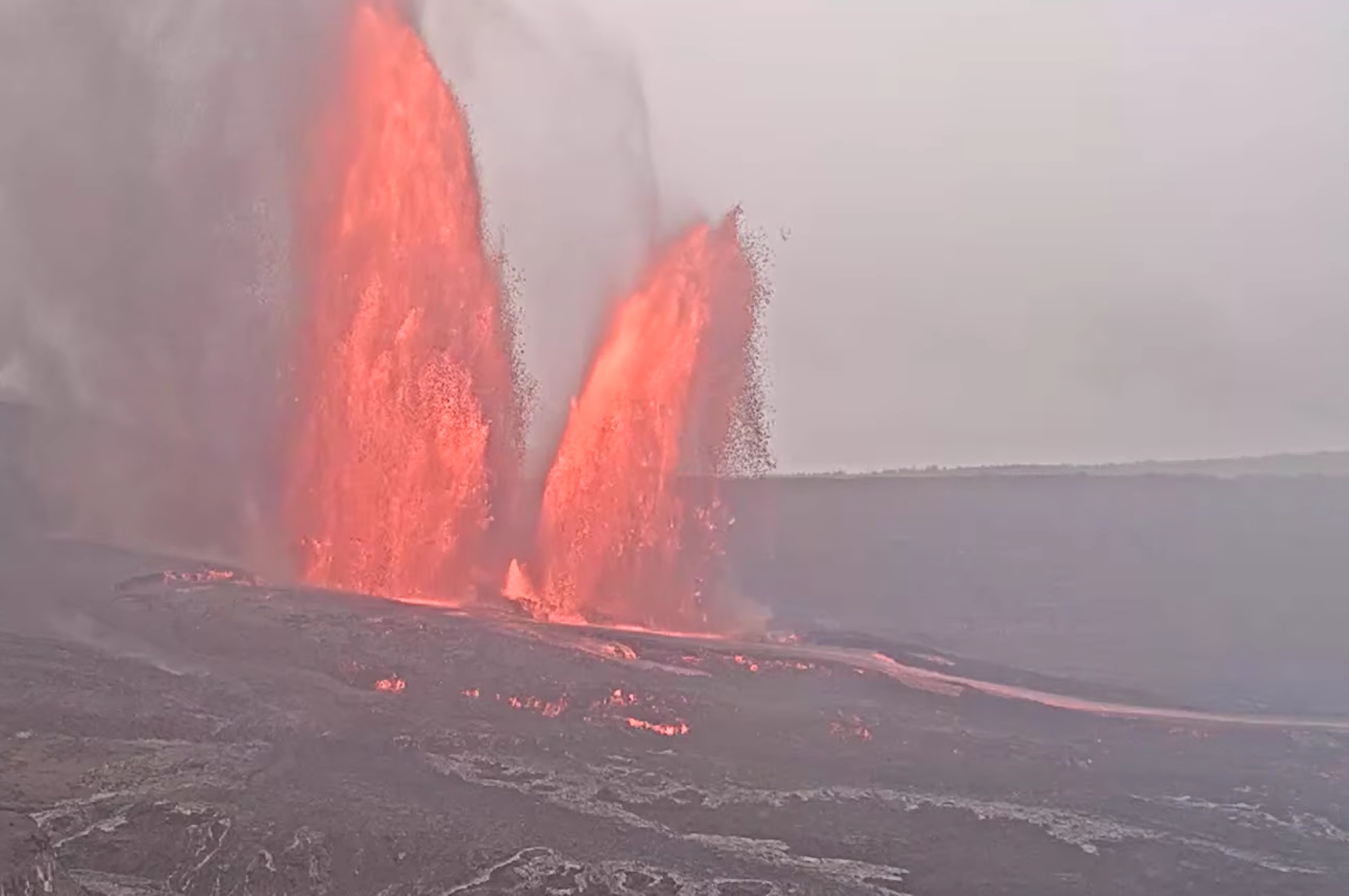
Episode 42 of the ongoing Halemaʻumaʻu episodic eruption of Kīlauea volcano on the Big Island began at about 1:50 p.m. on Sunday, Feb. 15 and continued into the afternoon.
Hawaiian Volcano Observatory reports that the north and south vents are fountaining, with fountain heights so far reaching up to about 1,000 to 1,200 feet high and about 800 to 1,000 feet high from north and south vent, respectively.
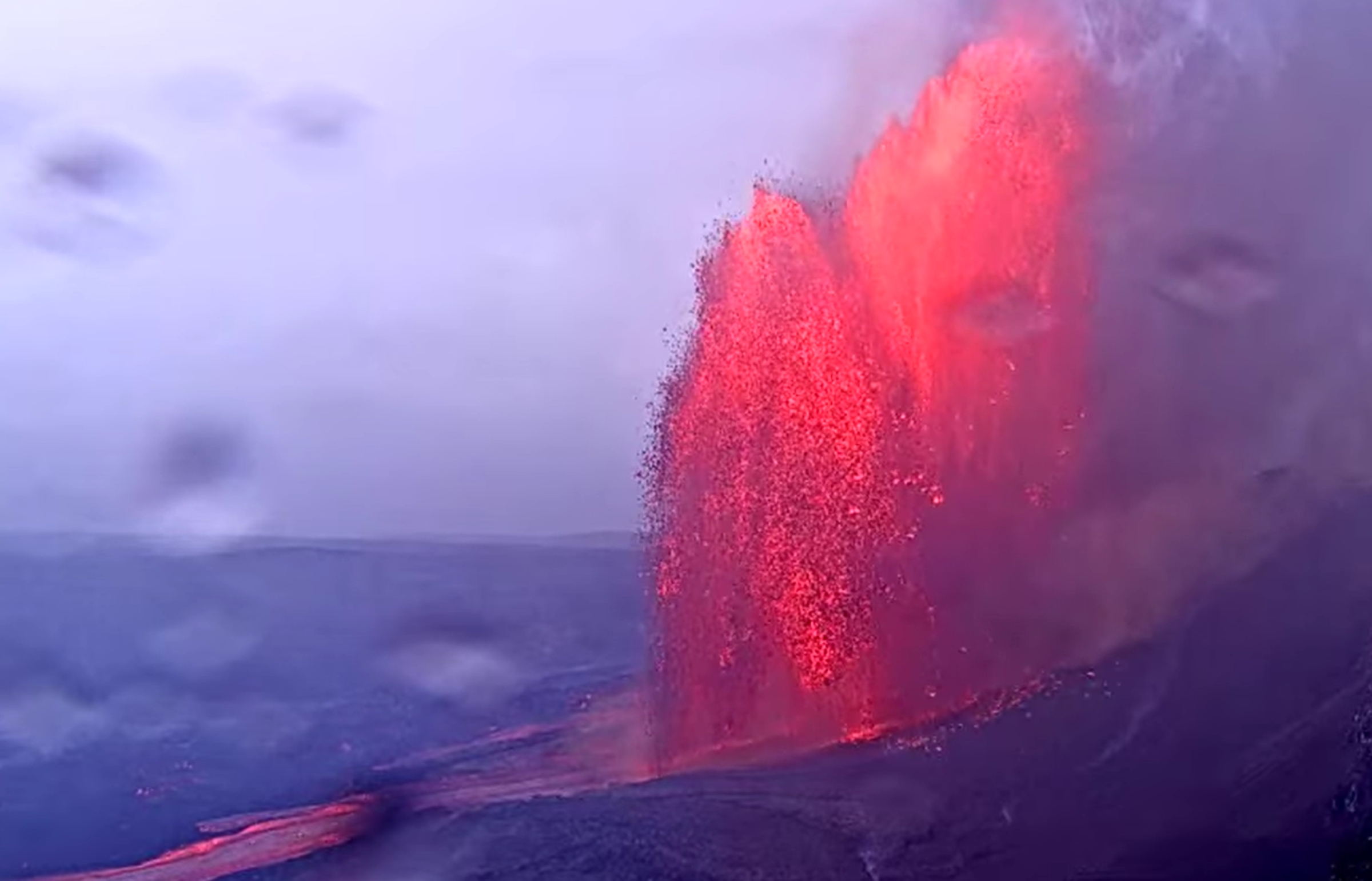
Ash and tephra — most of which appears to be dispersing to the southwest under the influence of relatively strong ground-level winds from the northeast — are being produced; however, no tephra fall has been reported in public areas at this time.
The plume top reached more than 15,000 feet above sea level and could potentially spread fine ash and strands of volcanic glass called Pele’s hair in other directions, depending on the ultimate height reached.
National Weather Service forecasters in Honolulu issued an ashfall advisory as a precaution in effect until 10 p.m. today for east and southeast portions of the island.
The advisory area includes places such as Hilo, Pāhoa, Hawaiian Paradise Park, Volcano and others in the Hilo, Puna and Kaʻū areas.
Episode 42 is producing a limited hazard extent such as less than a quarter-inch of ashfall accumulation.
Any ashfall could harm crops and animals. Minor equipment and infrastructure also could be damaged. Visibility could be reduced, plus widespread cleanup might be necessary.
Forecasters advise people with respiratory illnesses should remain indoors to avoid inhaling ash particles, and everyone outside in the advisory areas should cover their mouth and nose with a mask or cloth.
Precursory activity for this episode happened during the preceding day, and included more than 10 overflows in a range of sizes as well as in-vent spattering.
In the hours leading up to the onset of Episode 42, significantly larger overflows issued from both north and south vent.
Continuous overflows began at 1:08 p.m. from the south vent, with overflows from the north vent starting later.
Lava fountaining began at just before 2 p.m. on Feb. 15.
Resources
- Additional short messages during eruptive episodes: https://www.usgs.gov/observatories/hvo/observatory-messages.
- Timeline of eruptive episodes since the beginning of the ongoing episodic eruption Dec. 23, 2024: https://www.usgs.gov/volcanoes/kilauea/science/eruption-information.
- Three Kīlauea summit livestream videos: https://www.youtube.com/@usgs/streams.
- Report tephra fall: https://hawaiiash.science/report_form.
- Hawaiʻi Volcanoes National Park information: https://www.nps.gov/havo/planyourvisit/conditions.htm.
- Hawaiʻi Hazard Impact Map: https://www.arcgis.com/apps/dashboards/5865229bcba74020992b372ef18b6f17.
Hazard analysis
- Volcanic gas: Water vapor, carbon dioxide and sulfur dioxide are continuously released during an eruption. Sulfur dioxide reacts in the atmosphere to create the visible haze known as vog — or volcanic smog — downwind, which can cause respiratory and other problems.
- Tephra: Small glassy volcanic fragments — volcanic ash, pumice, scoria, Pele’s hair and reticulite — are created by the lava fountains. A combination of fountaining dynamics and wind conditions determines where tephra fall could occur for any given eruption episode. Larger particles fall near the vents while light particles can be wafted greater distances. These particles could be remobilized during windy conditions following recent eruptive episodes. Residents and visitors should minimize exposure to these fragments, which can cause skin, eye and respiratory irritation.
- Lava flows: During this eruption, flows have been confined to Halemaʻumaʻu Crater and the southwest side of Kaluapele, Kīlauea’s summit caldera, within Hawaiʻi Volcanoes National Park.
- Other: Significant hazards exist around Kīlauea caldera from Halemaʻumaʻu crater wall instability, ground cracking and rockfalls that can be enhanced by earthquakes. Close to the vents, tephra material on the crater rim is prone to cracking, slumping and small landslides that sometimes expose hot and molten material within. This underscores the extremely hazardous nature of Kīlauea’s caldera rim surrounding Halemaʻumaʻu Crater, an area that has been closed to the public since late 2007.
Sponsored Content