Maui and Molokaʻi community hubs among 5 selected to bridge gap between funding, ʻāina stewardship
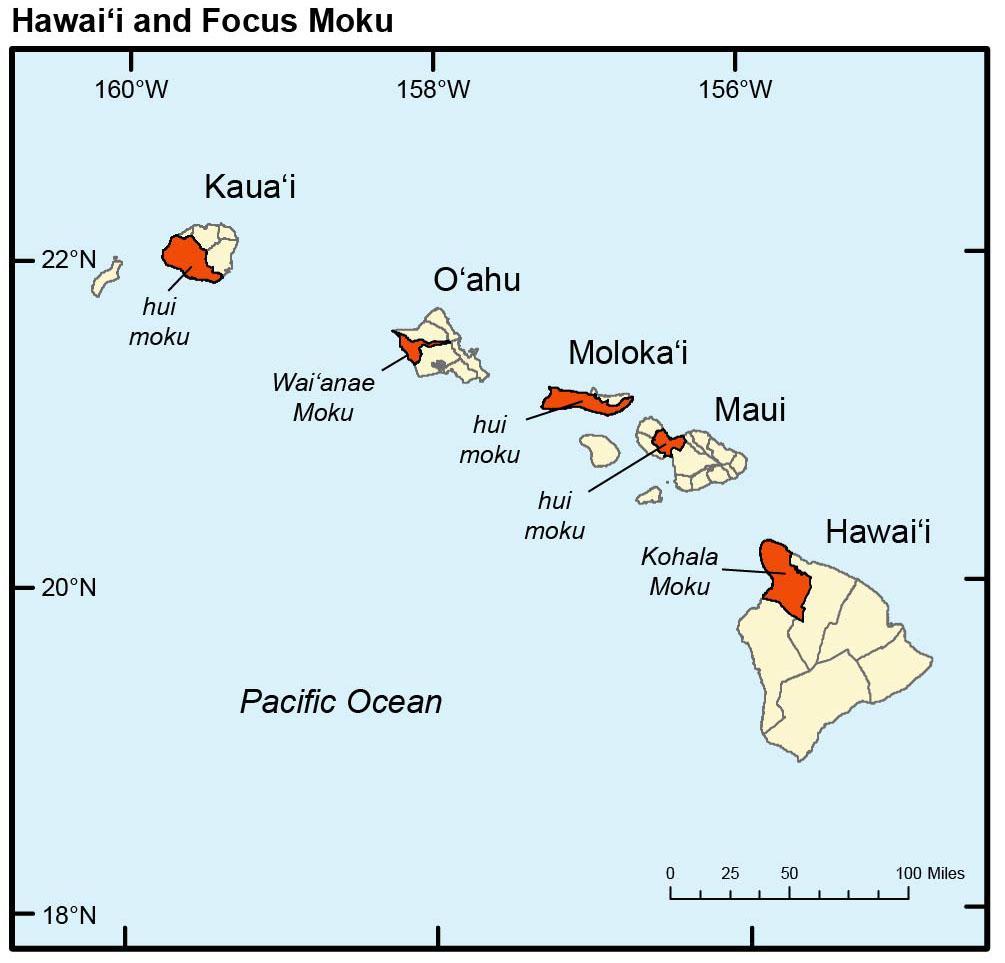
Following a competitive proposal process initiated in October 2025, the University of Hawaiʻi Sea Grant College Program announced five organizations to establish the first-of-its-kind Community Funding Hubs for Resilience and ʻĀina Stewardship. The five regional hubs are across the moku/hui moku (districts) of West Kauaʻi, Waiʻanae (Oʻahu), Molokaʻi, Central Maui and Kohala (Hawaiʻi Island).
The 5 organizations and their projects
- Kauaʻi Economic Development Board—Strengthening West Kauaʻi: A Funding Hub for Community-Led ʻĀina Restoration & Climate Resilience
- ‘Elepaio Social Services—The Waiʻanae Kaiāulu Funding Hub
- Molokaʻi Heritage Trust—Ka Lāhui Hoʻolako
- Living Pono Project—Central Maui Resilience Funding Hub: Expanding Access, Equity, and Administrative Support
- Vibrant Hawaiʻi—Kākoʻo Kohala
Each hub will receive up to $300,000 over three years to strengthen its administrative, financial and relationship-building capacities needed to support future community-led projects. Aligned with the cooperative vision of the Pili Nā Moku project, these hubs will serve as central resources for managing and distributing funding on behalf of community-based organizations, effectively lowering the barriers to local stewardship.
“In Hawaiʻi, we know the health of our families and our communities is inextricably tied to the health of our lands and our waters, and we benefit from ʻIke Hawaiʻi (Hawaiian Knowledge) that teaches us how humans and nature can thrive together in our island systems,” said Kawika Winter, associate professor at Hawaiʻi Institute of Marine Biology and director of the Heʻeia National Estuarine Research Reserve. “The Moku System provides us a framework to not only address the problems we face today, but to do so while honoring our ancestors and ensuring that our descendants will be better off than we are today.”
Empowering community-led stewardship
The hubs act as trusted intermediaries, forging direct partnerships between funders and local communities. By providing guidance with proposal development and budget management, these hubs help local organizations overcome technical barriers that often prevent small, grassroots groups from accessing vital funding for ʻāina (land) stewardship.
“These hubs are critical for a number of reasons,” said Eric Co, chief executive officer of the Harold K.L. Castle Foundation. “During COVID, we learned how difficult it was to get support to where trust was greatest and activities were most meaningful—at the grassroots level. These hubs build the equitable capacity needed to do so efficiently across the islands.”
Later this year, Hawaiʻi Sea Grant will launch a separate round of adaptation and resilience project funding. These future opportunities will allow smaller community-based organizations to collaborate with their local Community Funding Hub to develop and manage projects.
This effort was made possible through funding from the National Oceanic and Atmospheric Administration Office for Coastal Management awarded in 2024.
Sponsored Content