Reading the air: An Osaka lesson in the unspoken language of harmony
Editor’s note: This first-person essay stems from writer Brian Perry’s observations during a recent family reunion of siblings in Osaka, Japan. There, his encounters with everyday moments of “reading the air” offered a more intimate view than traditional news reporting.
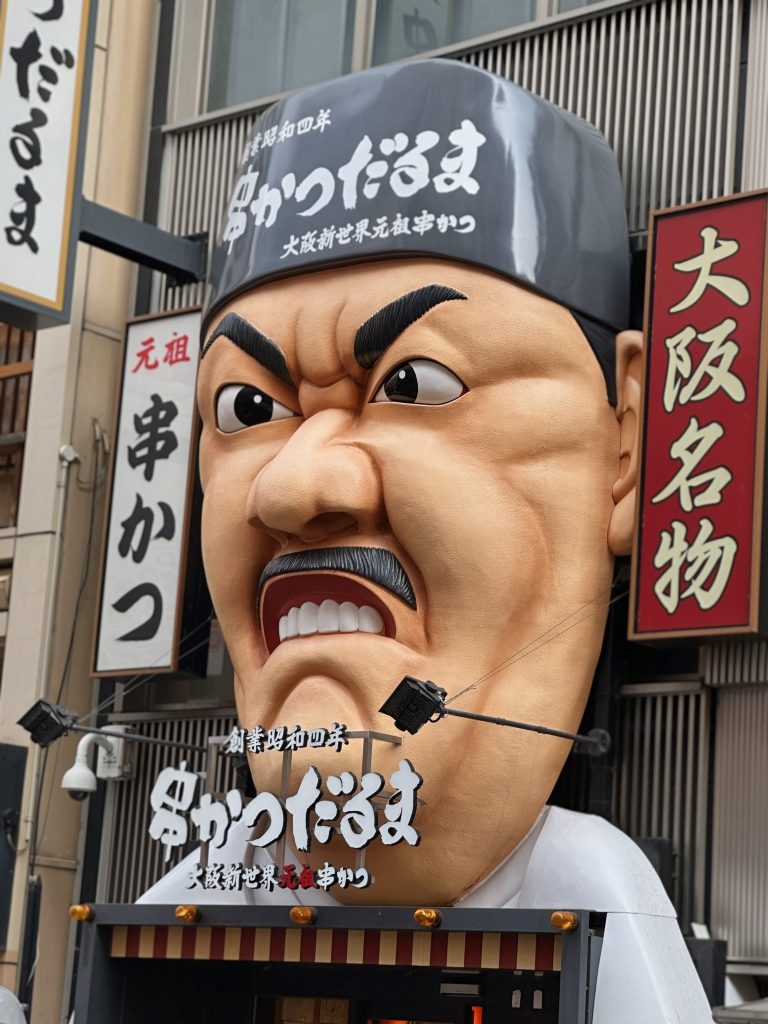
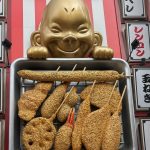
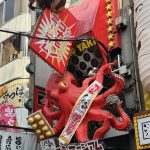
In Osaka’s neon-soaked Dotonbori district, surprises come as sharp as a teppanyaki chef’s knife. Crowds stream through narrow streets. A massive 3D red crab teeters over a restaurant entrance. Nearby, a smiling dragon beckons; and the angry chef, Daruma Daijin. He has a very strict rule for diners: no double dipping in fried meat sauce!
And then, here and there, the airwaves carry the classic disco-funk-soul of Earth, Wind and Fire.
Long ago hits like “Boogie Wonderland” and “September” drift ubiquitously amid Osaka’s elevator music soundscape. Disco, it turns out, is alive and well in Japan’s second-largest city. The devotion to groovy soul pop resonates on a frequency locals seem plugged into there.
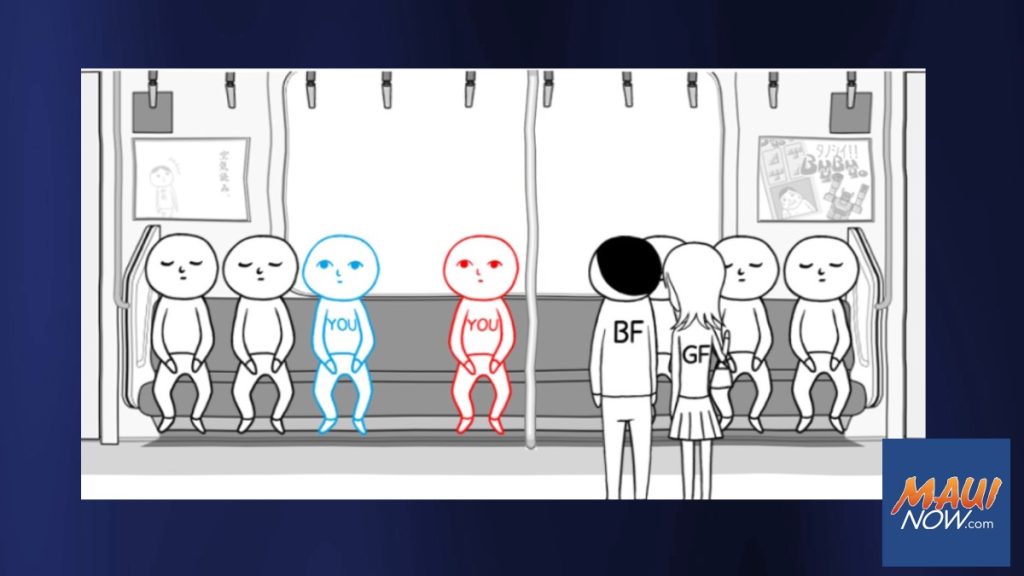
What I didn’t expect was that the hardest thing to hear in Osaka wasn’t the music, but the unspoken rules in the air — what the Japanese call kuuki wo yomu, “reading the air.” Not speaking the language heightened my anxiety; Google Translate flopped without WiFi; and my few phrases like “sumimasen” (excuse me) proved useless beyond politeness. As a journalist wired for clear words, I felt lost — unlike at home in Hawaiʻi where our coconut wireless works behind the scenes and etiquette like removing slippahs is unspoken but understood.
In Japan, what’s unsaid can carry more weight than a mountain of words. Hundreds of commuters process quietly through train stations, an invisible order imposed on chaos. In Osaka, people queue single-file on the right side of escalators, leaving the left lane open for those in a hurry. Group harmony, or “wa,” comes before individual convenience.
Learning about kuuki wo yomu
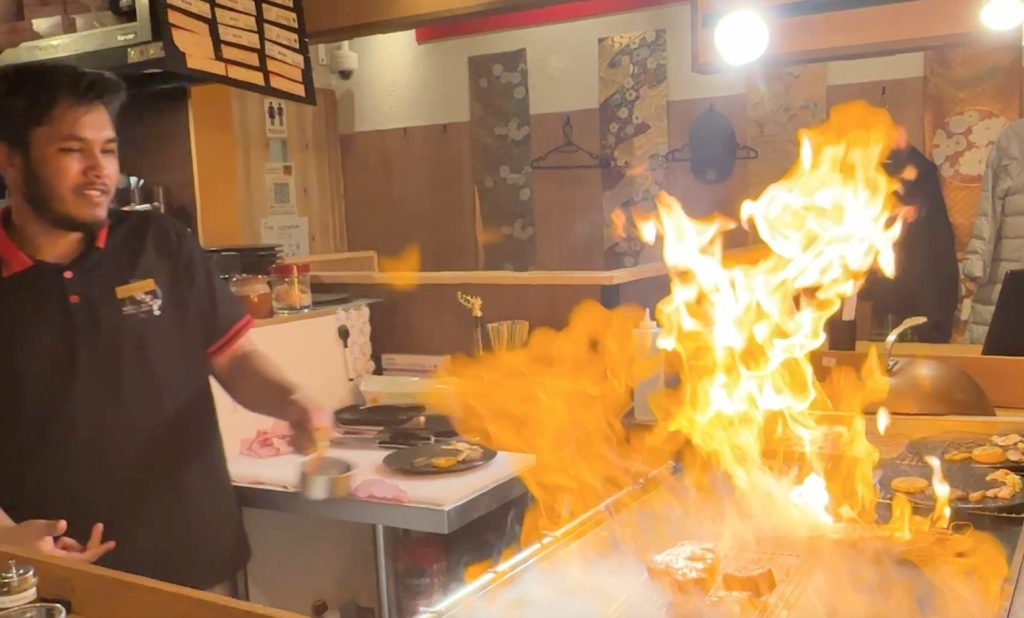
For our family, those cues surfaced at a busy okonomiyaki restaurant – the smoky, savory Japanese pancakes grilled right at our tables.
Our noisy, boisterous group of five siblings and their spouses filled three booths. We were like a buzzing island of energy, excited to be in Japan and together for the first time in at least a decade.
Our server initially navigated our friendly banter with patient smiles and short nods. Then, I suddenly heard something from the other end of our tables. It was some sort of sharp exchange of words. A misunderstanding about our order quickly escalated, and I felt an invisible ripple pass through the restaurant, affecting other servers and diners.
The server’s expression went from friendly to stern. He offered no compromise or explanation. He simply looked at us and crossed his arms in a sharp, unmistakable “X.” I took that as meaning a hard “no.” He found other customers to serve.
The “X” wasn’t just a “No.” It signaled that the “friendly banter” had ended abruptly. I could be wrong, but it felt as if we had broken an unspoken social contract. My gut told me: “Finish eating. Pay. Make room for other customers.”
Parenting, Osaka style
A boy, no older than five, was having a soul-shaking, sobbing tantrum on the sidewalk. His mother knelt down, bringing her face inches from his. She launched into a “machine gun” delivery of words in Japanese. I heard: Rat-a-tat-tat, rat-a-tat-tat, over and over again. His tears flowed.
While I didn’t know her words, the meaning in the air was clear: “You are disturbing the peace. Stop making a scene.” It was a parent correcting a child. No negotiation. Then a man, presumably the father, approached. As mom continued without skipping a beat, the man sort of bounced on the balls of his feet, smiling first at me, observing, and then at the boy.
The man acted as a “cushion,” a safety valve for the mother’s sharp discipline. While she enforced the tatemae (public face), the father provided the softer honne (private heart). Discipline and love delivered in equal measure. Together, they were teaching the boy a most important survival skill: how to withhold your internal storm so the public air remains calm.
Ah no, you’ve got to be kidding
At one point, I tried to “interview” the air itself. At a quiet bar in a department store, I waited as our wives shopped and watched a bartender at work. I asked the bartender – if she were not too busy – if she could answer a few questions as part of research for my article. She glanced at a row of empty chairs. She nodded, and I used the app: “Must a bartender be skillful at kuuki wo yomu?”
A long silence followed. No smile, no shake of the head, just indifference.
“Do you understand?” I asked. “Yes,” but nothing more.
Her silence was the answer.
When I finally thanked her, paid my bill and left, I saw a flicker of relief cross her face. I hadn’t gotten my interview, but I had received a lesson: Sometimes the most profound communication comes with no words at all.
Uh, sumimasen, Table 3
Late to the hotel breakfast buffet, my wife and I faced a line of a dozen guests. My brother-in-law was there to escort us in to Table 3, but the hostess hesitated, her eyes on the queue. I read the air: “Sumimasen, san (three) table,” loud enough for the line to hear. She checked her clipboard and let us in. A small victory in the invisible.
A final lesson: The bus ticket that was but wasn’t
My fragile grasp of the air vanished next to a limousine bus as my wife and I tried to board for a 50-minute ride back to the Kansai International Airport.
We had six bags and a white receipt in Japanese proving we had paid 3,800 yen (about $25) for two tickets. A bus company employee had even helped my wife make the purchase at a vending machine about 50 yards away.
But as I squeezed up a narrow corkscrew stairway into the bus, the driver, an elderly man, stopped me. He wanted the tickets. “Yes, of course.” I gave him two small papers, written in Japanese with numbers indicating yen.
The driver didn’t look at the receipt. He looked for the second ticket. I asked my wife for it, but it had vanished. Somewhere between the vending machine and bus door it was lost.
Pointing to the receipt, I asked the employee who assisted my wife to explain. He nodded, bowed a few times and spoke in a rapid exchange of Japanese with the driver, who appeared to cut him off. The employee looked embarrassed, gave me a pleading look and made the infamous “X” sign.
I blocked the doorway as I processed all this. We had clear evidence – the receipt and the employee’s account – that we had purchased two tickets. So, one ticket was lost. It didn’t change the fact we had purchased it.
But the driver was unmoved. He was reading the air of the dozens of other passengers – some already seated and others waiting to board behind me. I suppose – because it was never explicitly told to me – that to let both my wife and I board on based on a “mistake” would be to puncture the invisible bubble of order everyone else had agreed to live in.
Somewhere, unseen but heard, my wife said she’d go buy another ticket. She told me to get on the bus and wait. I did, wrestling with two carry-ons. Other passengers boarded the bus. Before long, I heard my wife again. There wasn’t enough time. I had to get off the bus. “Really? Let’s see about that,” I told myself.
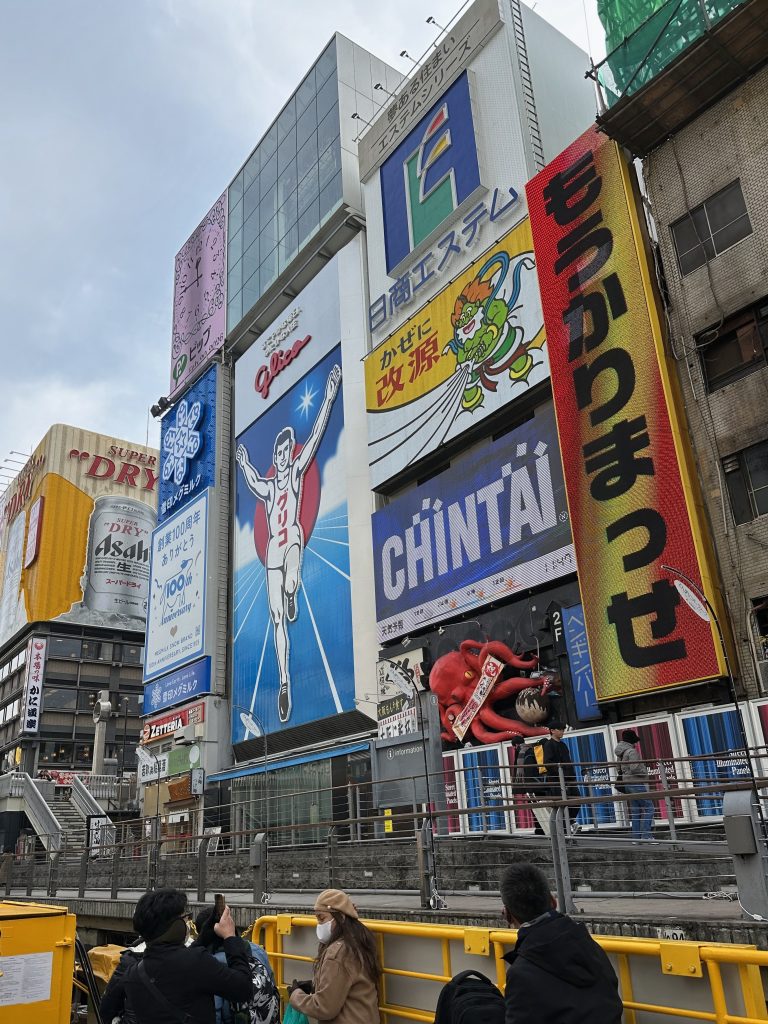
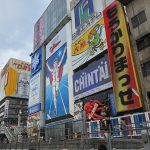
 The “Glico running man” at left is an iconic massive LED billboard in Osaka. PC: Brian Perry
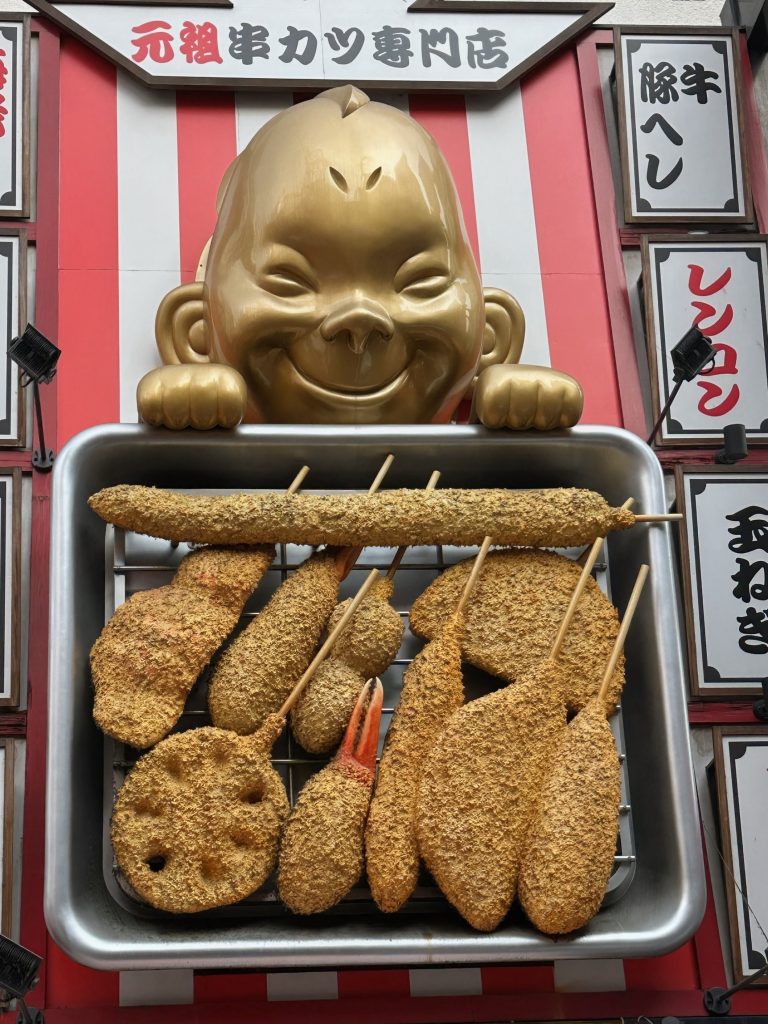
- A smiling face greets visitors to Kushikatsu Daruma, an iconic restaurant chain in Osaka. The tray of food represents skewers of lotus root, crab claw, asparagus and various meats and seasonal vegetables. PC: Brian Perry
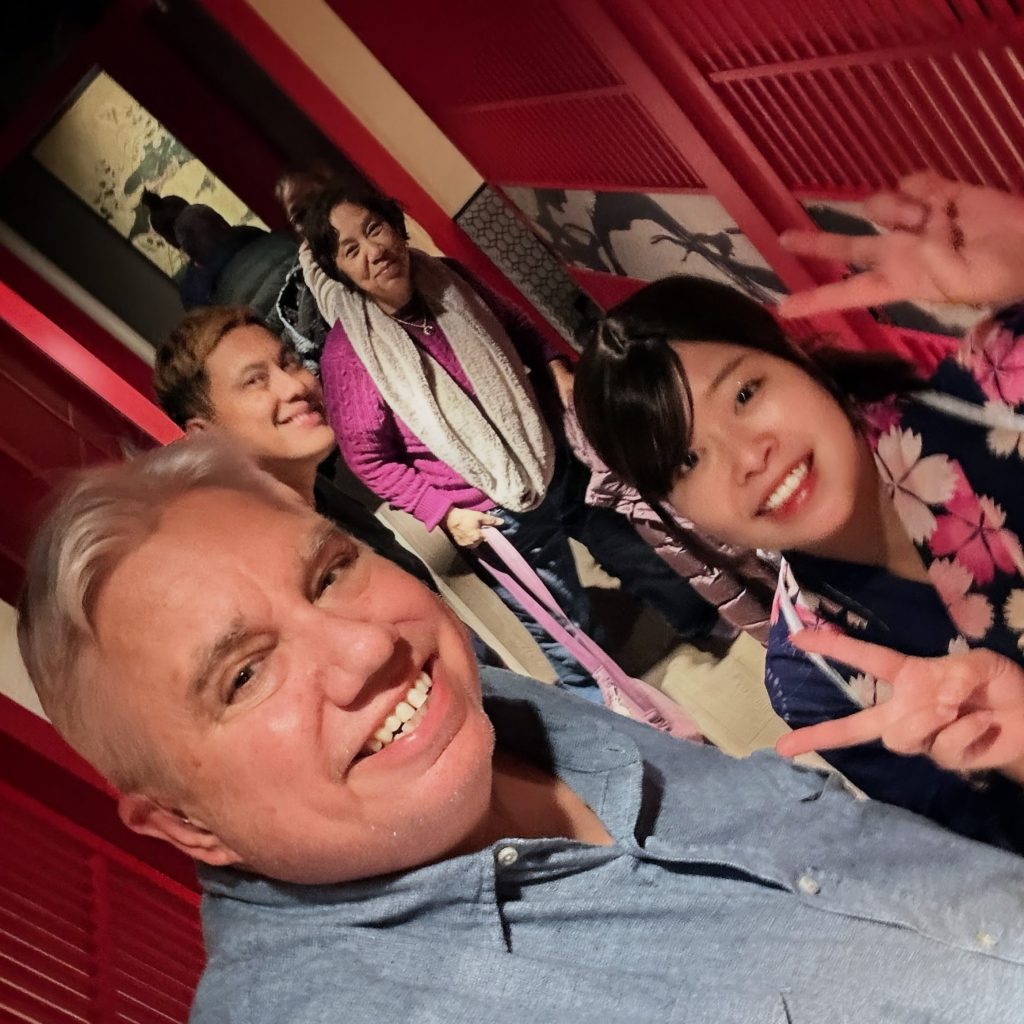
- The aim of kuuki wo yomu is maintaining harmony, especially in tight spaces such as this narrow restaurant in Osaka. PC: Brian Perry
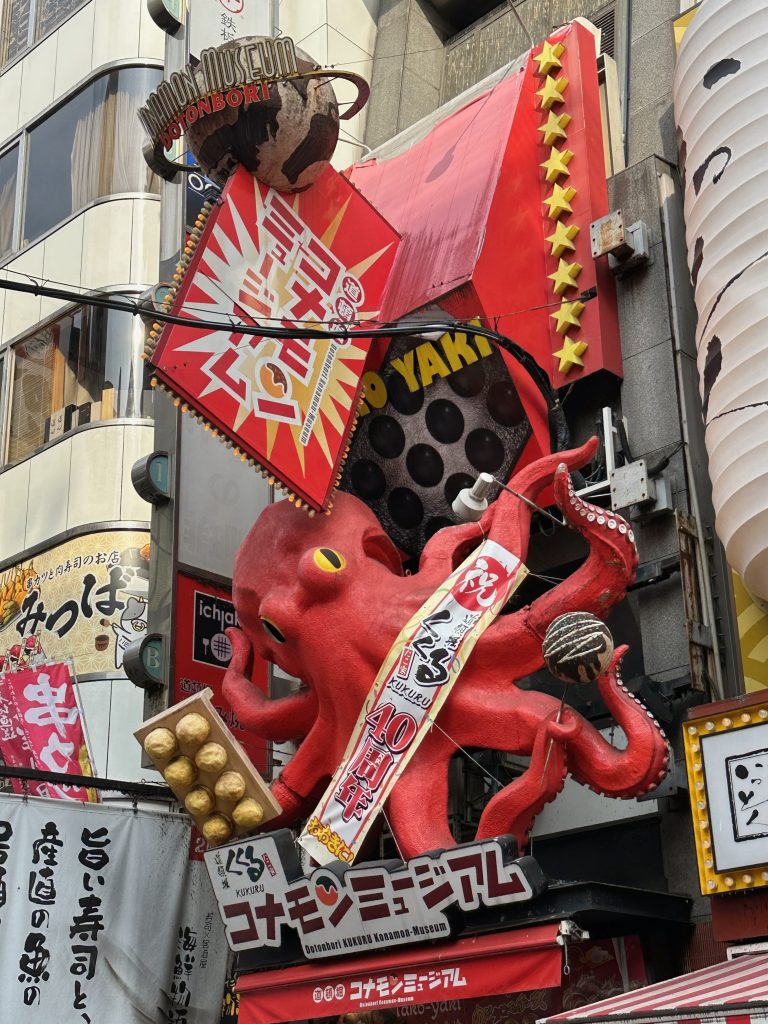
- An octopus appears to jump out of a wall above a restaurant in Osaka. PC: Brian Perry
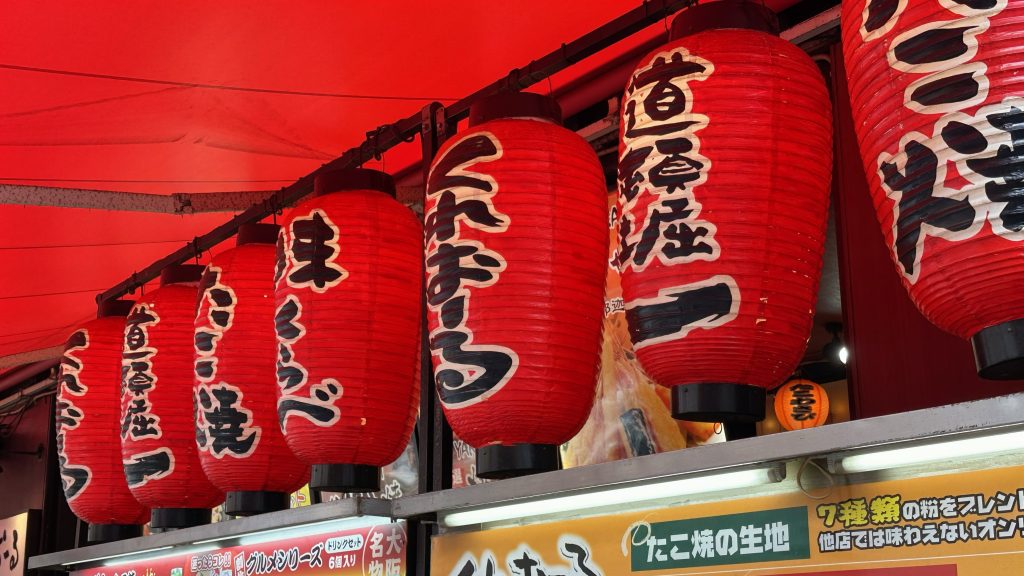
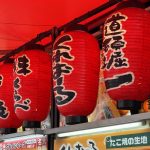
- Red lanterns light up the street life in Osaka. PC: Brian Perry

I felt my face flush. I became even more angry that I’d need to extricate myself with carry-ons in tow. I surmised that the driver’s stubborn insistence on a second ticket was rule-bound, inflexible. From the driver’s seat, exceptions erode the fairness everyone relied on — but in that moment, my anger boiled, insults choked my throat. I gritted my teeth.
Then, I felt it: an invisible force from the other passengers. A silent wave of disapproval passed through me: “You are the disruption.”
At that moment, the logic of my situation didn’t matter. Clearly I was creating disharmony, and the bus driver was following the rules whether I liked it or not.
So, I swallowed a final protest, stepped off the bus, and turned my back as it pulled away. My wife bought another bus ticket, and we rode the next bus to the airport without incident.
Sometimes the air says wait for the next bus — and you listen.
———————————————————
Here are some links for additional reading about:
What “reading the air” taught me about Japanese life.
How “reading the air” keeps Japan running.
Wikipedia: Ba no kuuki wo yomu.
“Reading the Air” in Japan: Why it matters.
The Unspoken Rules of Japan: Mastering the art of “Reading the Air”
Kuuki wo yomu: How Japanese read the room.
Reading the atmosphere in Japan.
Why the art of “kuuki wo yomu” is crucial for teammates and leaders.
It’s in the air: the meaning of kuuki wo yomu.
Lost in translation? How to read the air in Japan like a local
Sponsored Content