 Hawai'i Journalism Initiative
Changes upslope could help curb South Maui’s mud flooding issue, experts say
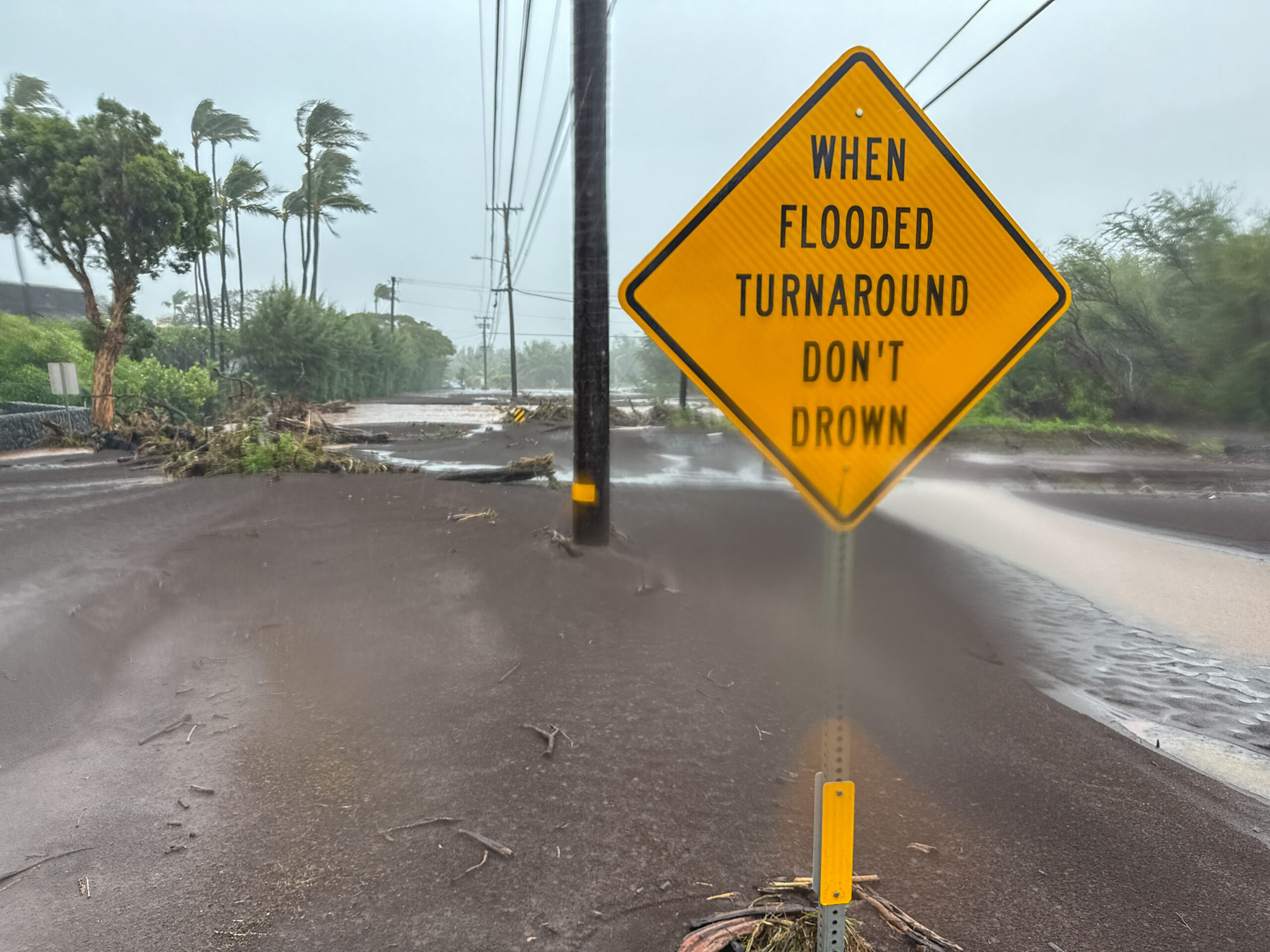
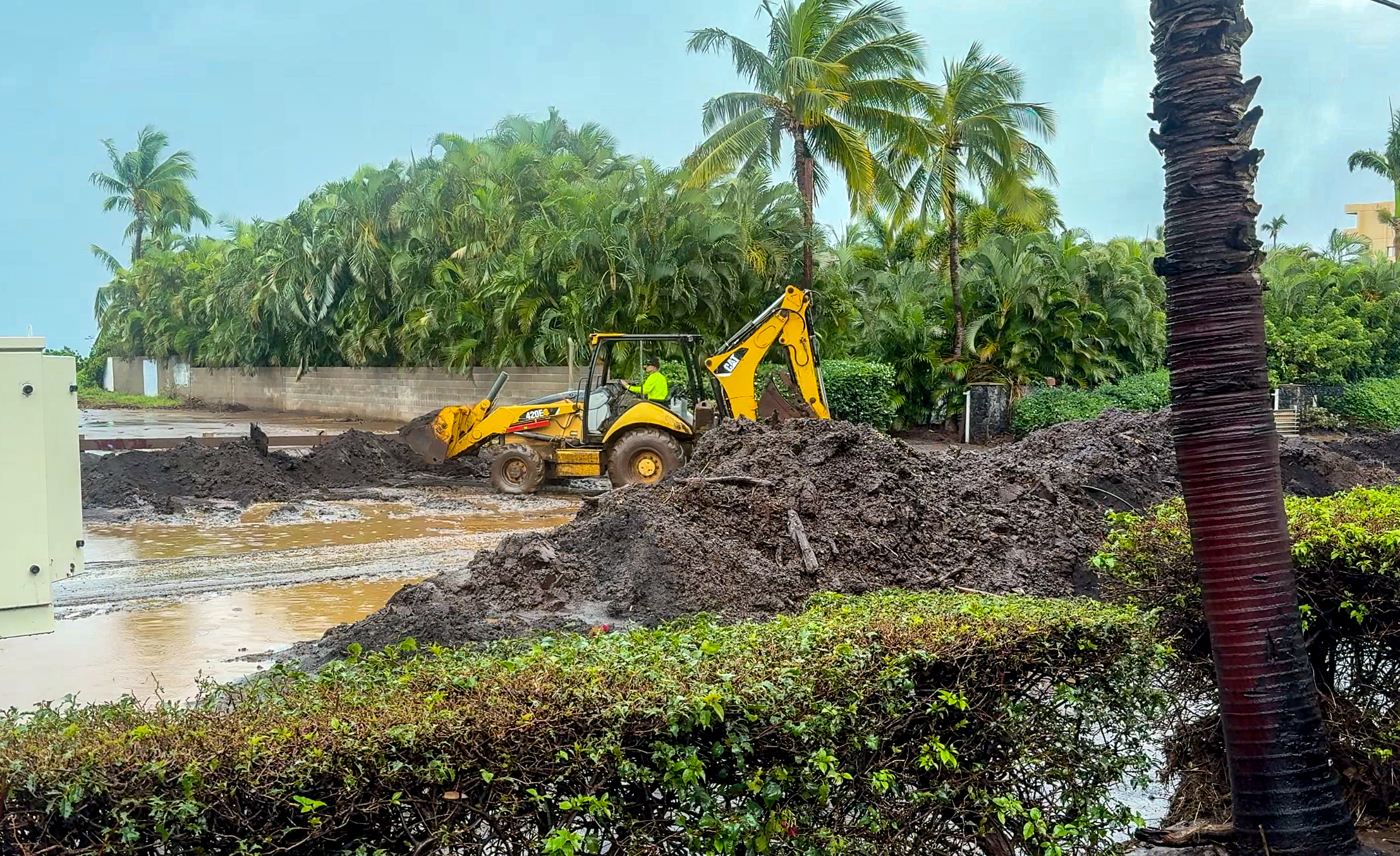
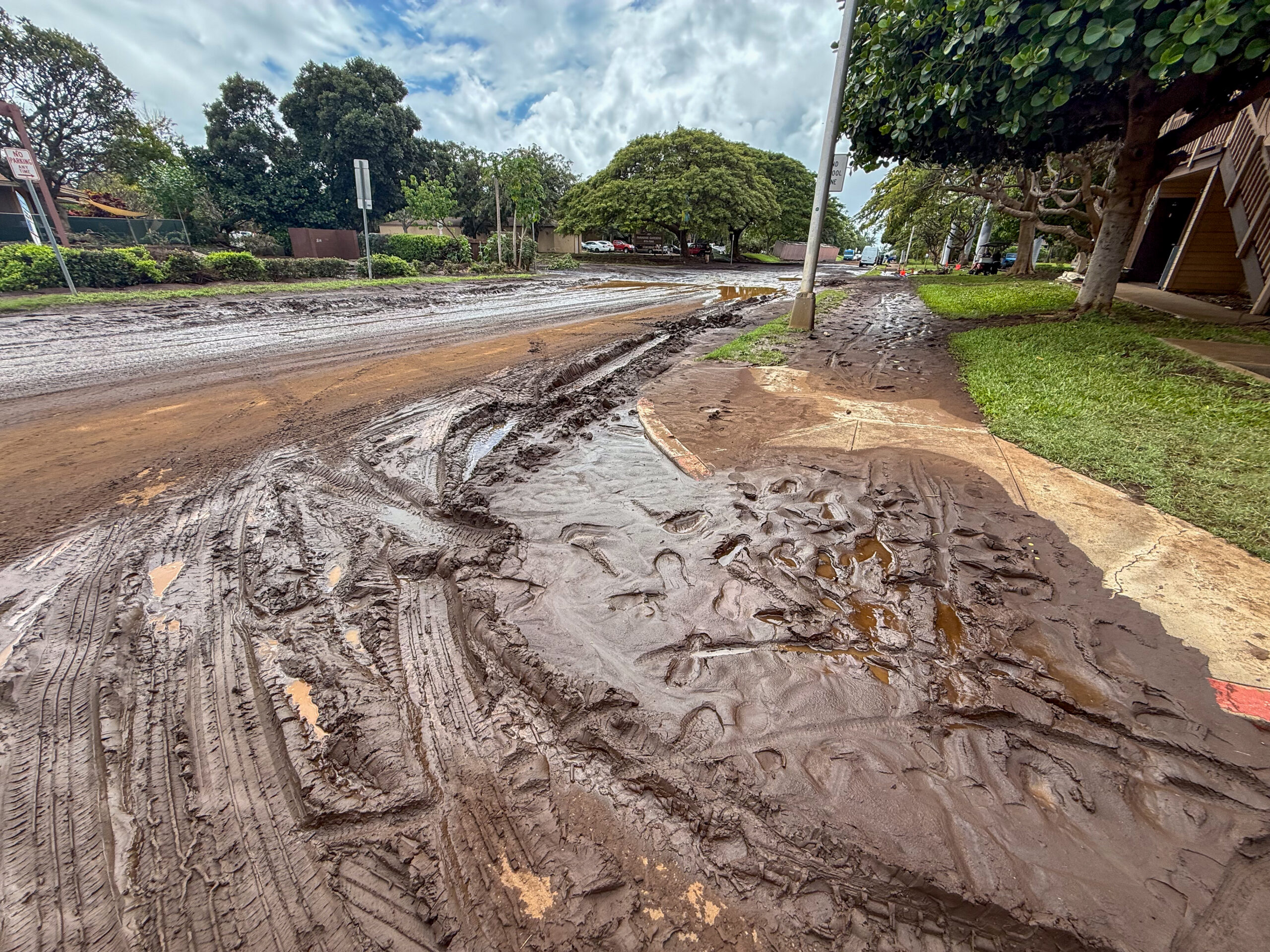
In nearly 20 years of living in North Kīhei, Tova Callender has grown used to floodwaters rushing through her neighborhood and kids floating by on stand-up paddleboards after heavy rains Upcountry. But now, she said, “it’s mud beyond their knees in parking lots.”
Callender, who lives a quarter-mile from the Waiakoa bridge where some of the worst mud floods occur, suspects the change in recent years is driven by a trifecta of drought, wildfires and deer that have left the hillsides above South Maui bare of vegetation and unable to absorb the runoff from major storms. That’s why she and others involved in conservation on Maui think the solution lies farther up the mountain.
“You can’t expect to solve the problem at the end of the pipe,” said Callender, the Maui coordinator for the Hawaiʻi Department of Land and Natural Resources’ Ridge to Reef initiative that seeks to manage watersheds from mauka to makai. “It’s just too much water and too much area and too much velocity. You really have to have a dispersed approach.”
HJI Weekly Newsletter
Get more stories like these delivered straight to your inbox. Sign up for the Hawai‘i Journalism Initiative's weekly newsletter:
During the Kona low storm that walloped the islands last weekend, Maui saw some of the most rainfall in the state, with nearly 50 inches of rain — just over 4 feet — over a period of three days at the summit of Haleakalā and parts of Kula. This rain rushes down the mountain through the low-lying floodplains of South Maui, making the landscape more carved out and vulnerable every year.
“Haleakalā is more than 10,000 feet tall,” Callender said. “That water is falling at the top and making its way all the way down. It’s not a small endeavor. Over time, the streams and the gulches have become more channelized, and so the water is naturally going to want to find its way down.”
In South Maui, floodwaters filled the streets, a condo complex damaged by a previous storm collapsed and portions of South Kīhei Road, including the area fronting Kama‘ole Beach Park II, crumbled.
By the time the runoff comes down, it’s already putting immense pressure on a system of culverts and ditches that can only handle so much volume, according to Maui County.
“Infrastructure systems are designed to manage more typical storm conditions,” Maui County Public Works Director Jordan Molina said. “Designing infrastructure capable of fully eliminating flooding during extreme storm events like this recent Kona low would require an extraordinarily large and costly system that would not be financially feasible.”
Tara Owens, coastal processes and hazards specialist with the University of Hawai‘i Sea Grant program, said the intense flooding in South Maui results from a combination of a changing climate and urban sprawl over the extensive wetlands that once helped absorb and filter runoff.
“Our development patterns, especially in South Maui, where the wetlands were filled and developed over the years, are definitely a primary reason for the major impacts we see,” Owens said. “Then on top of that, you have these climate change issues. So … increasing drought and then followed by heavy rains has this kind of impact — flash flooding and precipitation whiplash.”
The county sees flooding as an inescapable reality: “Because of South Maui’s natural wetland origins, low-lying coastal geography, and floodplain designation, the area will remain vulnerable to flooding during severe weather events,” Molina said.
“Addressing drainage challenges in South Maui is complex,” he added. “In addition to the area’s wetland origins, existing development patterns, limited space for new infrastructure, and increasing pressures from sea level rise and climate change contribute to ongoing flood risks.”
Molina said the county is working to carry out the Kīhei Drainage Master Plan that was finalized in 2022, with mitigation efforts including “ongoing engineering studies, exploring potential mauka-side drainage basin locations, sediment removal in gulches such as Kulanihakoʻi and Waiakoa, and other strategies intended to improve water flow and reduce flood risks where feasible.”
But, he said, “even with drainage improvements and resilient infrastructure, floodplain areas can still experience flooding during major storms.”
South Maui’s flooding problem requires a “treatment train,” a series of solutions at each level from mauka to makai, Callender said, pointing to a 2023 plan for managing Mā‘alaea Bay watersheds that emphasizes this type of holistic approach.
In Upper Kula, for example, invasive trees that disrupt the hydrology of the area and keep water from sinking back effectively into the landscape need to be removed. Callender pointed to the ongoing success story of Skyline Eco Adventures’ conservation initiatives to methodically replace eucalyptus trees with native koa. In Upcountry’s deep gulches, the Kula Community Watershed Alliance also has been working to remove moisture-sucking invasive wattle trees.
Deer also need to be controlled at all elevation levels, an ongoing battle that both state agencies and private landowners have put immense effort and funding towards by installing fencing to keep the animals from trampling on critical vegetation.
Replacing that lost vegetation wherever possible, particularly with recycled water, would also be a crucial step in helping to curb the runoff and sediment.
And while a lot of progress has been made in terms of planting native trees and fencing off areas to deer, Callender said that some storms are simply overpowering, and “at the end of the day, Mother Nature wins.”
“Because these challenges with the landscape are generations in the making, it’s going to take a generation to right things,” she said.
At lower elevation levels, restoring wetlands wherever possible would also help capture the runoff, said Robin Knox, who lives in Kīhei and is the lead scientist for the nonprofit Save the Wetlands Hui.
She thinks the county needs to start securing wetland areas for protection and clear out sediment to allow the wetlands to function during winter storms and throughout the year, cleaning and filtering water heading to the ocean. She added that the pattern of developing in flood-prone areas needs to stop, pointing to the example of a proposed workforce housing project in Kīhei that neighbors raised concerns over due to flooding risks.
Knox favors nature-based systems, “anything we can do to get the soil to hold the water, to get plants to hold the soil.” She pointed out that rigid concrete structures built to the specifications of certain flood limits can’t adapt to changing storms and the meandering paths of rivers and runoff.
“Why do we keep trying to make it a straight channel?” Knox said. “We’re just fighting against those forces instead of working with them. … There’s a lot of different buzzwords that can be put on it: permaculture design, ecological engineering, green infrastructure, low-impact design. But all of those things … mimic the way that nature works.”
Closer towards the coast, Owens said solutions could be “as simple as some better dune management” to offset both the storms and the coastal erosion that’s taking a toll on the shoreline from the other front.
In the long term, realigning South Kīhei Road could also become a reality just as it is in West Maui where the state is planning to move the vulnerable, low-lying Honoapi‘ilani Highway.
“Maintaining the road will get harder and harder because these erosion events will expand in their frequency and their impacts as the wave energy increases at the shoreline,” Owens said. “Sea level is rising and shorelines are migrating landward, and we have times when even the dunes are sort of sacrificial during these events. … When that happens, it can take a year or two or sometimes longer for those to recover.”
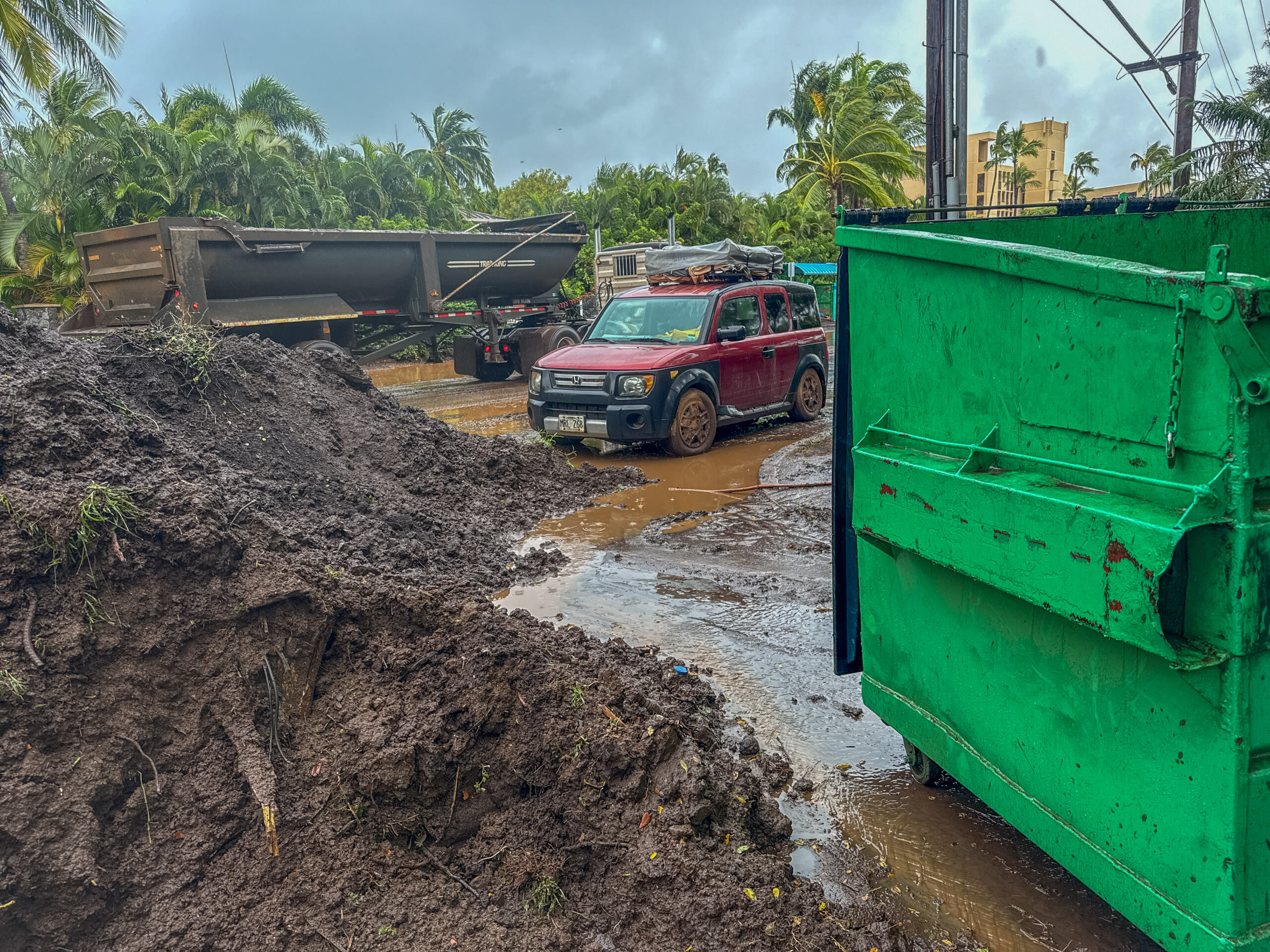
Maui County Council Member Tom Cook, who holds the Kīhei residency seat, also believes the solution to Kīhei’s flooding and drainage issues has to take place higher up the mountain, or the same thing will keep happening every winter, pointing to the example of the Kūlanihāko‘i gulch that was cleared of thousands of cubic yards of sediment last spring only to be clogged once more after the most recent Kona low.
Cook has also heard concerns about the Waiakoa bridge by Ululani’s and Sugar Beach Bake Shop, and he agreed the structure is “way too small to address the volume of water.”
But, he said, there would be issues with access to nearby properties if the bridge were raised. He said the county tried to make a clearer path through the sand dunes to allow for the high volume of runoff. However, the amount of sediment and debris that piled up on the bridge proved it wasn’t enough.
Cook thinks the county needs to invest more in stormwater detention basins Upcountry to collect runoff and allow it to drain more slowly, but he said a major impediment to projects like these is the high liability to government and private owners of dams — a common feature of detention basins — under a state law passed after a 2006 dam failure on Kaua‘i that killed seven people.
Sen. Angus McKelvey, who represents North Kīhei and West Maui, had proposed a bill this session that would relax some dam restrictions if the owners have certain insurance coverage. The measure died in committee, but Cook said state lawmakers want to reintroduce it next year.
“It’s not going to stop happening until we have a major comprehensive flood management,” Cook said. “And it’s not just flood management, it’s water management program, that we can take the floodwaters that are coming down the mountain … keep the sediment up there, capture the water for either irrigation and recharging the aquifer.”
Cook sees detention basins as the most straightforward solution to the flooding and said “we need a lot of them.”
“That will prevent South Maui from getting this over and over and over again,” Cook said.
Owens said that while the annual problem of flooding continues to be the reality, “we can do more than learn to live with it.”
“None of these approaches are easy to implement, and it’s going to take cooperation from everyone in our community, not just the government, but landowners and our decisionmakers in terms of funding,” Owens said. “There’s a lot of frustration in the community that we are continuing to have these types of impacts and that there isn’t an obvious solution underway. But I have to hope that we are working toward that.”