Kona Low storms drive March visitor spending down 1.6%
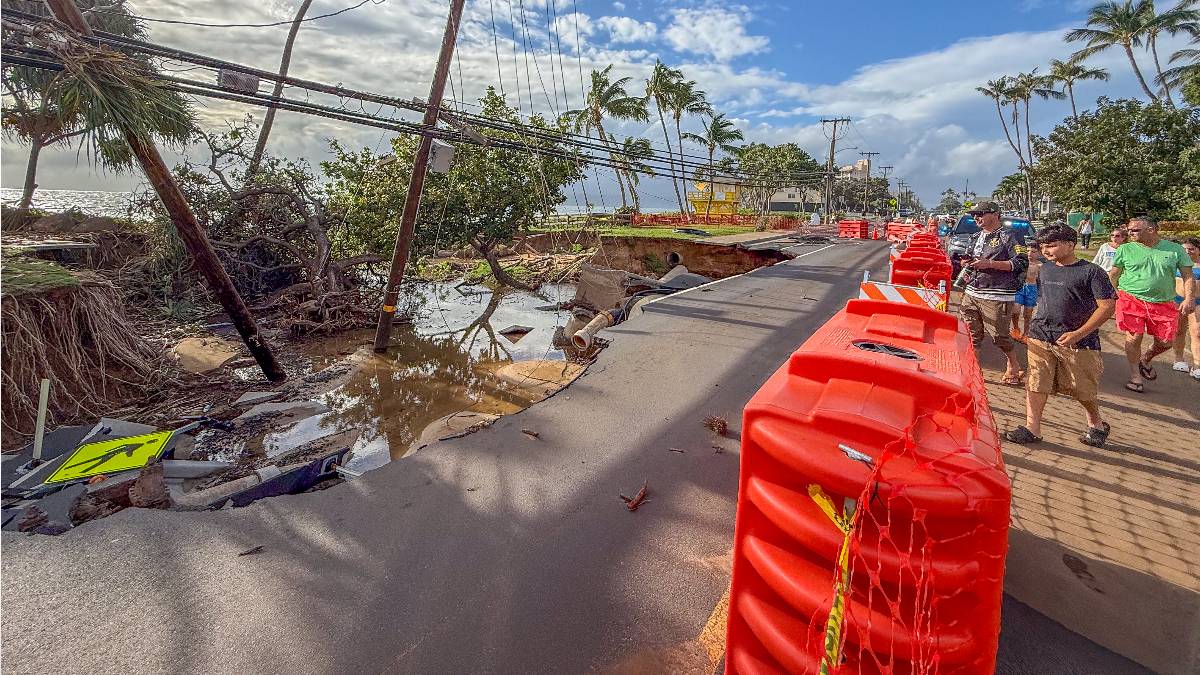
Back-to-back Kona Low storms in March hobbled Hawaiʻi’s tourism economy, triggering an estimated $300 million in lost revenue as flooding, flight cancellations and attraction closures disrupted spring break travel across the islands.
Total visitor spending fell to $1.96 billion for the month, a 1.6% decrease from March 2025, while total arrivals dropped 1.7% to 888,349, according to preliminary data from the state Department of Business, Economic Development and Tourism.
The storms struck in two waves—March 10–15 and March 19–24—forcing the closure of state and national parks and popular visitor attractions and diverting cruise ships from scheduled port stops. The resort areas of South and West Maui were among the hardest hit regions, along with Molokaʻi, the North Shore of Oʻahu and Hawaiʻi Island.
The drop in arrivals during spring break came during what is typically one of the busiest months of the year.
Department Director James Kunane Tokioka said he is working with the Hawaiʻi Tourism Authority to fund a recovery campaign that will restore visitor traffic while supporting local businesses and protecting jobs across the islands.
“During these storm events, numerous flight delays and cancellations, trip disruptions and the temporary closure of many visitor attractions and excursions resulted in an estimated loss of more than $300 million in tourism revenue,” Tokioka said.
East Coast visitors a bright spot
Not all markets declined. Visitors from the US East rose 13.9% to 271,291, with total spending climbing to $696.8 million from $619.9 million a year earlier. State officials attributed the surge to East Coast spring breakers who arrived in early March before the first storm system hit.
By contrast, visitors from the US West—historically the largest source market—saw a 7.4% drop to 424,581 visitors, with spending falling from $931.1 million to $882.1 million.
Japanese visitor numbers showed continued recovery, growing 8.8% to 67,014 arrivals. Canadian visitors declined 11.4% to 47,490, and arrivals from other international markets—including Oceania, Europe and Latin America—fell sharply, down nearly 25% from a year ago.
Cruise ship arrivals bucked the overall trend, rising nearly 39% to 19,286, though many passengers couldn’t complete all scheduled port stops due to the weather.
Shorter stays compound the impact
Visitors who did arrive stayed for shorter periods, with the average length of stay slipping from 8.43 days in March 2025 to 8.14 days. The average number of visitors present statewide on any given day fell 5.1% to 233,203, reflecting the compounding effect of fewer arrivals staying less time.
Air capacity to Hawai’i increased, with 5,562 transpacific flights carrying 1.247 million available seats—up 1.4% in flights and 4.9% in seats from March 2025. The gains in capacity were outpaced by storm-driven disruptions.
The full March 2026 visitor statistics report, including data tables, is available at dbedt.hawaii.gov/blog/26-20.
Sponsored Content