


US House passes Homeland Security funding bill, ending shutdown except for ICE and CBP
The US House passed legislation earlier passed by the US Senate to fund all of the Department of Homeland Security for Fiscal Year 2026 except immigration enforcement in two agencies, bringing an end to a shutdown affecting thousands of federal workers. The President has signed the bill into law.
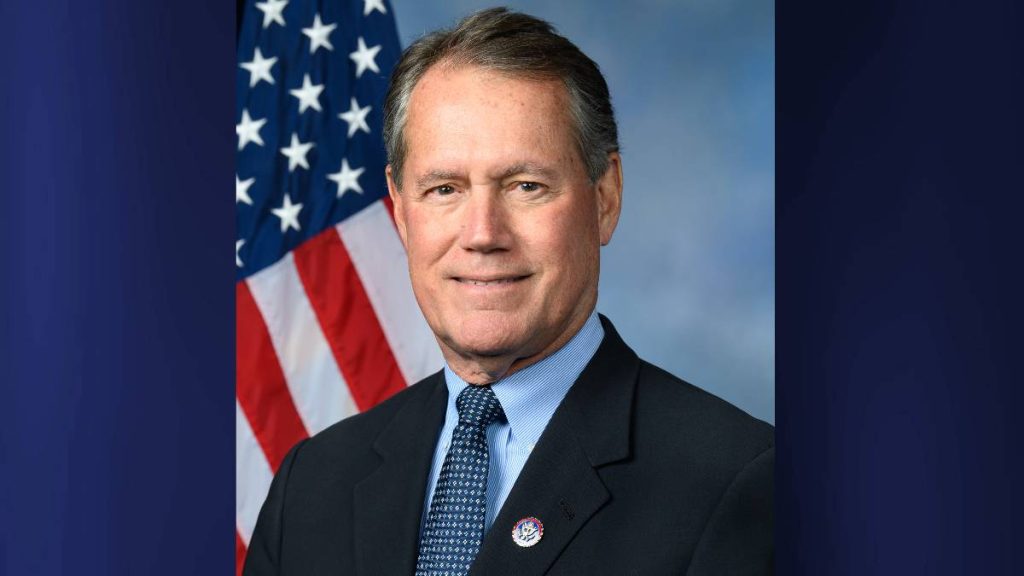
US Rep. Ed Case (HI-01), a member of the US House Committee on Appropriations, responsible for all federal discretionary funding said, “This will continue important government services, restart paychecks for hard working government employees at our airports and elsewhere, ensure continued FEMA disaster response following the Kona Lows, fully restore Coast Guard operations nationwide and allow other critical homeland security work to restart.”
US Sen. Brian Schatz (D-Hawai‘i), a senior member of the Senate Appropriations Committee, released a statement on House passage of the fiscal year 2026 Department of Homeland Security funding bill that passed the Senate unanimously on March 27 and then again on April 2.
“Today’s bipartisan vote in the House will mean DHS can finally reopen. For Hawai‘i, this will ensure FEMA disaster recovery support and other federal resources for communities impacted by the recent storms will continue without interruption. It’s also a reminder that when both parties choose to work together, Congress can keep critical services funded and functioning.”
The measure follows the approach advocated for by Congressman Case since the shutdown began. He was an original cosponsor of H.R. 7481, a compromise DHS funding bill to fund most agencies in DHS except for Immigration and Customs Enforcement (ICE) and Customs and Border Protection (CBP) to ensure that others are not unfairly punished while Congress focuses its attention on ICE and CBP reforms.
Case said, “I will continue to work with likeminded Members of Congress to advocate for ICE and CBP reforms. We need to enforce our immigration laws, but we cannot do so by surrendering our values.”
The final bill appropriates $48 billion to the covered DHS agencies and includes various provisions to provide more oversight on the Trump administration’s immigration-related policies and actions. It supports most of DHS including the Federal Emergency Management Agency (FEMA), US Citizenship and Immigration Services (USCIS), the Cybersecurity and Infrastructure Security Agency (CISA), the Transportation Security Administration (TSA), the Coast Guard, the U.S. Secret Service and more.
It does not provide funding for ICE or CBP’s Border Patrol; those employees are currently being paid from last year’s reconciliation law.
The measure included Case’s request for $1 million in Community Project Funding to install a new information system in the Hawai‘i Emergency Management Agency’s Emergency Operations Center. It will serve as a centralized platform for real-time information sharing, situational awareness and multi-agency coordination, and help ensure the safety and well-being of communities across the State of Hawai‘i.
“This new IT system will share information in real time so that emergency responders can make informed decisions and take necessary actions to save lives and protect property in the event of a disaster,” said Case.
The House’s CPF rules require that each project must have demonstrated community support, must be fully disclosed by the requesting Member and must be subject to audit by the independent Government Accountability Office. Case’s disclosures are here: https://case.house.gov/services/funding-disclosures.htm.
The bill also responds to concerns raised about the Trump administration’s immigration efforts by:
- Directing DHS to develop and implement a standard uniform policy to ensure that federal law enforcement personnel are clearly identifiable as such,
- Strengthening oversight of ICE and reconciliation funds through a $37 million increase (20 percent) to the DHS Office of Inspector General, and
- Including funding for both the Office for Civil Rights and Civil Liberties and Office of the Citizenship and Immigration Services Ombudsman, two offices the Trump Administration shuttered last year.
Case also secured a number of other key programs and provisions for Hawai‘i and the Indo-Pacific, including:
- $337 million for Emergency Management Performance Grants, which support state and local emergency management agencies like HIEMA.
- $342 million for FEMA’s Assistance to Firefighters Grant program, which is a major source of funding for county fire departments.
- $342 million for FEMA’s Staffing for Adequate Fire and Emergency Response Grant Program.
- $116 million to support the Coast Guard’s expanding mission in the Indo-Pacific.
- $15 million for the Coast Guard’s Honolulu Homeport Project, which funds expansion of operations and cutter maintenance activities at Base Honolulu.
- $96 million for the National Domestic Preparedness Consortium, a $5 million increase over FY 2025, which funds University of Hawaii’s
National Disaster Preparedness Training Center.
- $48 million for FEMA’s Next Generation Warning System.
- Language requiring a report on the opportunity for the Coast Guard to acquire additional pier and related space at Base Honolulu.
- Language requiring a report on unmet requirements for the infrastructure at the Coast Guard’s Air Station Barbers Point.
- Language encouraging TSA to address potential degradation of security scanning equipment at open-air airports.
The measure also includes the following priorities requested by Case
- $13.9 billion for the Coast Guard overall.
- $65 million for the National Computer Forensic Institute, through which 397 state and local law enforcement officers from agencies in Hawai‘i have received a host of forensic training courses.
- Report language supporting the growth of CISA support in the Pacific Islands.
- Language requiring a report on Coast Guard engagement and needs in the Indo-Pacific.
- Language requiring a briefing on the Coast Guard’s role in combatting illegal, unreported and unregulated fishing, which is a major issue in the Indo-Pacific.
- $584 million for the Urban Area Security Initiative under FEMA.
- $494 million for the State Homeland Security Grant Program, which provides funding to protect against terrorism and other threats.
- $124 million for the Emergency Food and Shelter Program.
- $95 million for FEMA’s Port Security Grant Program.
- $46 million for the TSA Law Enforcement Officer Reimbursement Program.
Sponsored Content