Historic Pacific Ocean Row reaches half-way point to Maui

After a month on the water, Joshua Dukes and his three rowing companions are nearing the halfway point on their historic journey from Washington to Maui, Hawaiʻi. The 3,100 mile trek across the open ocean started on May 2, 2026 and is expected to take a total of 50-70 days to complete.
To date, the crew has logged over 1,300 miles “with no engines, no sails, and no assistance.” The crew is powered by pure human strength, as members pursue their mission and find themselves.
Dukes, who worked for 13 years as a firefighter on Maui, currently volunteers with Aerial Recovery, a nonprofit utilizing veteran and first responders “stopping evil and saving lives by doing humanitarian special operations work” around the world. His purpose and mission in life are to help people heal, specifically fathers who have lost children and military and first responders with exposure to Post-Traumatic Stress.
To date, the four-man crew—which includes Dukes, Greg Anderson, Johnny Martinez, and Wilton Ngotel—has raised over $13,000 via a GoFundMe account to support their mission.

“Spirits are high, all systems are functioning optimally and they are looking forward to hitting their halfway mark and moving into more sunshine and warmer waters,” according to an online update posted on Friday.
Dukes, who spoke with us via cell phone on Friday, expressed gratitude as the crew closes in on their halfway point.
“I’m super excited to get back home and see our families,” Dukes said of the milestone. “It just kind of lit a fire underneath us. We just got to the beginning of the trade wind currents, and that to me—I mean, you know how predominant the trade winds are in Hawaiʻi—it’s just comforting knowing that we are now able to utilize something that I know and am familiar with.”
Bitter cold, Bumpy waters, Barnacle buildup

The first half of the transpacific journey was marked by several weeks of back-to-back storms, seasickness, battling barnacle buildup, and staying on course when winds were uncooperative.
“The first two days we all go sick really bad,” said Dukes. “We had a couple of nice days of weather, and then it was just like storm after storm. And the first storm we got wasn’t crazy, but it was probably 20 to 25 knot winds and it was blowing in the wrong direction.”
“We ended up deploying what’s called a para-anchor,” said Dukes, who described the device as an underwater parachute attached to the bow and often used during severe storms to lock the bow in place, putting the nose of the vessel into the wind and waves.
“That is an experience all in itself. I think the team has decided that that’s probably our least favorite portion of the trip because you just take cracks. The whole time the boat is just bouncing up and down and shaking and rattling,” said Dukes, who got airborne a couple of times in the stern cab.
“You’re trying to lay down and when the bow goes over a wave, the stern kind of catches up and then it launches you in the air like a rodeo.”
—Joshua Dukes
Dukes said he knew it was going to be hard, but was surprised when weather and the elements outmatched the physical demands that the crew had been training for.
“We spent close to a year rowing and working on mobility,” said Dukes, but the daily weight of navigating currents and changing weather conditions proved to be more of a challenge.
“The last storm we were in was like 10 days. And the first 12-13 hours we were on para anchor,” said Dukes. When the wind finally switched in their favor, Dukes thought, “Okay, we’re going to ride this out.”
“We ended up surfing these waves—some of them up to 14 feet—in this boat. I’m a surfer, but it’s a new experience surfing a rowboat down these waves in the middle of the ocean with no lifeguards or help anywhere around,” he said.
The passage along the Pacific Crossing is traditionally done with the support of an escort boat and launches from Monterey, California instead of Washington. “That’s one of the things that makes this a world record is that it’s unsupported,” said Dukes.
Washington is also home to half the team, and where training was held—factors that were considered in determining the more northerly starting point. Members said it was also something that called to their sense of adventure and spirit of exploration.
After starting their journey under the cover of freezing nights, coupled with 45-50 knot winds, Dukes said, “I got a good understanding of why they don’t do it from Washington. It’s just brutal. It’s so chaotic in that section of the coast.”
Despite frigid waters, the team is still tasked with regularly cleaning the boat of barnacles that build up and slow the vessel down.
“Those things are relentless. We cleaned off so many barnacles, and we got to do it again,” said Dukes, “We’re overdue right now.”
Keeping critical connections

The Row West Pacific journey has its own built-in Wi-Fi that connects to satellite, enabling critical connection for the crew.
“We’ve got a lot of redundant safety equipment, but our main form has been Startlink, which is incredible. I mean, you think about your ancestors who have done this stuff for thousands of years. They weren’t able to FaceTime their family when they missed them, you know. That’s been pretty cool,” said Dukes.
While communication is possible, the crew is in the middle of the ocean, so the connection has been spotty at times.
Backup equipment includes a satellite phone, a Garmin inReach for texting via satellite, a YB Tracker that shows real-time progress, and a Raymarine GPS plotter for programming waypoints and staying on course.
“We even brought a map and a sextant for a catastrophic failure, but we haven’t had to use it,” said Dukes.
Even with all the equipment, the journey has been weather dependent.
“We put our initial plot, and we started getting all these calls from people. They’re like, ‘Hey, you’re going off track. What’s going on?’ and we’re like, ‘You guys don’t understand. The weather out here is gnarly. We have to kind of go where the weather has taken us because we don’t have a motor, we don’t have sails. It’s just us rowing.’ So we, we’ve been using the wind and the waves to our advantage as best we can,” said Dukes.
“We’ve been looking at the stars at night. We’re not necessarily navigating by them, but it does help,” he said.
Into the trades, visions of Maui
As the crew heads into the second half, their mental space has shifted to warmer waters and visions of a big red food truck at the finish line.
Chef Kyle Kawakami of Maui Fresh Streatery is among the well-wishers who plans to meet up with the crew upon their arrival.
“We’re excited to eat really good food when we get there,” said Dukes. “We’re looking at his Instagram page yesterday, and we’re like, ‘Oh, we got to get off here… ‘ After eating the same thing every day, it just makes you start to dream a little bit.”
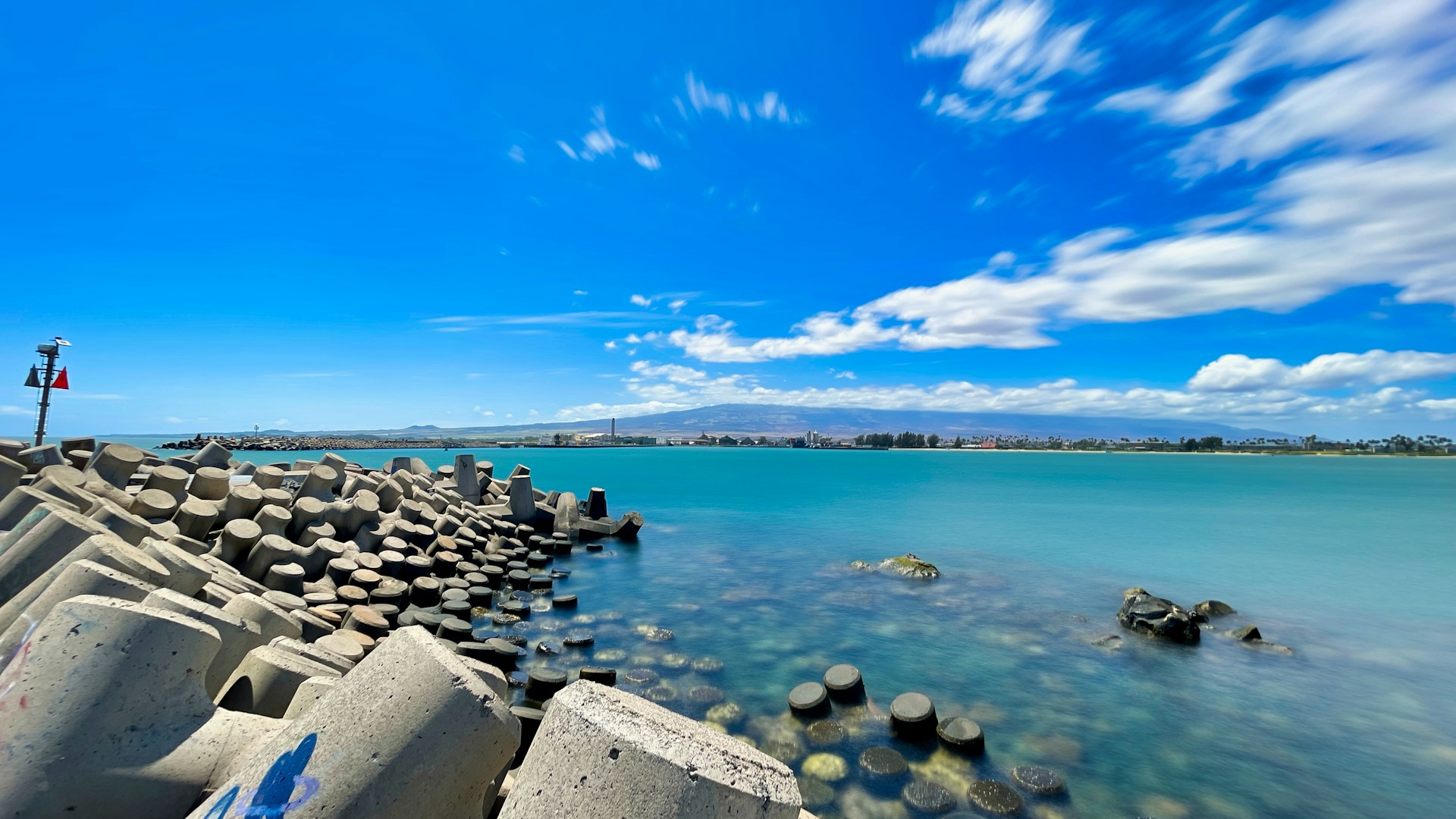
The goal for landing is to arrive at Kahului Small Boat Harbor, pending favorable weather conditions and clearance from the state Department of Land and Natural Resources.
“I want to thank everybody in the community for cheering us on and supporting us. It’s just been really cool,” said Dukes.
“This journey is about more than crossing an ocean,” he said in an earlier report. “It’s about pushing beyond perceived limits and showing what’s possible when you commit fully to something bigger than yourself.”

Follow the Row West Pacific journey on Instagram @rowwestpacific, including live broadcasts, and on YouTube at Row West Pacific. Track the movements of the team in real time via a live tracker at www.rowwestpacific.com.
Sponsored Content