Navy to continue low-frequency sonar training in Hawaiian waters
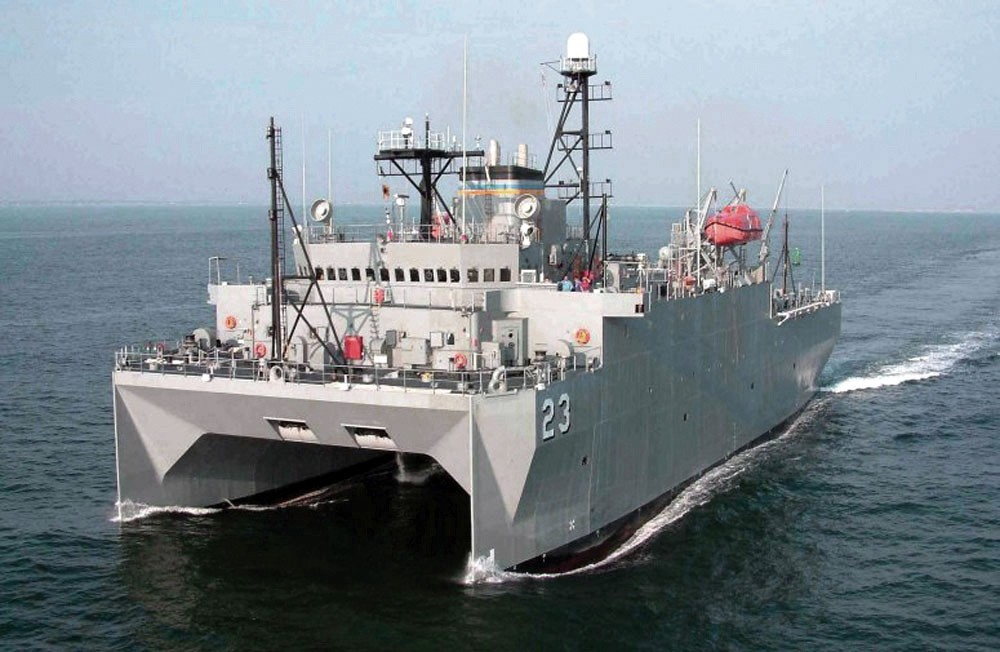
The Navy has decided to move forward with a plan allowing continued use of its low-frequency sonar system for submarine detection training and testing in the Western and Central North Pacific and Eastern Indian oceans, including waters around Hawaiʻi.
The decision, outlined in a record of decision tied to the Surveillance Towed Array Sensor System Low-Frequency Active final supplemental environmental impact statement, selects what the Navy identified as its preferred alternative among several options considered during the environmental review process.
The sonar system is towed by surveillance ships and used to detect, track and report diesel- and nuclear-powered submarines over long distances. The study area for the program overlaps with the Hawaii-California Training and Testing area and the Mariana Islands Training and Testing area, both of which include waters near the Hawaiian Islands.
According to the Navy, the approved plan keeps operational boundaries, geographic mitigation zones and coastal standoff distances unchanged from those established in 2019, including a 12-nautical-mile buffer from land. The Navy also added protections for what it calls Offshore Biologically Important Areas and updated seasonal restrictions for some of those zones.
The Navy said it revised its environmental analysis using updated marine mammal density data, a newer acoustic modeling system known as NAEMO, and more recent scientific literature.
Under the new authorization, the Navy is permitted 1,100 transmission hours annually, an increase from the 592 hours analyzed in the 2019 decision. However, the Navy attributed that change to a shift in how it measures sonar activity rather than to an expansion of actual operations. The service said it previously tracked only active “ping” cycles but has moved to a “duration” method that also counts quiet pauses between pings, aligning SURTASS LFA reporting with how the Navy tracks its other sonar systems. The Navy maintains that the underwater acoustic footprint remains equivalent to the 592 hours documented in 2019.
The Navy said the decision followed consideration of public input gathered during the environmental review process, along with an assessment of potential impacts to marine life weighed against military readiness needs.
The record of decision and related environmental documents are available on the Navy’s project website at nepa.navy.mil/surtass-lfa.
Sponsored Content