Maui Council panel reviews non-binding agreement for ML&P’s Honokōhau ditch system, other West Maui water assets

Maui County could more than double public control of West Maui’s drinking water under a proposed deal with Maui Land & Pineapple Co., but County Council members on Wednesday pushed back on provisions in a memorandum of understanding that would combine the water purchase with zoning changes for housing on land the company wants to keep for development.

The Council’s Disaster Recovery, International Affairs and Planning Committee held an informational briefing on a non-binding memorandum of understanding, signed May 18 between the county and Maui Land & Pineapple, that outlines a potential purchase of water infrastructure assets in West Maui and Upcountry.
During a PowerPoint presentation, Managing Director Josiah Nishita told the committee the acquisition, if finalized, would increase public stewardship of West Maui’s drinking water systems from about 45% to 93%.
“The purpose of this acquisition and the work towards it is really to restore public trust resources back to public stewardship,” Nishita said, adding that the purchase would also help provide operational redundancy in water supply systems. The move also supports housing development, agriculture and conservation, he said.
While there is no binding asset purchase agreement yet, the ML&P negotiations are part of a broader push by Mayor Richard Bissen’s administration to shift West Maui’s water systems into public ownership. When the framework was first announced in May, Council Chair Alice Lee cautioned that “this is not a done deal by any stretch of the imagination.”
Separately, the Council’s Water and Infrastructure Committee has been reviewing a related but distinct $6 million proposal to acquire the smaller Launiupoko and Olowalu water systems, with a follow-up hearing scheduled by the Budget, Finance and Economic Development Committee for Aug. 4, beginning at 9 a.m.

Water assets draw broad support, but other provisions raise concerns
The proposed deal covers the Honokōhau Ditch System and its tunnels, siphons and pipelines; two development tunnels; the 7.8-million-gallon Plantation and 4.5-million-gallon Village reservoirs; four production wells in Honokōwai; two wells in Kapalua; and a long-term lease of the 8,661-acre Puʻu Kukui Watershed. Deputy Director James “Kimo” Landgraf of the Department of Water Supply said Hawaii Water Service operates the systems now in service under contract.
According to the company’s website, Hawaii Water acquired Kapalua Water and Waste Treatment companies from ML&P in 2021. The company provides water and wastewater service to 1,000 customer connections in the Kapalua, Maui resort area. The utility serves homes, hotels, condominiums, golf courses, restaurants and other West Maui resort amenities.

Under the MOU, ML&P would continue maintenance and operations of the Puʻu Kukui Watershed for at least three years until Maui County is ready to take over.
Council members generally supported the county acquiring the water infrastructure, but they raised concerns about non-water elements included in the same MOU, such as zoning changes ML&P is requesting for housing on three parcels in Makawao and one each in Honokeana and Alaeloa. A slide presentation shows these parcels would be rezoned from agricultural to residential or business-country town, in Alaeloa’s case. The MOU separately references roughly 911,520 gallons per day in existing water source credits, plus additional credits still to be negotiated.
Committee Chair Tamara Paltin said she supports “the water portion of it, and money and water, not so much land, land entitlements and all of that,” and several colleagues echoed her preference to separate the water purchase from land-use negotiations.
Council Member Kauanoe Batangan asked that any follow-up hearing wait until the county has received and reviewed due diligence documents, preliminary title reports and a related prior agreement governing existing water credits.
“My preference is in alignment with what the other members had shared about taking up the purchase of the water assets separately from the land use entitlement portion,” Batangan said.
Lee pressed Nishita on whether the administration was combining unrelated assets into a single negotiation. “Are you trying to bundle these purchases?” she asked.
Nishita said the various assets under discussion would likely come back to Council as separate agreements.
“I wouldn’t expect that Council is going to get one agreement for all assets,” he said in response to Lee. “There would likely be at least separate agreements for water assets and land assets because of the different nature of that. And then depending on the asset itself, some may be able to move quicker than others; or some we may reach agreement on others quicker than other assets.”
Agricultural land concerns
Multiple members raised objections to potential housing development near Maui Gold Pineapple’s active fields in Upcountry. Lee questioned locating housing or a proposed fire station next to working agricultural land.
“Do we want to abut it with residential properties or a fire station? I don’t see how that’s a good fit,” she said.
Landgraf said that, because the negotiations are at the MOU stage, “we didn’t fully look at what it looks like when it’s developed. We haven’t gotten to that part yet. We’re still waiting to see all their due diligence.”
Council Member Yuki Lei Sugimura shared Lee’s concern about the proximity of Maui Gold pineapple fields. “I don’t want anything to impact Maui Gold pineapples,” she said, later adding that “agriculture is so fragile.”
Nishita told the committee no land currently in agriculture would be identified or impacted by the parcels under zoning consideration; however, some parcels are adjacent to ongoing agricultural operations.

Non-water assets
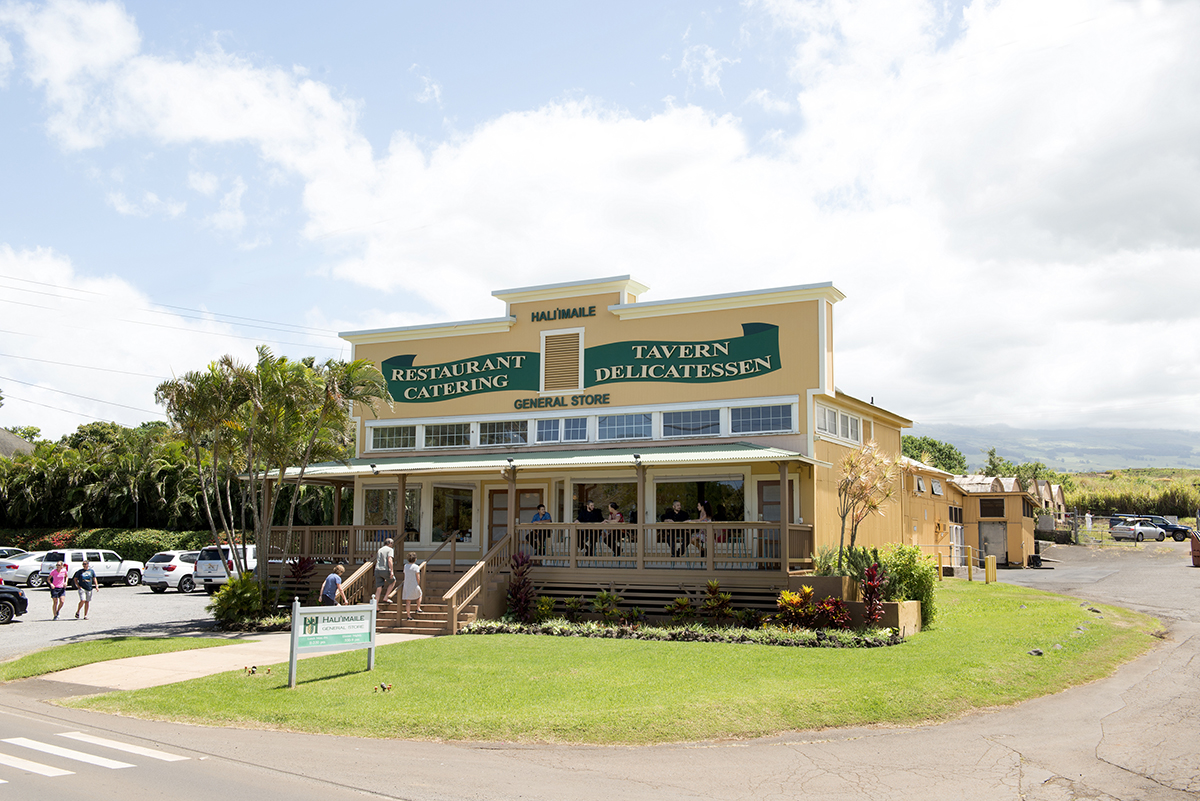
Separately, the MOU includes non-water assets such as a 0.38-acre Mokuʻula land parcel, a 0.43-acre Kahana roadway in Napili and two separate portions of tax map key lots in Hāliʻimaile proposed for a future police substation and fire station. Nishita noted that the administration had requests from the Maui Police Department for the Hāliʻimaile property for a substation.
Housing affordability and water credits
Council Member Keani Rawlins-Fernandez pressed the administration on whether housing built on the parcels would be reserved for local residents rather than developed as luxury housing.
Nishita did not specify how that could be done, but said that there are “potentially a few different mechanisms that that could be accomplished. I wouldn’t want to talk too much about that at this moment, you know, given active state of negotiations.” However, he offered to discuss the point with council members individually or during a closed executive session.
Rawlins-Fernandez said: “Okay, okay, because for the public seeing it says change and zoning to support housing . . . So I just want to ensure that it doesn’t end up just being like, vacant luxury lots.”
She asked about appraisals for each of the parcels, and Nishita said appraisals would be needed for the various assets acquired.
Later, Rawlins-Fernandez suggested that land involved in the negotiations be in a trust, like the Lahaina Community Land Trust, “where it stays as housing for the residents.”
She also asked whether water credits could be conditioned on owner-occupied or affordable housing. Deputy Corporation Counsel Caleb Rowe said he was unaware of that ever happening, “but if it’s part of a negotiated agreement, such as this, I don’t see why we couldn’t attempt to negotiate that.”
Council Member Tom Cook said he supports the county potentially acquiring some of the land itself for public-private affordable housing partnerships, with the county retaining ownership through a lease-land model to keep prices down.
Financial and legal questions
Lee also questioned ML&P’s financial history and pressed the administration to determine whether the county would be exposed to lawsuits or hidden liabilities, including existing customer water agreements and unresolved title issues.
“That’s all part of the due diligence process,” Nishita said. “We’re not buying the company. We’re acquiring assets now. Part of the review of that is ensuring that the county is well aware of any impacts or liabilities related to assets. But primarily the litigation that I’m guessing being referred to or that’s in the public domain is with Maui Land and Pine.”
Lee said she was concerned because “the company has a reputation for being in financial trouble in the past. I’m just hoping that we know exactly what we’re buying.”
No PUC review required
Landgraf and Paltin discussed that the transfer of water assets from ML&P to Maui County would not require Hawaiʻi Public Utilities Commission approval. Maui Land & Pineapple is the wholesale water source rather than the retail distributor. Hawaii Water Service, which owns and operates the Kapalua distribution system, would likely continue serving customers there even if the county acquires the underlying water sources, Nishita said.
Next steps
The MOU is non-binding and valid through May 18, 2027. Due diligence started this summer, and the county expects to order preliminary title reports and contract an appraiser this coming fall. County officials anticipate making an offer to ML&P and submitting a resolution to acquire the water and other assets to the council by this winter.
The Council previously set aside funding for potential water asset acquisitions in the fiscal year 2027 budget.
Council members took no vote after Wednesday’s informational briefing. The committee deferred the matter until the administration completes due diligence, including a review of preliminary title reports and financial disclosures from Maui Land & Pineapple.
Sponsored Content