Hawaiʻi recognized for preschool quality as leaders focus on expanding Pre-K access
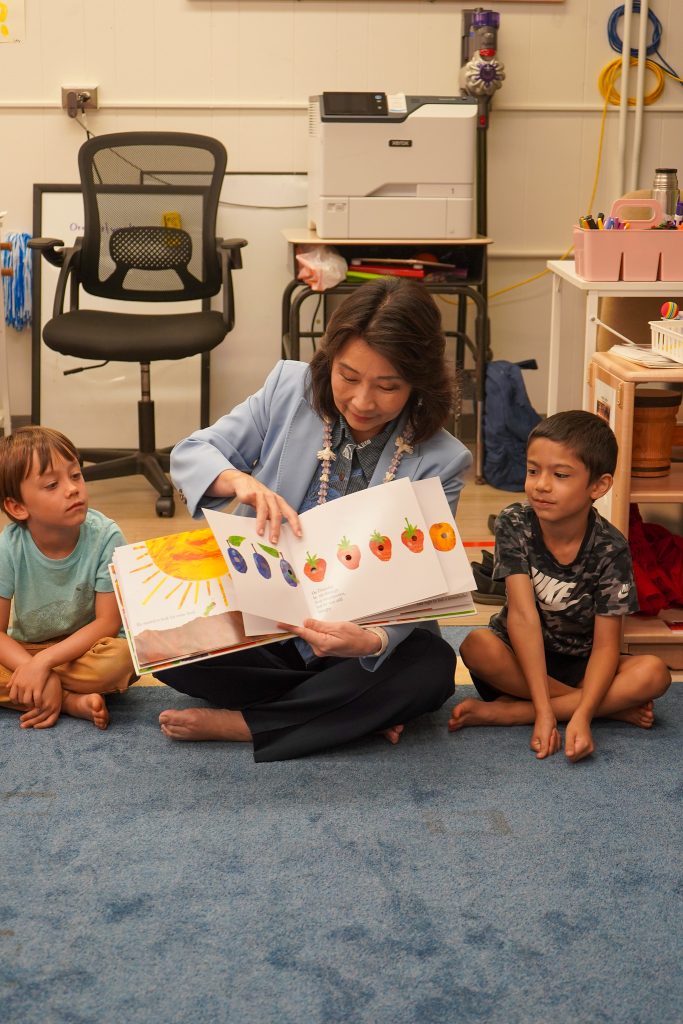
Hawaiʻi remains a national leader in preschool quality, meeting all 10 of the National Institute for Early Education Research’s (NIEER) benchmarks for high-quality early learning, according to NIEER’s newly released 2024 State of Preschool Yearbook.
In the 2023–2024 school year, Hawaiʻi enrolled just 5% of its four-year-olds and 2% of its three-year-olds in state-funded preschool programs, the lowest participation rates among Pacific states. With a strong commitment to building public pre-kindergarten classrooms as part of a mixed delivery system, the Executive Office on Early Learning (EOEL), Lt. Gov. Sylvia Luke, and Hawaiʻi’s Public Charter School Commission are working together to accelerate preschool expansion efforts.
“Every child in Hawaiʻi deserves the chance to thrive, and expanding access to high-quality preschool is one of our best investments,” said Luke, who oversees the state’s Ready Keiki plan. “We’re proud to set a standard of excellence and remain committed to reaching more families statewide through a mixed delivery approach — opening classrooms, expanding child care subsidies, and investing in early education workforce development and innovative preschool models.”
Hawaiʻi’s state-funded preschool programs, including those operated at DOE schools and Charter schools, have been recognized for maintaining small class sizes, employing highly qualified teachers, implementing comprehensive learning standards, and conducting regular program assessments.
“We are proud that Hawaiʻi’s programs are among the best in the nation for quality,” said Yuuko Arikawa-Cross, director of EOEL. “We are equally committed to ensuring access to these programs for more of Hawaiʻi’s children, especially in underserved communities.”
In the 2023–2024 year:
- State-funded preschool enrollment grew to 1,026 children, an increase of 322 students from the prior year.
- State spending on preschool rose slightly to $7.59 million, though per-child spending dipped compared to the previous year after adjusting for inflation.
- Both of Hawaiʻi’s state-funded preschool programs met all 10 quality benchmarks.
“The earliest years of children are the most formative,” said Ed H. Noh, Ed.D, executive director of the State Public Charter School Commission. “Expanding and offering free public preschool ensures that all our keiki have access to early learning opportunities vital for their learning, development, and future pathways to success.”
While state-level progress continues, potential federal cuts to early childhood programs like Head Start could create new challenges. According to NIEER, nearly 2,000 Hawaiʻi children could lose access to Head Start if proposed federal funding cuts are enacted, nearly twice the number currently enrolled in state-funded preschool programs.
State leaders are focused on scaling up Pre-K access by creating new classrooms, recruiting qualified educators, and strengthening public-private partnerships across all islands. Hawaiʻi’s goal is to provide every child with the opportunity for a strong start to lifelong success.
Sponsored Content