Kīlauea’s latest eruption sends lava 1,000 feet high, covers nearly half of crater floor
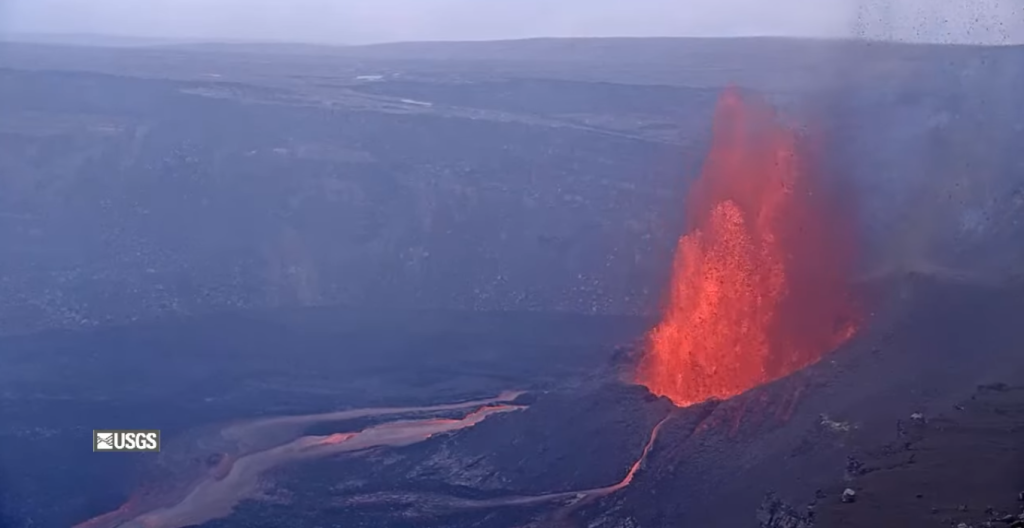
Kīlauea volcano entered its 22nd eruption episode early Friday morning, with lava fountains shooting up to 1,000 feet high, according to the Hawaiian Volcano Observatory.
The eruption began at 4:40 a.m. on May 16, following a series of smaller gas-piston events that started at 10:45 p.m. Thursday. By 4:40 a.m. Friday, dome fountains had begun to overflow from the vent, leading to sustained high fountaining from the north vent just over half an hour later.
Fountain heights peaked near 6 a.m. and later fluctuated between 328 and 492 feet. Multiple lava streams began flowing across Halemaʻumaʻu crater’s floor, covering an estimated 40 percent of its surface.
This marks the 22nd episode since the current eruption began on Dec. 23, 2024. Activity has alternated between intense bursts and brief pauses, with lava erupting from two primary vents within the crater — one to the north and another to the south.
Officials with the US Geological Survey warned of elevated volcanic gas emissions, including sulfur dioxide, which can form volcanic smog, or vog. The agency also advised that glass-like fragments such as Pele’s hair and other tephra may be present downwind and near eruption sites, as seen during previous episodes.
Visitors to Hawaiʻi Volcanoes National Park and nearby residents are urged to remain aware of air quality conditions and airborne volcanic debris.
Sponsored Content