Council panel moves ahead with Kahului housing project, sparks debate over water availability
A unanimous vote by the Maui County Council’s Housing and Land Use Committee to advance an affordable housing project in Kahului drew criticism Wednesday from West Maui Council Member Tamara Paltin.
She found it “disgusting” that Maui County and developers found a way – through a water availability exemption – to make water available for a segmented Kahului Civic Center mixed-use project, but that no similar accommodation has been made for a much-needed affordable housing project in West Maui “where it’s most needed.”
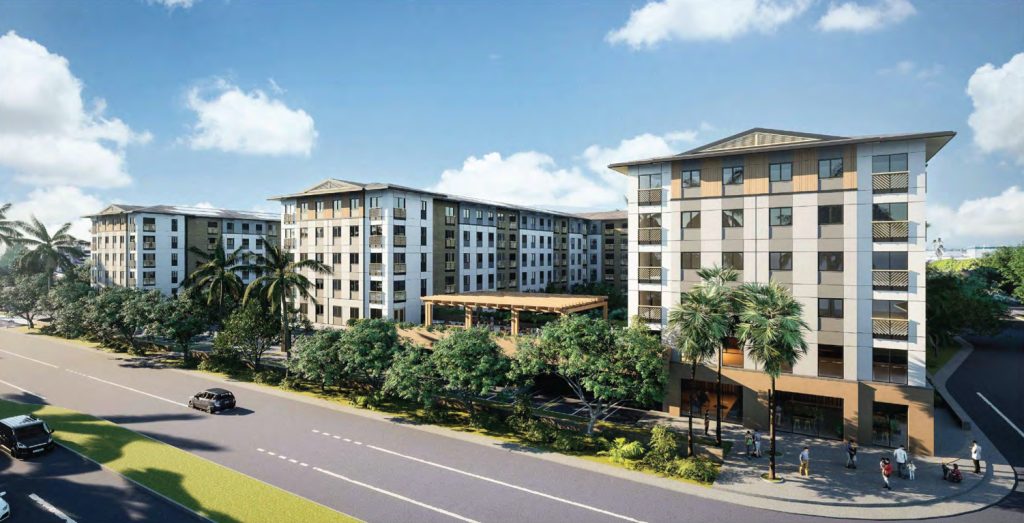
The Kahului project, named Kaiahale ‘o Kahiluhilu, is the affordable rental portion of a larger Kahului Civic Center mixed-use complex on 3.4 acres of state-owned land at 153 West Kaʻahumanu Ave. Developed by EAH Housing, the comprehensive master plan for the site includes a civic center and a transit hub, with the Maui County transit hub opened in November 2024.
The approved project will feature two six-story buildings with a total of 303 residential units and 298 parking stalls. All but two non-revenue manager units will be affordable for households earning between 30% and 60% of the area median income.
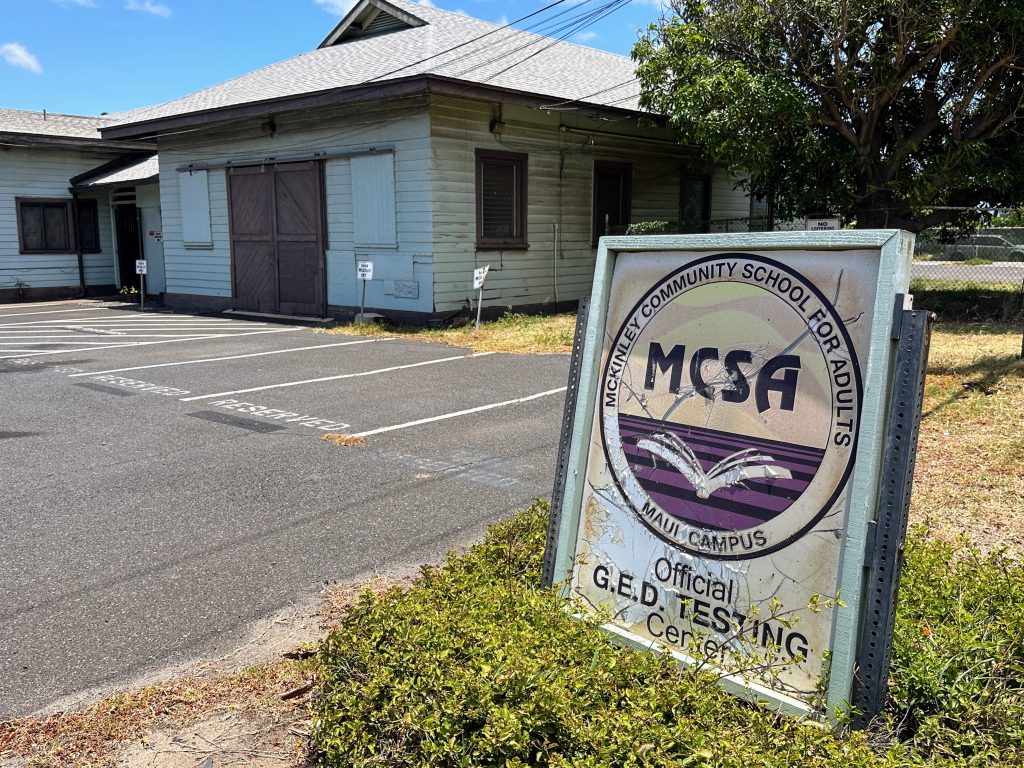
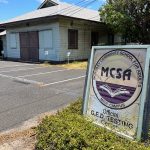
 A shattered and weather-worn sign for the McKinley School for Adults is near the entrance to a parking lot at property next to a planned 303-unit state housing project called Kaiahale o Kahiluhilu. PC: Brian Perry
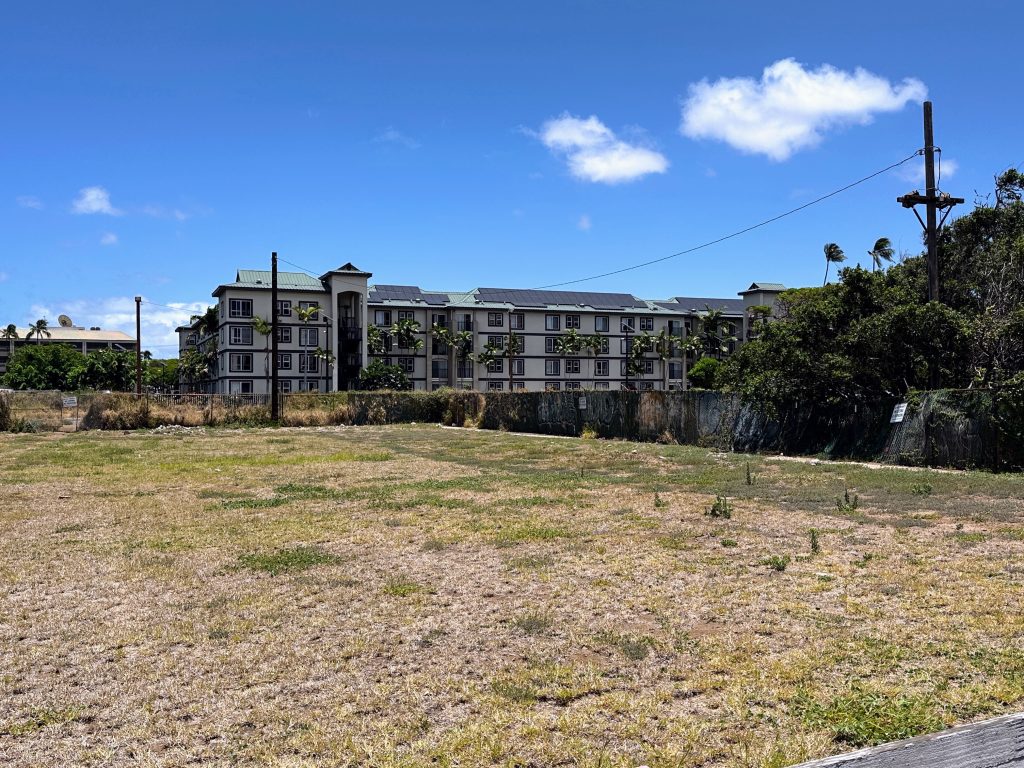
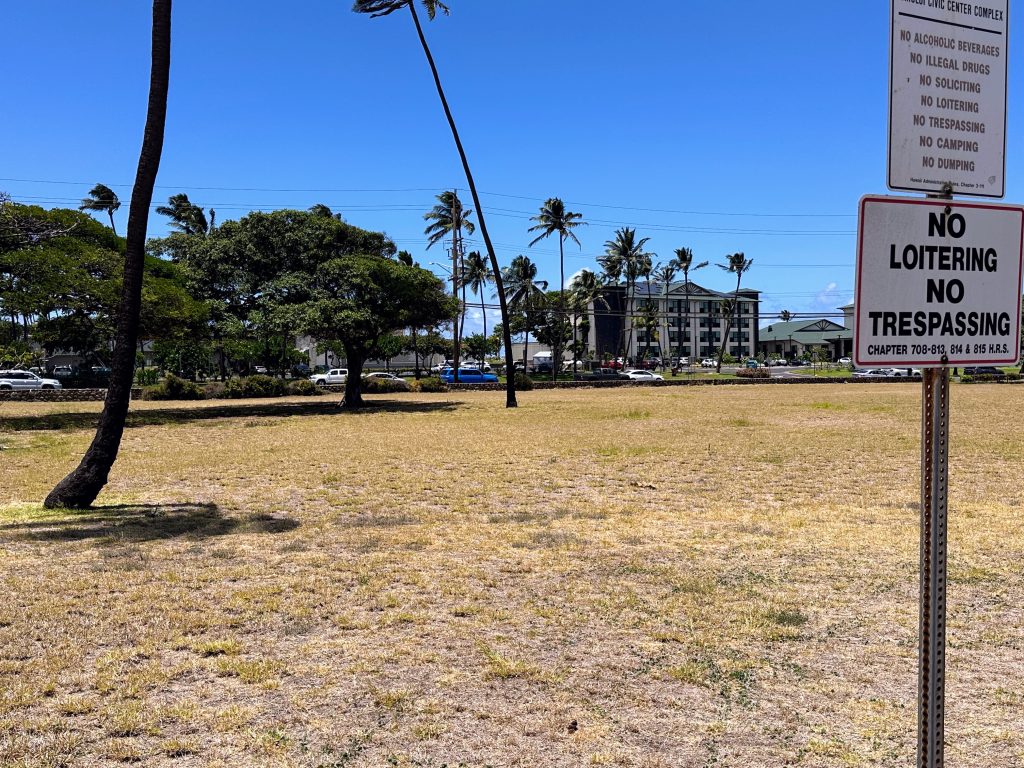
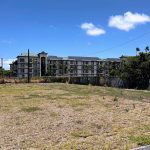
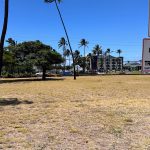
- An open field awaits work on a planned 303-unit state housing project called Kaiahale o Kahiluhilu. PC: Brian Perry
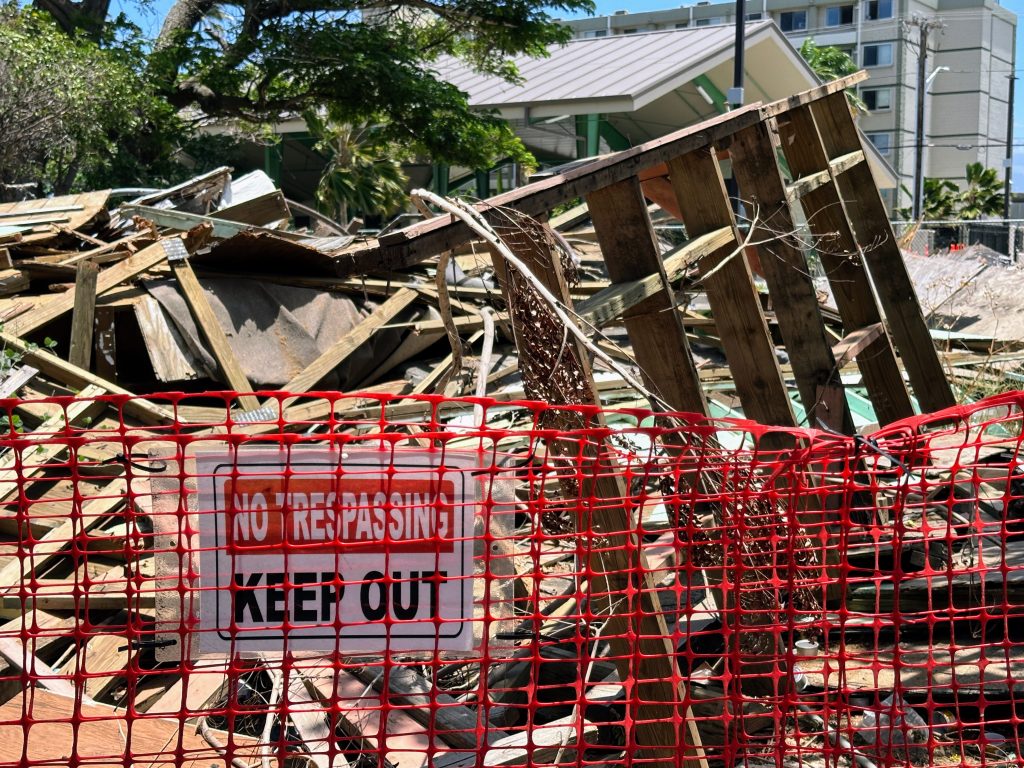
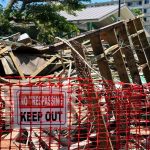
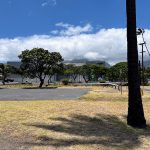
- A “Keep Out” sign warns people to stay away. At rear, is the Kahului Transit Center. PC: Brian Perry
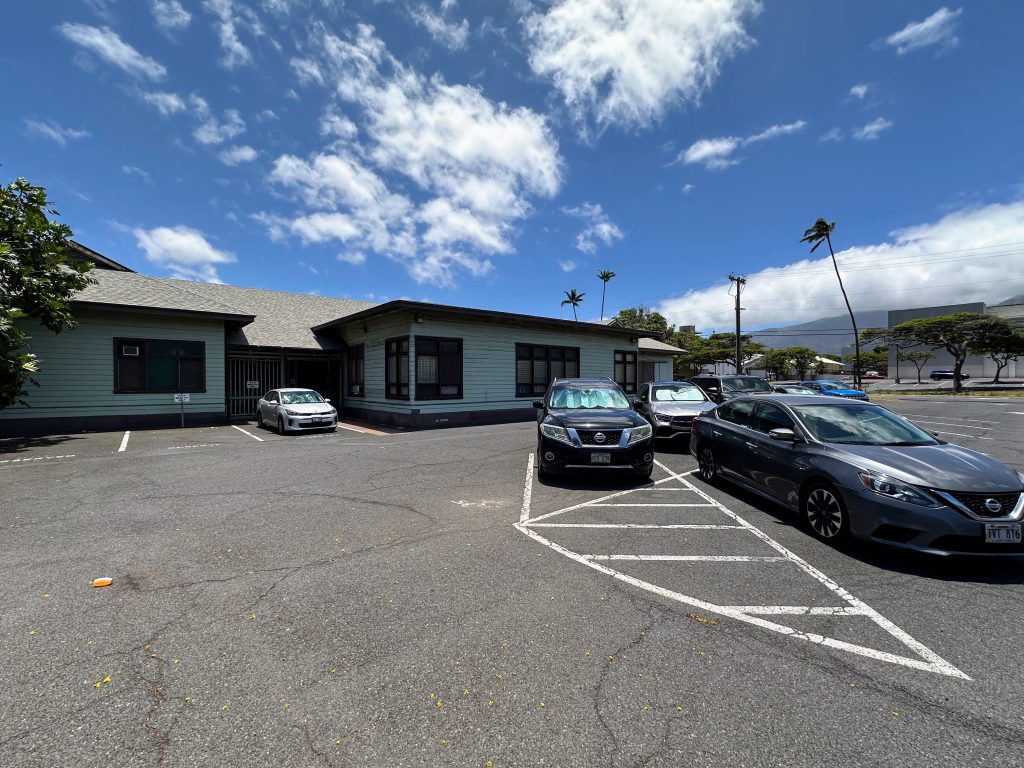
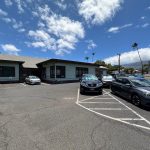
- The parking lot has some vehicles at the McKinley School for Adults, located next to a planned 303-unit state housing project in Kahului. PC: Brian Perry
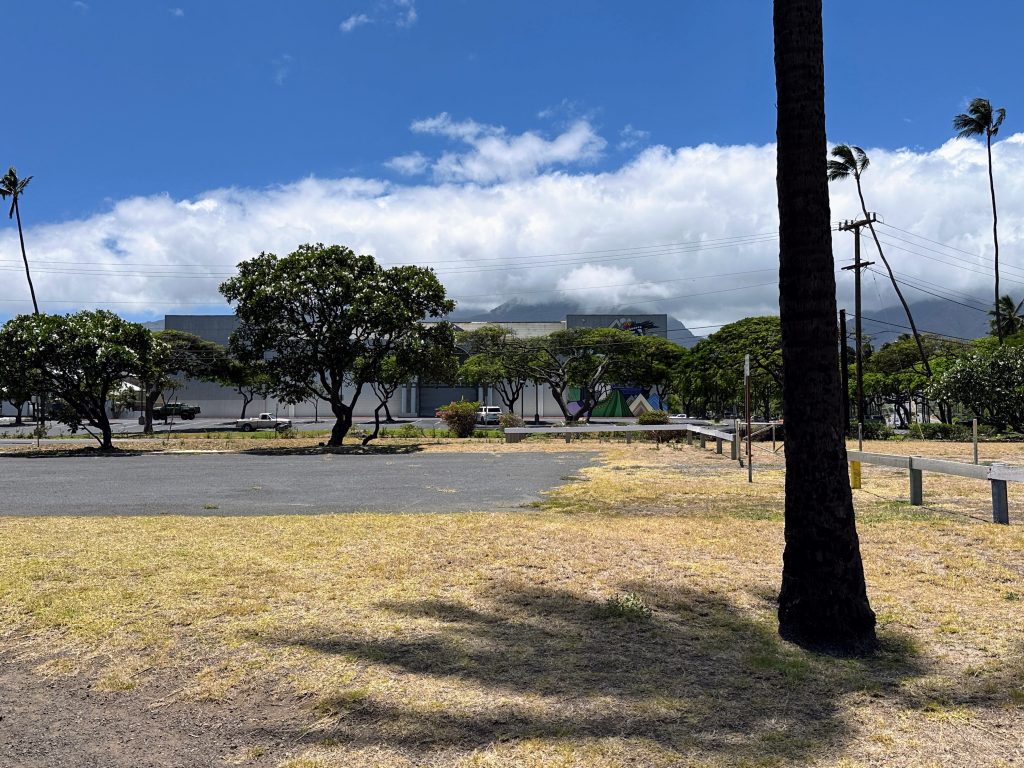
- A vacant field abuts Ka`ahumanu Avenue in Kahului. PC: Brian Perry
- Kane Street and the former Sears department store are next to the project site. PC: Brian Perry
The committee’s approval followed a contentious discussion about water availability and whether it’s for affordable housing in Central Maui or West Maui.
Paltin noted that the Department of Water Supply had previously stated there was insufficient water to serve the entire project. She pointed out that the Hawaiʻi Housing Finance and Development Corp. and EAH Housing split the project into phases — the affordable housing component and the civic center component — after which the Water Department determined water was available for the affordable housing portion.
“If there isn’t sufficient remaining capacity on the Central Maui Water system to serve the project, where is the water coming from?” Paltin asked.
Water Department Deputy Director James “Kimo” Landgraf confirmed the change in assessment, explaining that the department “reviewed the analysis” and made another determination.
“I don’t know about the office portion (of the Kahului Civic Center), but we know we have the water for the residential portion,” he told council members, adding that he understood the project would be broken into separate sections.
He further explained that the Water Department found a way to use more water from one of the county’s treatment plants, and it “took a little while” to get the analysis.
Paltin challenged the perceived double standard. “It just seems like different people play by different rules sometimes because it’s not a 100% residential workforce housing project,” she said.
She said the Water Department should make similar accommodations in West Maui where affordable housing is desperately needed after the August 2023 wildfires.
Later Wednesday, in response to a Maui Now request for further comment, Water Department Director John Stufflebean said: “The DWS does have water available for the Civic Center project.”
“However, we evaluate the separate water systems individually, and the situation in West Maui is different from the situation in Central Maui,” he said. “On the West Side, there is no water available for any new connections and, due to designation, this situation is not likely to change for some time. In addition, we need to be absolutely sure that we have water for those rebuilding.”
The reference to “designation” stems from the state Commission on Water Resource Management’s “designation” of the West Maui region as a surface and groundwater management area under state oversight as of August 2022. This means the state commission administers water withdrawal permits, not the county.
There was a deficit of water availability in West Maui even before the wildfires, Water Department officials have said.
Paltin also asked Department of Housing Deputy Director Saumalu Mataafa whether a residential workforce housing agreement had been executed with the county for the state project. The short answer was “no,” but work on such an agreement is ongoing.
A special management area permit for the project also is pending.
Paltin expressed concern that the civic center component appeared to be “piggybacking” on the housing project to obtain water.
Pulelehua project’s water challenges
The Pulelehua project, a planned 500-home development located 310 acres mauka of Honoapiʻilani Highway between Kāʻanapali and Nāpili, has been stalled for years because of insufficient water availability. Otherwise, it’s considered “shovel ready” and a much-sought-after opportunity to provide housing for West Maui residents displaced by the wildfires.
In May 2024, Stufflebean said that while temporary housing for displaced residents may be approved on a case-by-case basis in West Maui, the county did not have a sufficient permanent source to serve Pulelehua.
Pulelehua developer, Paul Cheng of Maui Oceanview LP, is seeking development of private wells from the state water commission, but the water from test wells has been too salty. It requires a reverse osmosis treatment process that creates a residual discharge of brine that needs a permit from the state Department of Health. Additionally, the state water commission is currently only processing permits for existing water users, not new ones.
Despite these challenges, the Maui County Council has approved $33 million in funding for Pulelehua from the county’s Affordable Housing Fund. The funding includes a condition that a “will serve” letter for 75,000 gallons of temporary water is needed for the 240 affordable rental units to begin construction.
The Council vote to provide the funding last year was 6-3, with Council Members Yuki Lei Sugimura and Tasha Kama voting “no” due to lingering questions about water availability. Council Member Nohelani Uʻu-Hodgins also voted “no,” but for a different reason — due to the developer’s inability to pay prevailing wages, a violation of state law, according to her office.
Council Chair Alice Lee, who voted in favor, said then that she would “absolutely continue to support Pulelehua.” She expressed frustration, saying, “I am thoroughly disappointed that there isn’t a concerted effort to make Pulelehua a reality before it’s too late.”
Precedent set for future projects
In her closing remarks, Paltin sarcastically remarked that it’s “fantastic” to see Maui County and the state work together on an affordable housing project.
“I only wish they could do the same for West Maui,” she said.
She noted that the Kahului Civic Center project was a mixed-use project with affordable housing. Initially, the Water Department determined there wasn’t enough water for the project, she said, “then they went back and did some special math (an exemption of a water availability rule) and now there’s water.”
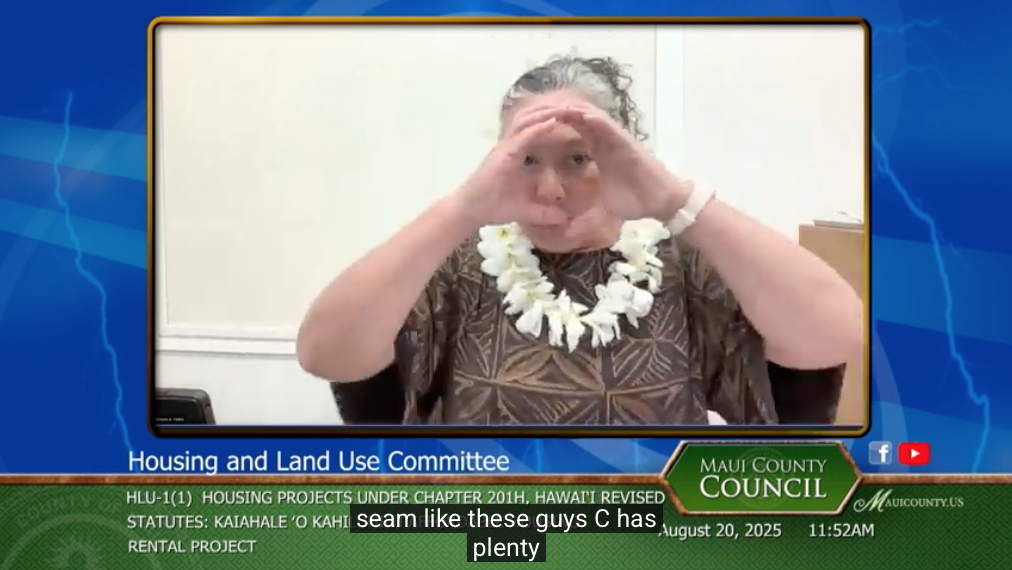
“You know, I just wish that we could be as prudent, expeditious with Pulelehua because we lost over 2,000-something structures, 4,000 units of housing (in the wildfires),” she said. “We cannot figure it out to give them the same kind of deals, the same kind of consideration here?”
“When this (Kahului project) is actually a mixed-use plan, and when that didn’t work out for water availability, they just split it up,” Paltin said.
She asked whether the 240 units at Pulelehua, which are 100% affordable, couldn’t “get the water seen like these guys?”
“Kahului has plenty housing. West Maui has zero,” she said.
Paltin also pointed out that the Council recently approved the 1,150-unit Honuaʻula project in South Maui, which went from 700 to 450 to 288 affordable homes. “But we can’t put together 240 workforce affordable housing for West Maui that will be permanent?”
“This disgusts me,” she said, especially coming two years after the Lahaina wildfire disaster.
“I hope we’re so proud of ourselves for doing this, because I’m not proud of this,” she said. “This is disgusting to me that we would push this through . . . What’s being done for the West Side?”
What’s next?
The Housing Committee’s recommendation for approval of the housing project moves on to the full Council.
While work to obtain government approvals is ongoing, developers hope to begin construction in 2027, with completion two years later.
As of April, the project was lined up for $10 million in grants — $5 million each for a first and second phase. Plans for the first phase call for building 197 multi-family rental units, with the second phase set for 106 units. The units are targeted as affordable for a family of four earning $74,820, $59,880 for a family of two and $52,380 for one person. Some units would be set aside for people with the lowest income levels.
Editor’s note: This post has been updated with a correction on the “no” vote for Council Member Nohelani Uʻu-Hodgins on a vote concerning affordable housing funding for the Pulelehua housing development.
Sponsored Content