

Hawai‘i Wildlife Center mobilizes as seabird fallout season begins
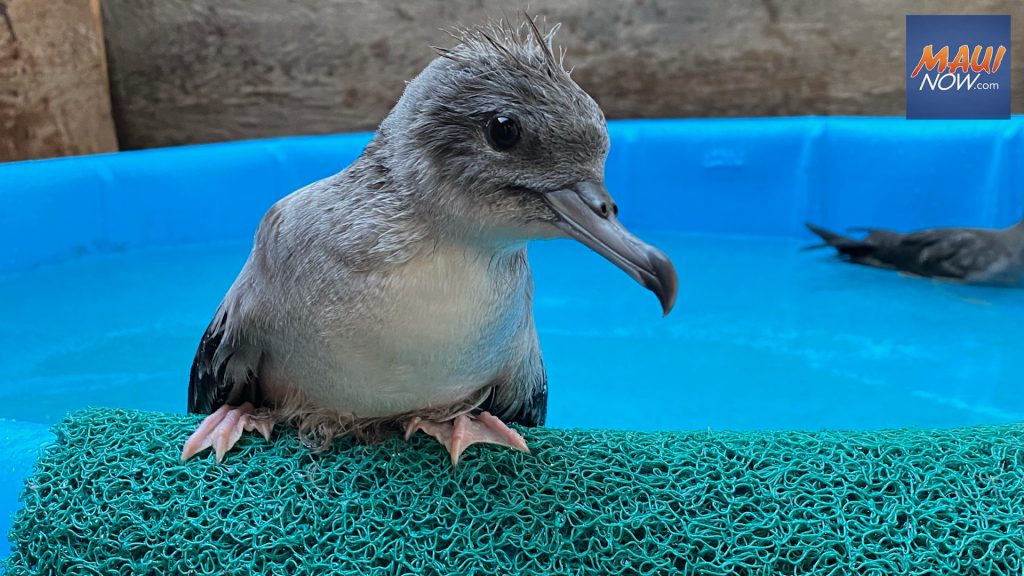
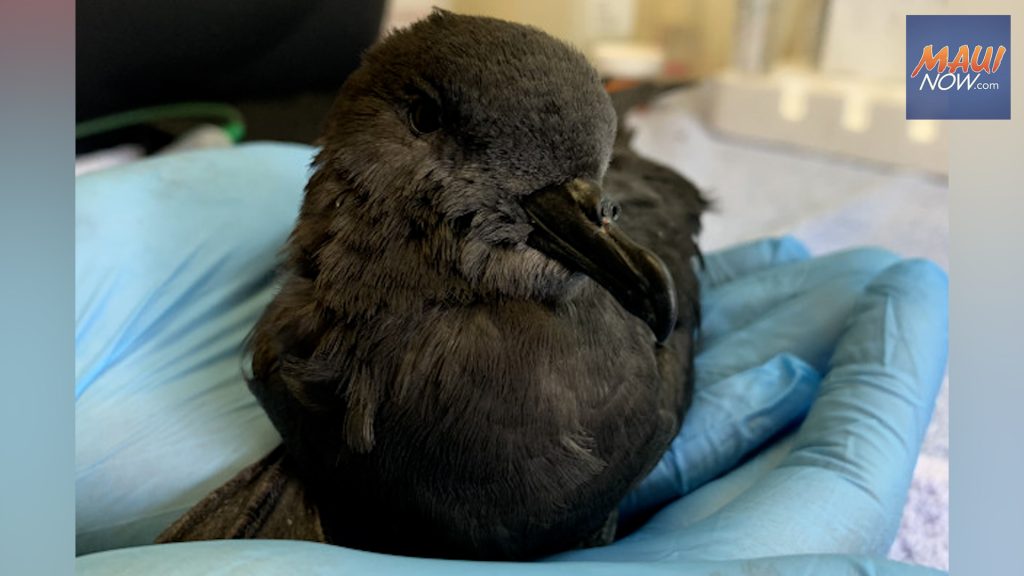
Seabird fallout season is underway and young ʻOu (Bulwer’s Petrels) are already being found on the ground. The season begins with fledging ʻOu leaving their nests, followed later by an increase in downed ʻUaʻu kani (Wedge-tailed Shearwaters), which peak in numbers around mid- to late-November.
While ‘Ou are fledging now, ‘Ua’u kani are still in or near their burrows and still being cared for by parents. If you see a fluffy seabird chick and are unsure if it needs help, the public is asked to contact Hawai‘i Wildlife Center before intervening.
HWC is one of two organizations permitted by state and federal wildlife agencies to provide medical treatment and rehabilitation care to native wildlife, has Oʻahu-based staff, and manages the care and release of these birds. Feather and Fur Animal Hospital will continue to receive downed seabirds 24 hours a day, seven days a week, and work with the HWC staff who will provide rehabilitation of native bird patients.
During this critical period, young seabirds disoriented and exhausted by artificial lights fall to the ground, making them vulnerable to predation and car strikes. Quick rescue is essential for their survival. The HWC’s O‘ahu satellite clinic operates seven days a week. Downed seabirds will receive short-term care before release, while seriously injured seabirds and other native winged species will be transported to HWC’s Big Island Hospital for longer-term rehabilitation.
“Artificial lights cause seabirds to crash-land, leaving them unable to survive without intervention,” said Linda Elliott, president and director of the Hawai‘i Wildlife Center. “With the community’s help, every bird we get back into the air is a step towards protecting Hawaiʻi’s native species and delicate ecosystem.”
Community members who find a downed seabird or other native bird or bat species in need of help should transport the animal to an approved drop off site—the fastest way to ensure the bird receives care. For drop-off locations and hours, visit the Department of Land and Natural Resources website.
If unsure whether the bird is a seabird or needs help, contact the HWC at 808-884-5000 or email a photo to birdhelp@hawaiiwildlifecenter.org. However, if transporting the bird is not possible, alternative transportation may be arranged through the HWC’s Wheels for Wildlife volunteer program or other approved response organizations. Please note that arranging alternative transportation will delay care of the bird.
Since its inception in 2017, the HWC’s O‘ahu Seabird Aid Program has successfully rescued and rehabilitated thousands of birds. In 2024 alone, the program handled 645 ʻUaʻu kani (Wedge-tailed Shearwaters) during the peak of the season with an overall shearwater release rate of 95%. The rescue efforts involve coordination between state and federal wildlife agencies, nonprofits, businesses, and the public.
The OSA Program is made possible by support from Hawaiian Electric, Honolulu Zoo, Feather and Fur Animal Hospital, and the Hawai‘i State DLNR Division of Forestry and Wildlife. Follow the progress of the OSA Program and the Hawai‘i Wildlife Center through Instagram and Facebook (@hawaiiwildlifecenter). More information is available online at www.hawaiiwildlifecenter.org/oahu-seabird-aid-program. Donations to support the OSA Program and HWC may also be made online at www.hawaiiwildlifecenter.org.
Sponsored Content