

State water commission takes fire for ‘inaction’ amid West Maui water crisis
The state Commission on Water Resource Management heard testimony Tuesday from West Maui residents frustrated with the commission’s “inaction” in managing delivery of water to residents and farmers in a region beset by a severe drought.
The dry conditions underpinned Tuesday’s announcement by the PGA Tour that it would not hold its annual The Sentry professional golf tournament at the Plantation Course in Kapalua, where greens and fairways have turned brown. The economic loss is expected to be in the tens of millions of dollars for local businesses and residents.
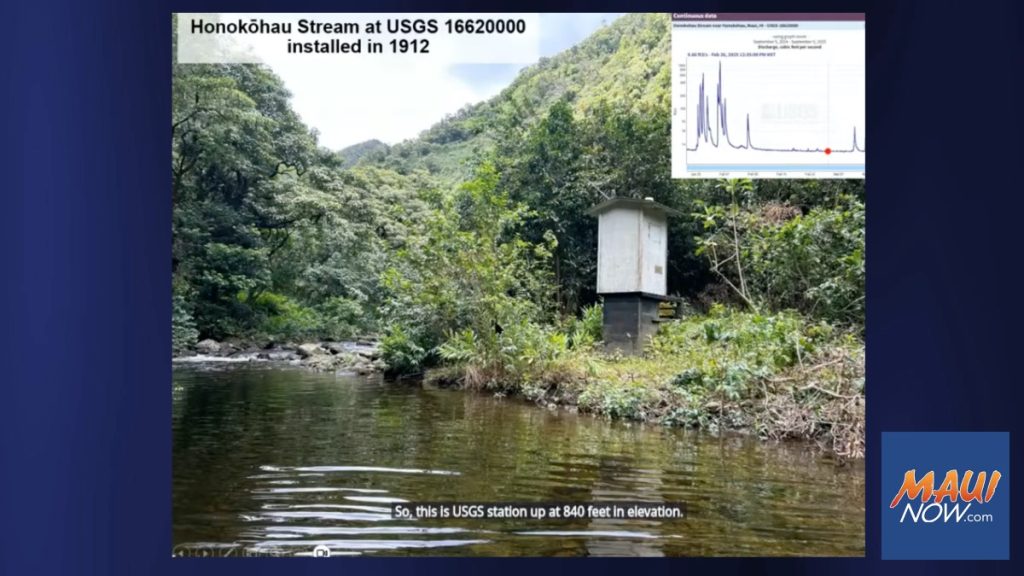
It may have been coincidental that Tuesday’s commission meeting came on the same day as the PGA’s announcement. The previously posted agenda for the meeting of the water commission — held in Honolulu and chaired by Dawn Chang — included a staff briefing on West Maui drought conditions and an update of the Honokōhau water system mauka of the Kapalua Resort.
Since the summer of 2022, the commission has been responsible for state oversight of the West Maui’s surface and groundwater resources after undergoing a process of “designation” of those water resources. The commission has been sharply criticized for being slow to process water use permit applications in the region.
TY Management Corp., the owner of the Kapalua Plantation Course, filed a lawsuit last month alleging the Maui Land & Pineapple Co. failed to properly maintain the Honokōhau Ditch system.
TY Properties attorney Grant Allison told water commission members Tuesday that the pro golf tournament has been an annual fixture and major visitor sporting event since 1999. It generates an estimated $50 million in economic activity annually for Maui, he said.
Allison said the golf courses were denied the use of groundwater for irrigation, despite what he called a history of using it during times of need. He called the tournament’s cancellation “preventable,” asserting that groundwater “should have been used.”
MLP Chief Executive Officer Race Randle said his company is prioritizing in-stream flow requirements during the drought. He noted that the company’s first priority is ensuring they maintain the 8.6 million gallons per day requirement in the stream.
ML&P announced recently that it might sell or lease its water assets so it can focus on other business, such as building housing. Maui County has indicated it might be interested in purchasing the private West Maui water system.
Honokōhau Valley residents, including taro farmers, testified before the water commission, expressing their frustration and arguing that the commission’s slow pace in regulating water use is putting their lives and livelihoods at risk. They said their concerns have been met with delays and a pattern of “non-action items,” despite years of coming to public hearings and meetings.
According to commission staff, the Honokōhau Valley has received only 46% of its normal rainfall over the last year, leading to record low stream flows. This has reignited a long-standing dispute over water, pitting residents, taro farms and cultural practitioners who rely on the stream against the users of the Honokōhau Ditch, which includes ML&P, Hawaii Water Service and the Maui County Department of Water Supply.
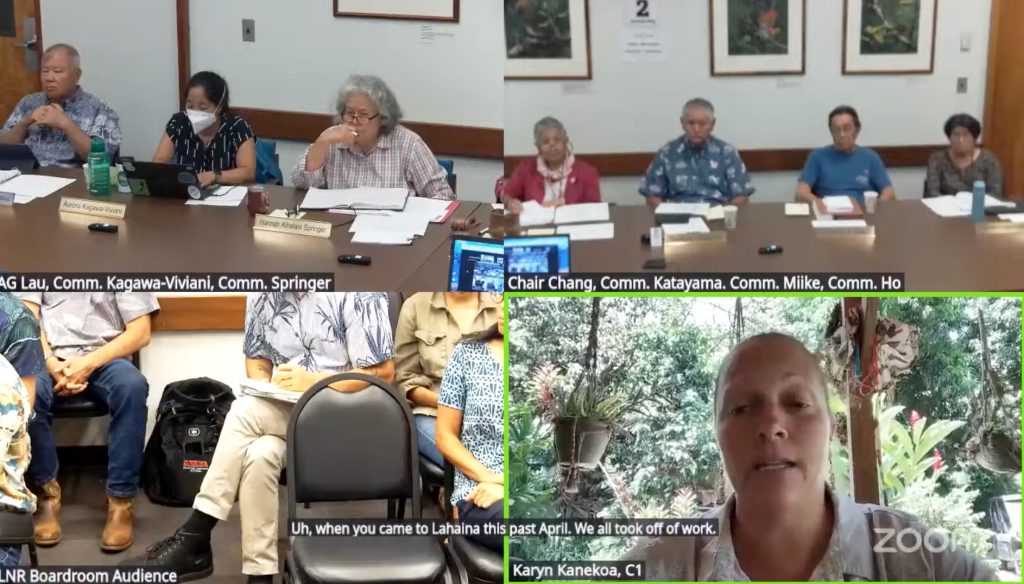
Karyn Kanekoa, a taro farmer, testified that the situation is “desperate,” saying the stream is the “lifeblood of the entire valley.” She detailed how the dwindling water supply has led to crop death, leaving families with “less to feed their families, their neighbors and community.” She also criticized the commission’s perceived lack of accountability for private water diverters, which she said has “led to conflicts in our own valley.”
She noted that farmers’ water-starved kalo crops have been left with “lots of rot this past summer due to extreme low flows and therefore warmer temperatures in the lo’i.”
“It seems like the inaction is a theme for the commission,” Kanekoa said. “We’ve tried everything, and we’ve been very patient. We are wondering at this point… maybe we’re the only suckers that are still playing by the rules here.”
She also expressed deep skepticism about claims that groundwater is being used as a primary alternative for non-essential purposes.
“The word on the street is that the governor and Water Commission are directing MLP to deliver drinking water to irrigate the golf course,” Kanekoa said.
Wili Wood, who restores taro patches, echoed the community’s concerns and recounted an incident where a sudden automatic release of a “small wave of water” from a “Taro Gate” dam washed nearly a dozen children about 100 yards downstream.
“Somebody could have drowned,” he said, but fortunately the children are “used to the river and were able to climb out.”
Both community members demanded that the commission enforce regulations and provide a clear timeline for a water shortage plan and permit applications.
Water users address drought challenges
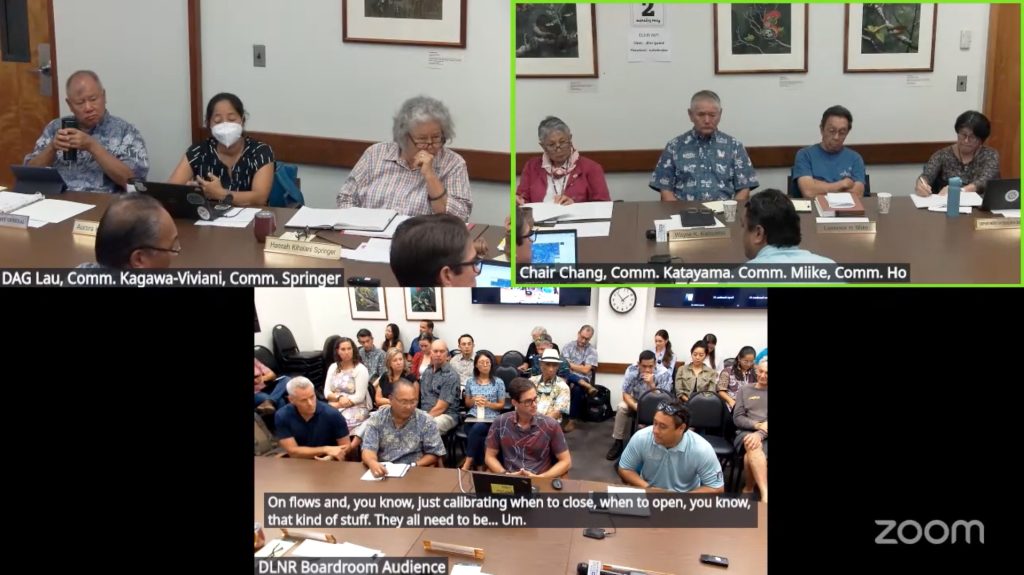
Representatives from major water users also testified, acknowledging the challenges of operating under drought conditions that have drastically reduced stream flows.
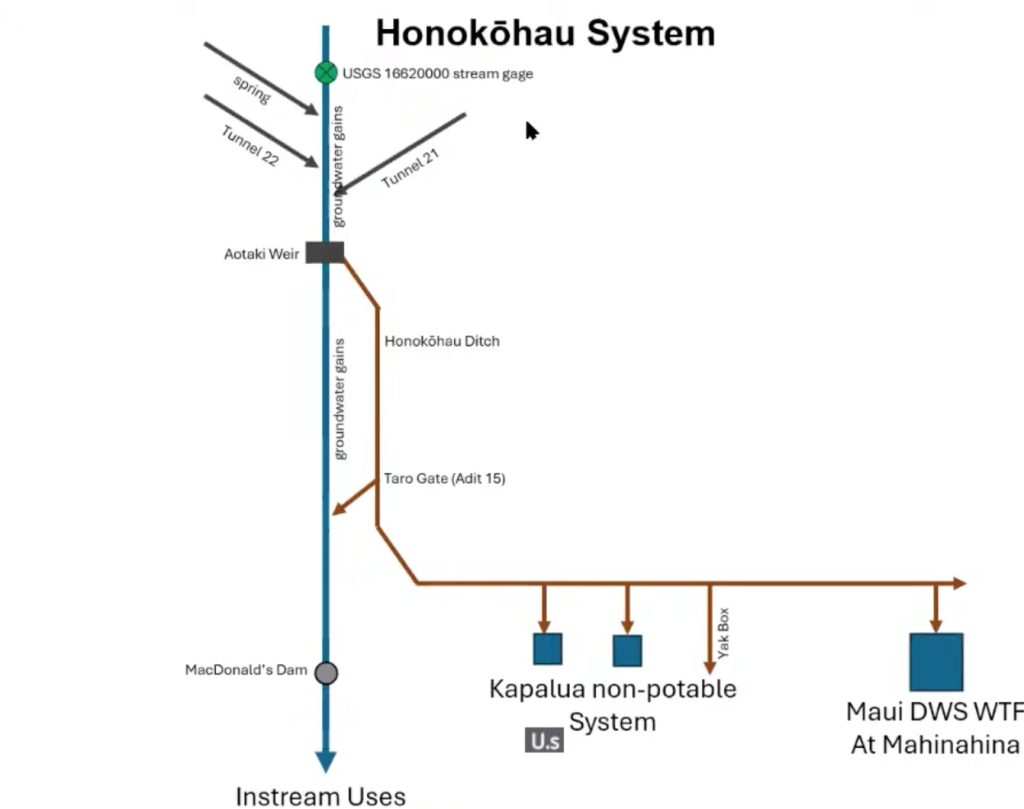
The Honokōhau Ditch system relies on water diverted from the Honokōhau Stream in West Maui. With stream flows setting new record minimums and the Honokōhau Valley receiving less than half of its normal rainfall, the companies have a limited supply of water to distribute.
Race Randall, the chief executive officer of ML&P, stated that the company’s first priority is to maintain the 8.6 million gallons a day required for in-stream flow standards, which has been “quite challenging” this year. The limited flow means that often there is no water to divert for other uses.
Prioritizing water and infrastructure limitations
The companies have established a clear prioritization for the available water:
- In-stream flow standards: Ensuring the minimum flow for the stream’s ecosystem.
- Domestic use: Delivering water to the county’s treatment facility to be converted into potable drinking water.
- Fire protection: Maintaining reservoir levels for fire hydrants and helicopter use.
Hawaii Water Service General Manager Geoff Fulks explained that the water providers have a “no-go zone” for reservoir levels, reserving a minimum amount for fire flows. This priority often means that there’s little to no water left for other needs, such as non-potable irrigation for agriculture and golf courses.
Communication and automation
The ditch system’s remote location presents a significant logistical challenge. According to Hawaii Water Service, managing the ditch requires a lot of communication with all users to confirm flows and ensure compliance with restrictions.
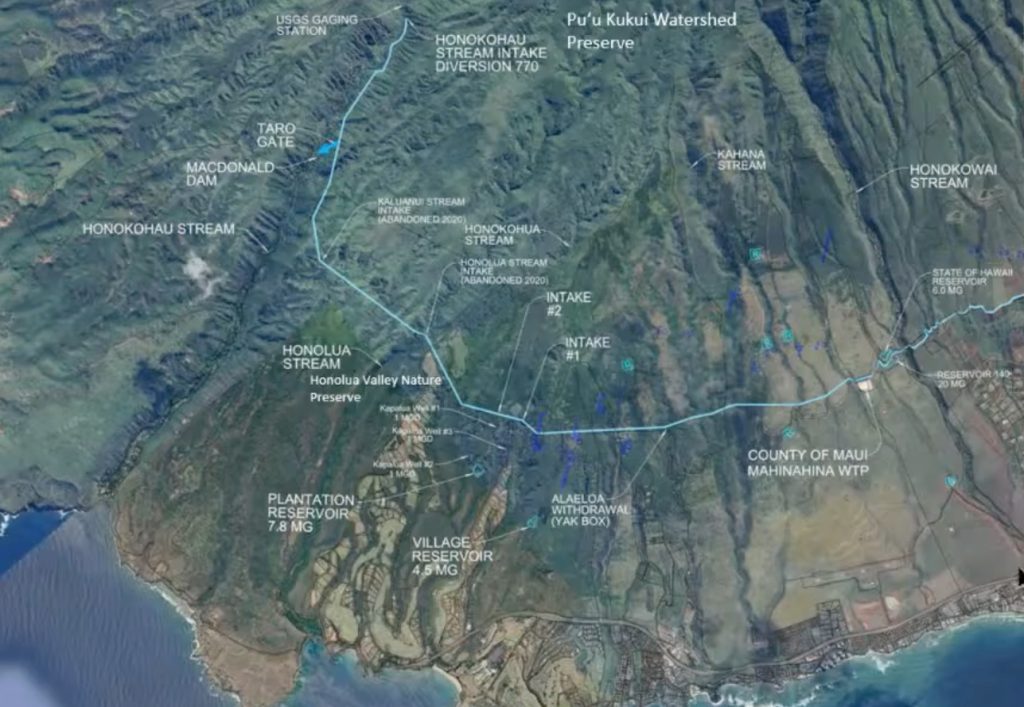
To mitigate the difficulty of getting to the remote gates and manually adjusting flows, the companies have invested in automation. This includes a remote-controlled gate at the “Taro Gate” and a new sensor system to monitor flows and water quality.
Water Department Deputy Director James “Kimo” Landgraf said the department supports commission recommendations to increase reservoir storage and expand the use of recycled water. He also noted that a new well, which is 95% complete, cannot be used without a new permit from the commission.
Calls for immediate action
Legal and community advocates, including Mahesh Cleveland of Earthjustice, echoed the community’s frustration, expressing concern that non-essential activities, such as golf courses, appeared to be prioritized over the public’s needs.
Kekai Kahahane, a Lahaina resident, criticized what he saw as a “lack of will by government entities” to address the water shortage. He described the frustration of rebuilding fire-ravaged Lahaina town while facing water restrictions.
“I almost wanted not to testify already because I knew I was gonna be hot,” he said.
He added that it seems the commission “tend(s) to side with with these big landowners.”
In response, Commissioner Chair Chang acknowledged the urgency and said the commission is not “going to hesitate to take appropriate action.”
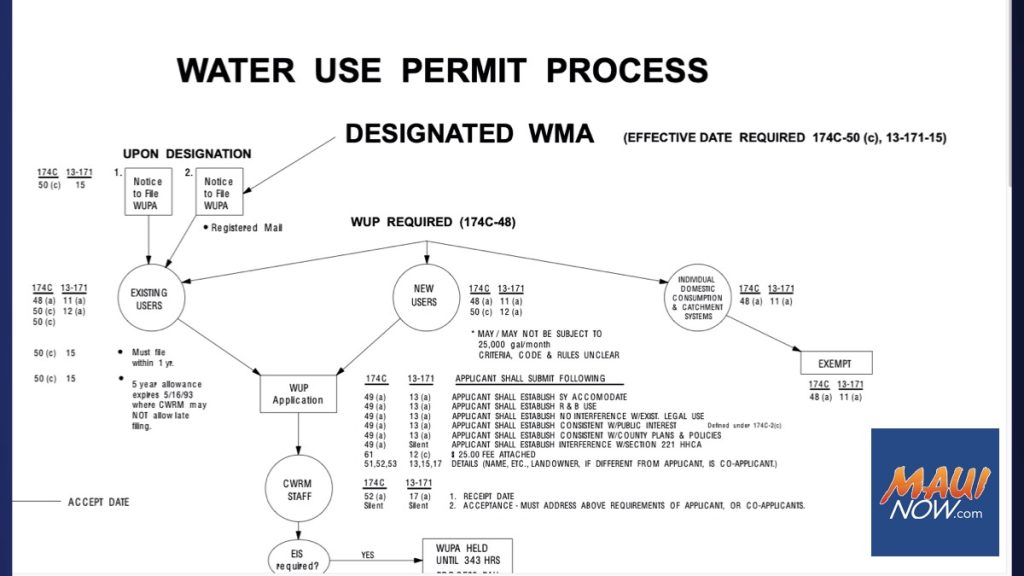
Deputy Director Ciara Kahahane said staff will work with “all deliberate speed” to make all submitted water use permit applications publicly available online to increase transparency. She also committed to presenting a tiered approach for permit review at the next meeting to accelerate the process.
The commission’s next meeting is Oct. 28.
Sponsored Content