
 Hawai'i Journalism Initiative
New Pā‘ia siren expected in late 2026, as recent emergencies show they’re no longer a ‘last resort’
The piercing wails of a warning siren on the outskirts of Skill Village rang through the Pā‘ia air on the afternoon of Sept. 23.
The staff of Doris Todd Christian Academy knew immediately what it was for. They had recently heard fire trucks and spotted smoke rising in the distance from a growing brush fire. As they hustled to evacuate the children, the siren hammered home the urgency.
“I think it’s good because they’re just trying to get people’s attention, and hopefully people will either tune in to the radio or online or call someone to get information,” said Carolyn Moore, head of the private academy.
The use of the sirens in the Pā‘ia fire and during the tsunami warning in July showed just how much the approach to sounding them has changed since the 2023 Lahaina wildfire.
Before the deadly West Maui blaze, the only time most Hawai‘i residents would hear the all-hazards outdoor warning sirens was on the first working day of the month when they were tested. Former Maui Emergency Management Agency Administrator Herman Andaya previously referred to them as “a last resort.”
But now, after the decision to not sound the sirens in Lahaina sparked widespread criticism and led to Andaya’s resignation, “it’s part of our protocol” to always take the sirens into consideration during an emergency, said Kono Davis, deputy administrator of the Maui Emergency Management Agency.
“The Lahaina fire was the turning point,” Davis told the Hawai‘i Journalism Initiative on Thursday.
The siren near Skill Village, which was the closest to the fire, was set off at 2:25 p.m. as emergency responders realized the fire was growing large, moving fast, and heading toward people and critical infrastructure, Davis said. But this was about an hour after the fire was first reported at 1:29 p.m. and about 15 minutes after evacuations were ordered at 2:09 p.m.
Davis said that “while this can appear as a delay, the sequence is deliberate and safety-focused.” All information needs to be confirmed with the incident commander on the ground and aligned across all alert platforms before the siren is activated.
“It’s important to understand that we cannot sound a siren without having messaging prepared to accompany it,” he said. “A siren alone, without supporting information, can create confusion.”
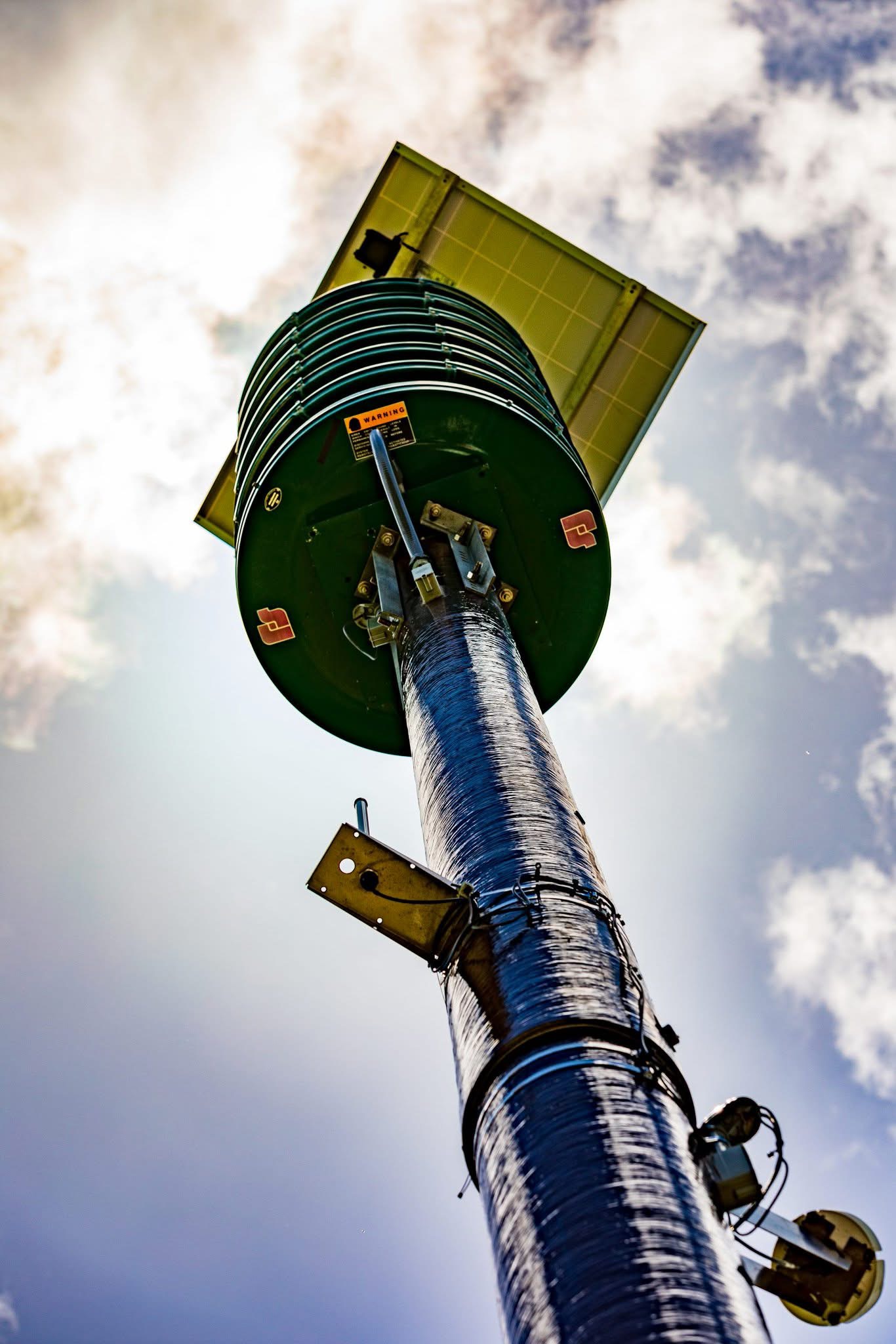
Along with the Skill Village siren used in the fire, there are three other sirens in the vicinity of Pā‘ia and Kū‘au: one by the Maui Country Club in nearby Sprecklesville, one down the road at the Pā‘ia Youth and Cultural Center, and one at Makana Park, according to the Hawai‘i Emergency Management Agency’s public siren dashboard. All four sirens are currently operational and none require maintenance.
But some residents are calling for another warning siren, and fast. A change.org petition urging the county to clear Holomua Road in the wake of the fire also asks to expedite the installation of another siren. About 200 people had signed the petition as of Tuesday, though it was unclear who launched the petition.
According to the Hawai‘i Emergency Management Agency, there used to be a siren known as KA108 at the Kū‘au Store. But the area “is now adequately covered by KA107, the Makana Park siren, which in only 896 feet from the original KA108 Kū‘au Store siren,” the state agency’s communications director, Kīele Amundson, told the Hawai‘i Journalism Initiative on Tuesday.
The KA108 Kū‘au Store siren will be replaced by the KA108 Holumua Road siren, which is scheduled to be installed in late 2026, said Amundson, who could not be immediately reached for more details on why the siren would take a year to install.
Maui County Council Member Nohe U‘u-Hodgins, who holds the Makawao-Ha‘ikū-Pā‘ia residency seat, said, “I would love another siren” for Pā‘ia and Kū‘au.
“I’ve been trying to push for a quicker timeline, but I try to understand HIEMA’s limitations,” she said.
Davis said that having another siren on Holomua Road would help by “increasing geographic coverage and redundancy.”
“While not the only tool in our toolkit, another siren on Holomua Road would add to overall community awareness and help ensure that residents in the immediate area receive timely notice during fast-moving events,” he said.
Since the Lahaina fire on Aug. 8, 2023, MEMA has activated the sirens in three incidents: the Kā‘anapali fire on Aug. 26, 2023 that burned fewer than 10 acres but came dangerously close to homes; the tsunami warning on July 29, 2025 that followed an 8.8-magnitude earthquake in Kamchatka, Russia; and last week’s fire in Pā‘ia.
The sirens aren’t activated for all emergencies. For example, they didn’t sound during the Crater Road blaze in July 2024, which burned nearly 600 acres of open land and triggered advisories to prepare for potential evacuation that were eventually lifted.
“We don’t want to always be sounding the siren for every single fire that there is on Maui,” Davis said. “So it depends on the impact of the incident, right? If it’s happening right away and it’s going to take us awhile to send out the normal messages to the platforms that we normally send it out, we will sound the siren.”
Despite being called the “all-hazards” outdoor warning sirens, Davis said they were often seen as being for tsunamis; now they’ve “evolved” into more of a general notification tool.
“Because we live on an island and there’s so much gaps in communication, whether it’s cell phone, power outages, or people not even having these devices to receive emergency information, we take a look at all ways to inform,” Davis said.
Lack of cell service and internet was a major reason why people said the sirens should have gone off during the Lahaina fire.
Cell service was spotty during the recent fire in Pā‘ia, said Moore, who received a couple of calls that were dropped and was unable to call out. The academy was able to send out text alerts to parents before Hawaiian Electric cut the power and the internet went down.
The fire started shortly before dismissal time and parent pickups, so only about 20 of the school’s 240 students were still on campus by the time they evacuated to Heritage Hall, about half a mile down Baldwin Avenue from the school.
Moore got plenty of alerts, including from the siren that’s located less than a quarter-mile away, the firefighters who came to use the school as a staging area for water drops, and the frequent updates she got on her phone and the Genasys app that Maui County started using in May to provide real-time updates on evacuation statuses by neighborhood.
So many notifications streamed in that “sometimes it gets annoying … but for the most part, I think it’s great,” Moore said, adding she hoped more people would sign up for the alerts.
In addition to the sirens, Maui County said it sent out wireless emergency alerts, MEMA alerts and updates on the Genasys app. Announcements also went out through local radio stations and Davis did some TV interviews.
Police also went door to door urging evacuations in areas of Pā‘ia. Maui County spokesperson Laksmi Abraham said about 30% of the people told to evacuate did not want to leave. Maui Police Department spokesperson Lt. Gregg Okamoto estimated that this totaled at least 10 families. Okamoto and Abraham said they did not know the reasons those people opted to stay.
“Of course we’re concerned, but we can’t drag them out of their house,” Okamoto said.
Davis agreed that first responders can only do so much, and pointed out that the top priority at the time was evacuating and protecting Pā‘ia Elementary School, which was most at risk as the fire advanced and jumped Baldwin Avenue.
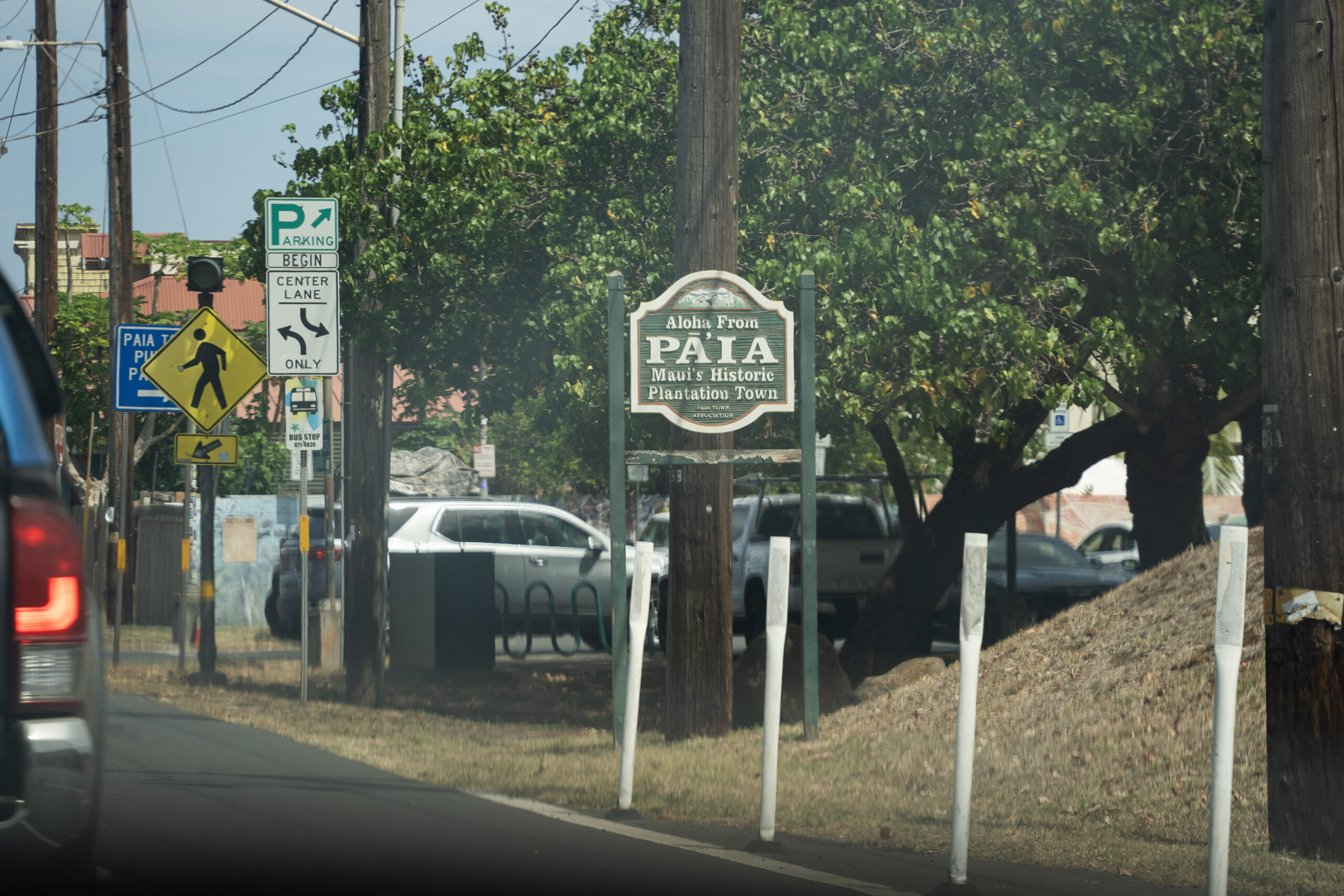
Those who did evacuate got caught in a traffic snarl.
Melanie Adams, director of Aloha Kai Academy, a private preschool that leases space at Holy Rosary Church, said her staff took 11 preschoolers and eight toddlers down to the Pā‘ia Community Center where parents could pick them up. Traffic was so backed up going through Pā‘ia town that some of the parents beat the staff to the community center, said Adams, who was off island at the time and coordinating with her staff remotely.
Adams said the fire was triggering for her staff, including one teacher who lives in Kula and was in tears thinking of the 2023 fire as last week’s blaze crept closer to town.
“But the main thing is that all of the teachers stayed very calm,” Adams said. “They … followed all of the directions that they needed to.”
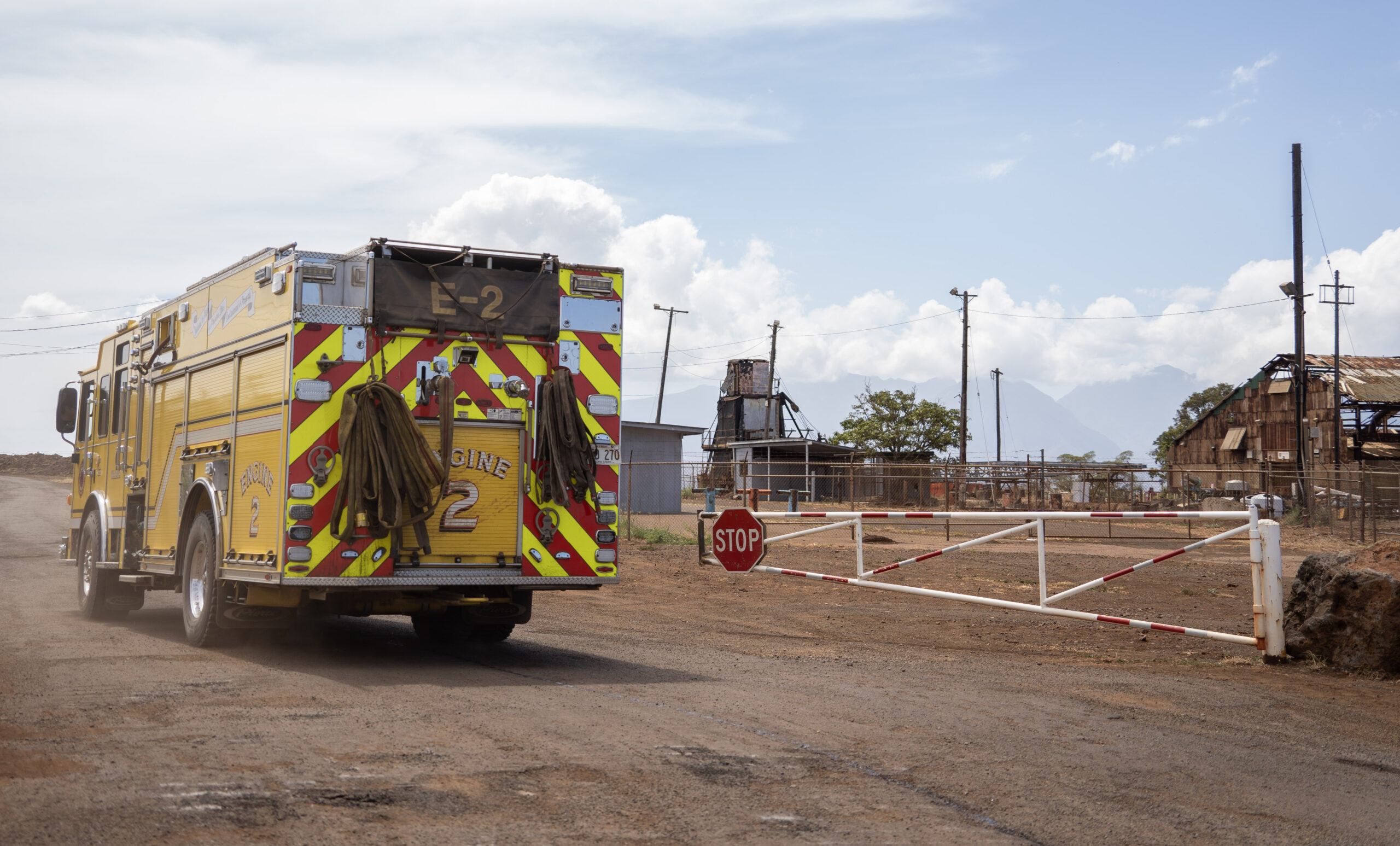
Moore got stuck in traffic driving down Baldwin Avenue, but she said that was eased when the owners of the old Pā‘ia Mill opened the gate to the cane haul road passing through their property.
Wayne Thibaudeau, co-managing partner of the Pā‘ia Village Company that aims to revitalize the mill property, said he was in a meeting on-site when one of the staff pointed out a huge plume of smoke up the hill.
As people began evacuating along Baldwin Avenue, Thibaudeau estimated that there was a line of cars backed up about three-quarters of a mile from town. He said the mill has multiple gates along the road, including one on Pā‘ia Mill Road that provides direct access to Haleakalā Highway.
“We opened the gate and people were asking if they could go through,” Thibaudeau said. “We told the police officers that they’re welcome to send people through this gate.”
Thibaudeau said over the years, the mill owners have worked to harden the site against fire by clearing brush on the vacant lot. In the long term, they plan to transform the old mill into a housing and commercial center, and Thibaudeau said he hopes it can be a future gathering place in emergencies and also offer the 250,000-gallon water tanks on-site for fire suppression. They’re currently used for irrigation.
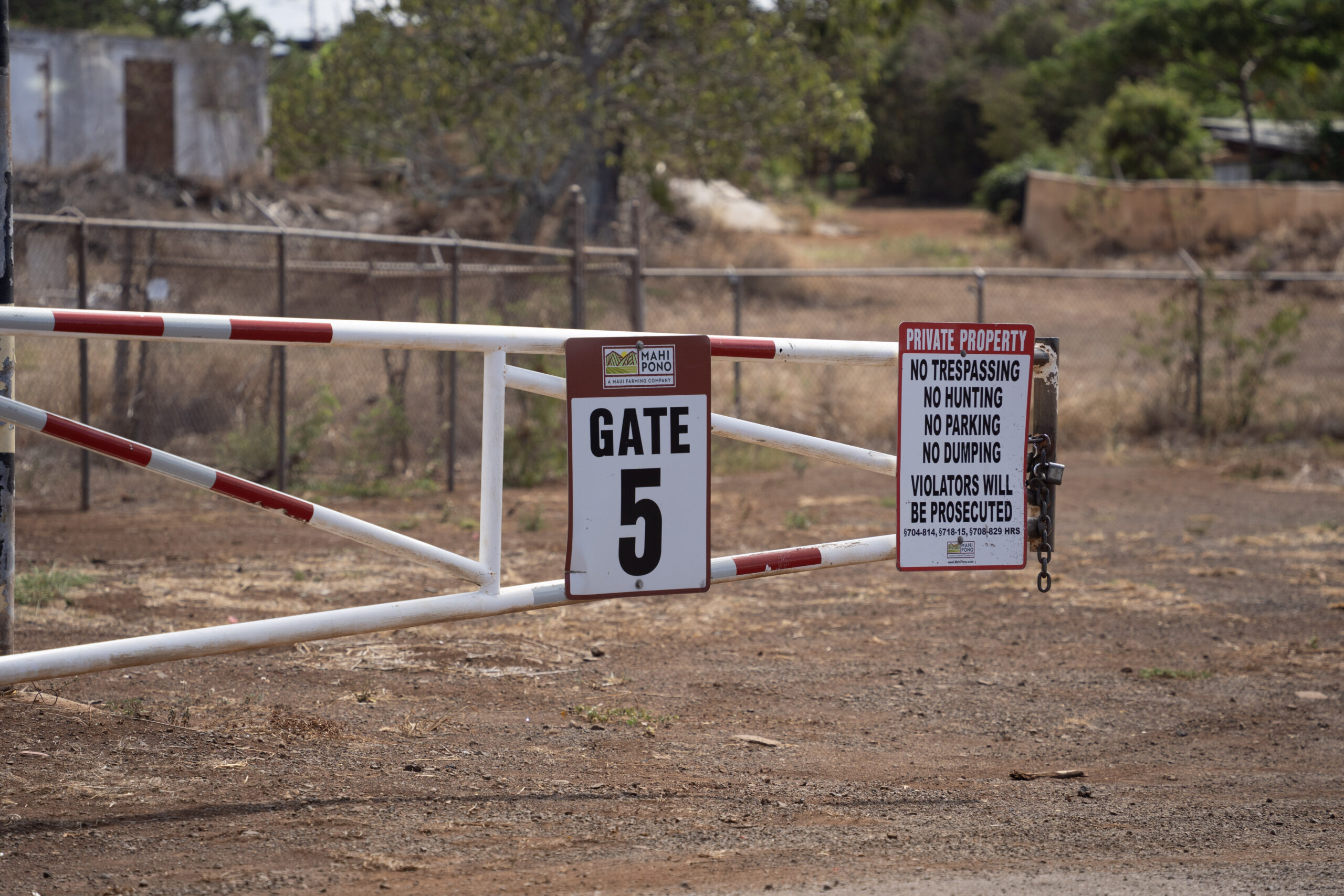
During the Lahaina fire, fleeing residents struggled to open locked gates and in at least one instance used hand tools and a police vehicle to wrench open a gate.
Both the mill road and Mahi Pono lands were used as evacuation routes, Davis said. He said that MEMA is working with private landowners to identify roads and create a map that could be used by the public in emergencies.
“These roads have no street names. They have no directions,” Davis said.
For most people, it’s likely the first time they have been on those roads.
“And so there’s an effort moving forward to encompass every possible evacuation route that is available to us,” Davis said.
Mahi Pono, which cut firebreaks and used water trucks to help fight the latest fire, told the Hawai‘i Journalism Initiative that the company “has always allowed the County’s first responders to use Mahi Pono’s farm roads, at a moment’s notice, in the event of emergencies.”
“Each emergency situation presents unique challenges, and we defer to the County’s expertise in determining which routes are the most appropriate for evacuation and emergency response,” said Grant Nakama, senior vice president of operations for Mahi Pono.
Nakama said the company regularly maintains in-field firebreaks and that the more than 20,000 acres of land that it actively farms also help mitigate fire risk on Maui.
Property tax records show that Alexander & Baldwin owns the land around Holomua Road and Baldwin Avenue where the fire burned, and Mahi Pono-affiliated companies own the rest of the land around Holomua Road. Nakama said Mahi Pono actively uses those fields as grazing lands for cattle, which helps control grass height. Any other agricultural uses, including planting cover crops, “would require an adequate and reliable source of water,” he said.
U‘u-Hodgins, who organized town halls with emergency officials in the wake of the Lahaina fire, said the private landowners she’s worked with have been very cooperative in emergency preparation talks.
She said some improvements she’d like to see after the Pā‘ia fire include more awareness of the old cane haul road and other evacuation routes, as well as better notifications from Pā‘ia Elementary, which she said didn’t notify her and other parents until the evening about the fire.
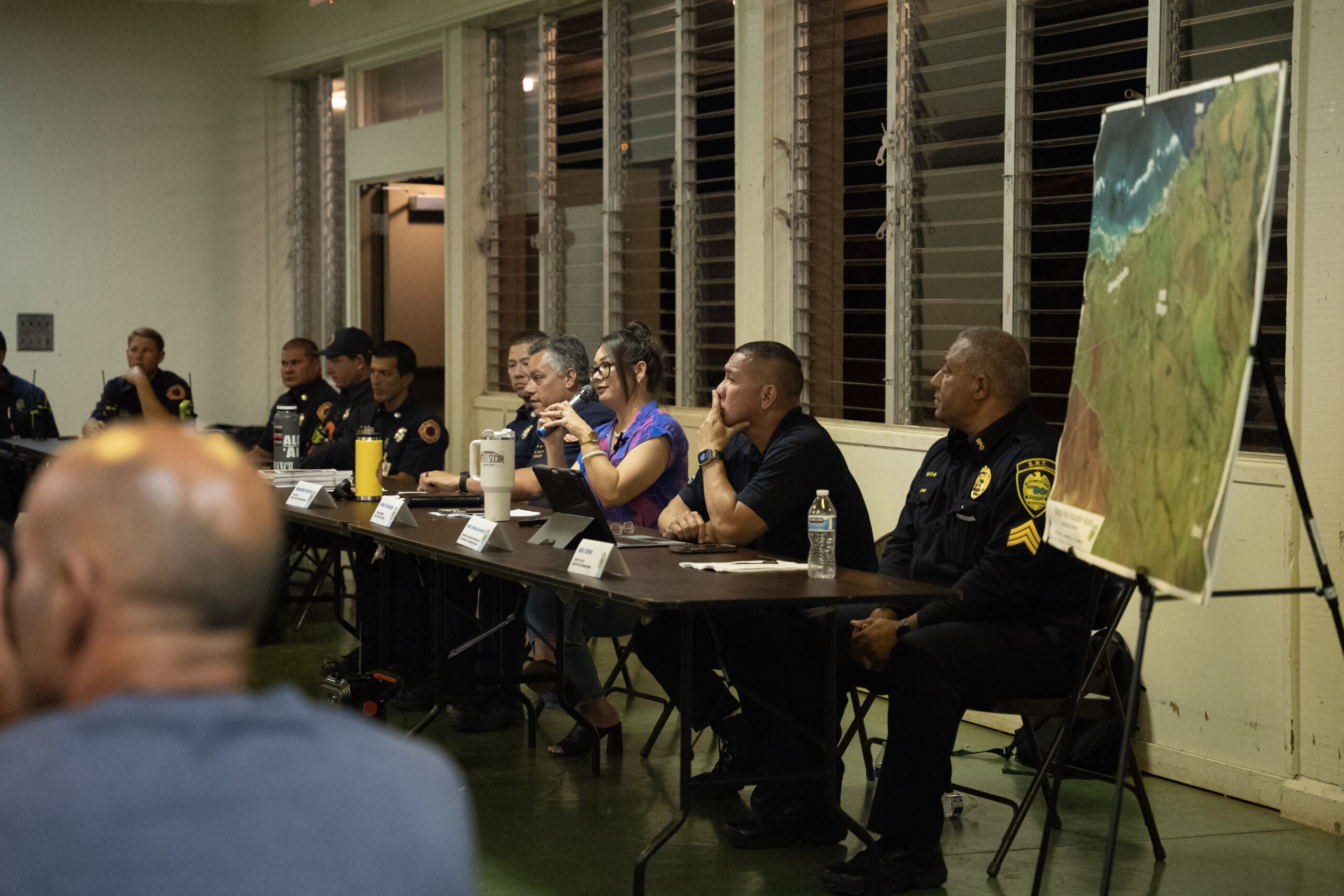
The state Department of Education said in a statement to HJI on Tuesday evening that community notifications about brush fires come from MEMA, not individual schools. When schools do have to evacuate, the focus is on getting all students and staff to safety, and parents and guardians may not get notifications from the campus that an evacuation is underway.
“If the emergency continues and students are not able to return to campus, parents or guardians are contacted from a safe reunification site to arrange pick-ups,” the department said. “This basic evacuation framework applies to all schools statewide.”
The school was not damaged but remains closed this week as soot is cleared from the classrooms.
U‘u-Hodgins said that as emergencies hit closer to home, changes have to be made.
“I think when we look at these kinds of situations and emergencies from our little tiny protected island of Maui, you think, oh, that’s just what happens over there,” U‘u-Hodgins said. “Lahaina was a very, very stark and terrible reminder that it could and it did happen to us. And as I said, we never have to learn that lesson twice. And I think it’d be disrespectful to not make changes after that fire.”