DWS offers additional information on Upcountry Maui Stage 3 water shortage

With a Stage 3 water shortage in effect for Upcountry areas, the County of Maui Department of Water Supply (DWS) is providing the following information:
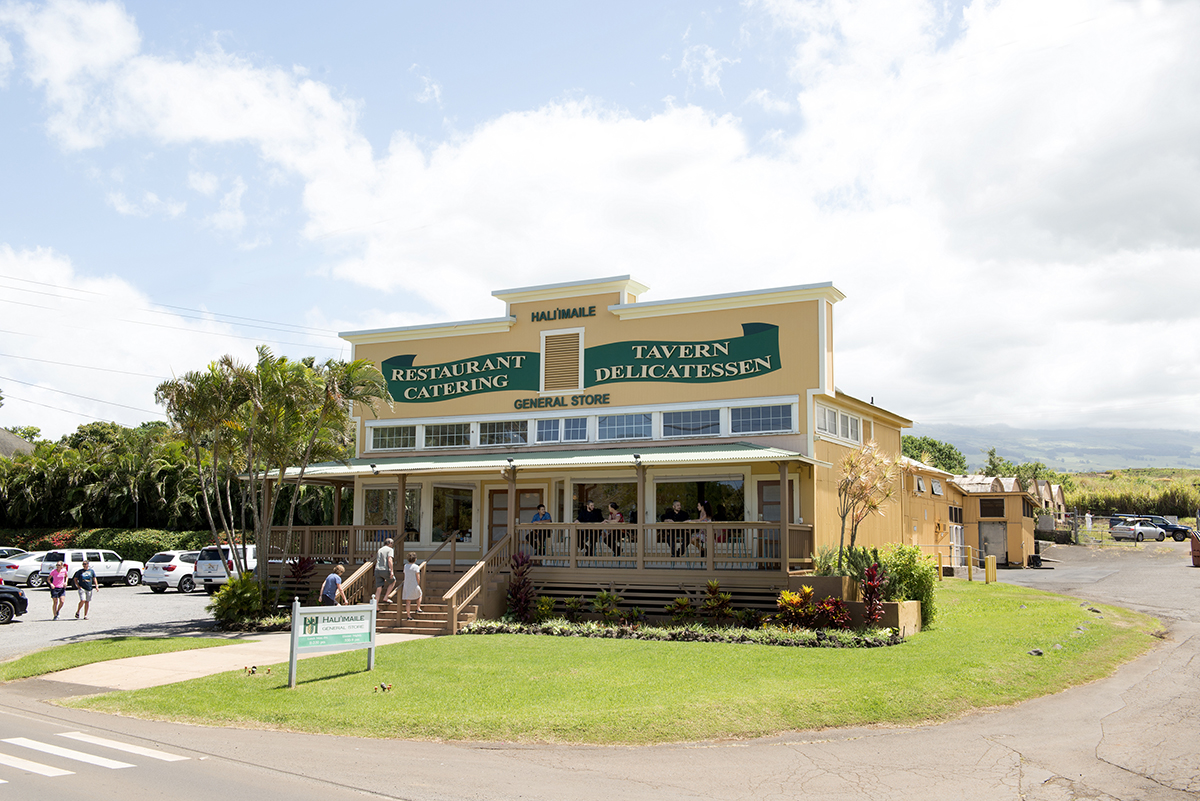
1. What areas are affected? The Upcountry service area includes Makawao, Upper and Lower Kula, Haʻikū, Hāliʻimaile, Pukalani, Kokomo, Kaupakalua, Ulumalu, Keōkea, ʻUlupalakua, and Kanaio.
2. What are the mandatory water restrictions?
- All nonessential commercial and industrial water use must stop.
- Irrigation of turf grass is prohibited.
- Plants, trees and gardens may be watered once a week using drip irrigation or hand-watering only.
- Leaks or faulty sprinklers must be repaired within two days of notice.
- Potable water use at temporary construction meters is prohibited.
- Personal vehicle washing is not allowed.
- Irrigation of parks, school grounds and recreation fields is prohibited.
3. Do restrictions apply to agriculture users? Yes. Agricultural customers must follow the same water restrictions, as the 180-day exemption period has ended.
4. Hasn’t recent rainfall affected the water shortage? No. Recent rainfall hasn’t significantly affected flows in streams and levels in reservoirs supplying the Upcountry service area.
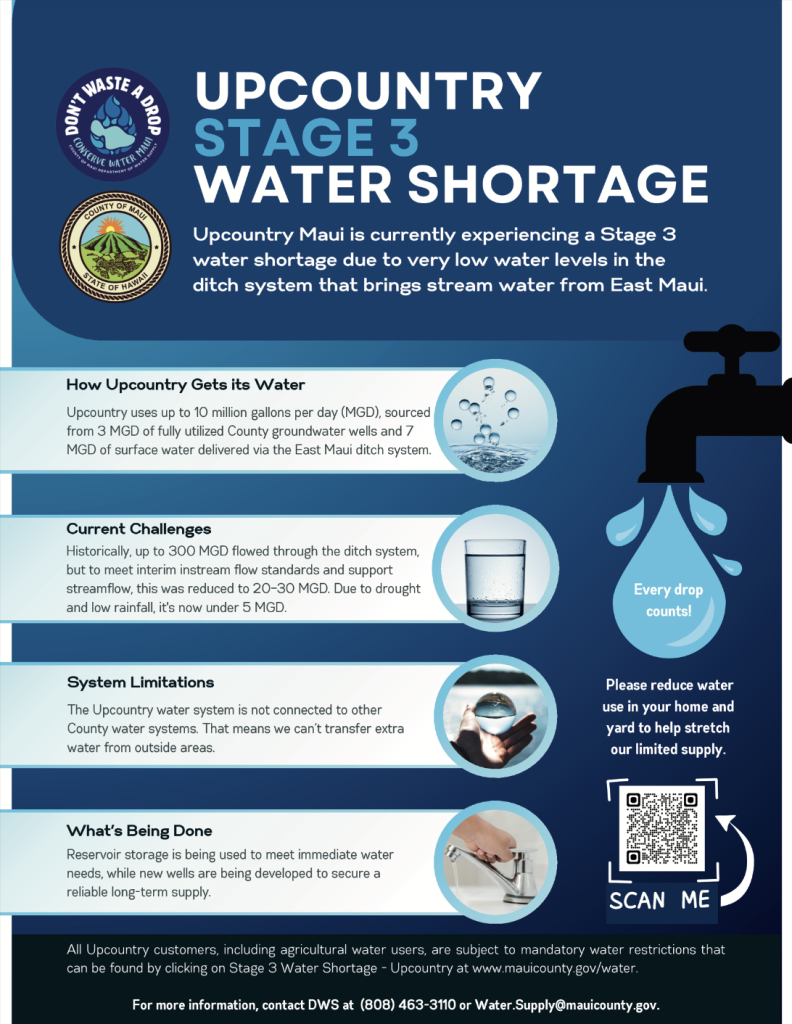
5. Where does Upcountry water come from? Water is sourced from East Maui streams (via ditch systems) and County-operated groundwater wells.
6. Why was Stage 3 declared? A prolonged drought has drastically reduced stream flow in East Maui. The ditches that carry surface water (not owned or operated by the County) are delivering far less water than needed. County wells are already operating at full capacity.
7. How much water does Upcountry use? Upcountry typically uses up to 10 million gallons per day (MGD):
- 3 MGD from County wells
- 7 MGD from East Maui surface water
8. Why not use other sources? The Upcountry water system is isolated and cannot be connected to other County systems.
9. A Stage 3 water shortage has not been issued before. Where did all the water go? Historically, up to 300 million gallons per day (MGD) flowed through the ditch system. The volume was adjusted to leave more water in the streams and meet the interim instream flow standards. The volume in the ditch is usually between 20-30 MGD. The lack of significant rainfall and prolonged drought has reduced that to less than 5 MGD.
10. Will my water rates increase? No. DWS is not raising rates at this time due to the water shortage.
11. When will this end? The County is currently relying on reservoir storage. If water use exceeds available supply, reservoirs are depleted. Restrictions may be eased when stream flows increase and reservoir levels are restored.
12. Does DWS provide anything to help the public conserve water? The DWS provides the following free items to the public:
- Faucet aerators for the kitchen and bathroom
- Leak detection dye tablets (to check toilets for leaks)
- Moisture meters
- Shower heads
- Hose nozzles
- Toilet tank bag
- Hose timers
The free water conservation devices are available from 8 a.m. to 4 p.m. Mondays through Fridays at Suite 102, 2200 Main St., Wailuku.
13. What can residents do to reduce household water usage? Residents can take several simple and effective steps to conserve water at home, such as:
- Fixing leaks promptly to prevent water waste
- Taking shorter showers instead of baths
- Plugging the sink when washing dishes by hand
- Running only full loads of laundry or adjusting the water level for smaller loads
- Using drought-tolerant plants and xeriscaping to reduce outdoor water use
For more water conservation tips and to learn about our water shortage and conservation plan, visit https://mauicounty.gov/waterconservation.
For more information, visit https://www.mauicounty.gov/water.
Sponsored Content