Hawaiʻi Agribusiness Development Corporation holds first-ever board meeting on Maui
The Hawaiʻi Agribusiness Development Corporation, Board of Directors held its first-ever meeting on the island of Maui this month, marking a significant milestone in the agency’s effort to expand agricultural opportunities statewide and directly engage with local farmers, educators and community leaders.
At the Oct. 16 meeting at the University of Hawaiʻi Maui College, the ADC Board took several key actions: it approved a new license agreement with the Hawai‘i State Department of Education authorizing construction and operation of the Wahiawā central kitchen facility on ADC land, advancing the state’s farm-to-school initiative, and created a Permitted Interaction Group to examine Maui’s agricultural irrigation and water infrastructure systems.
The meeting also served as part of ADC’s neighbor-island outreach to gather public input as the agency continues to finalize its Hawaiʻi Agribusiness Plan, the statewide agricultural strategic plan required under Hawai‘i Revised Statutes (HRS) §163D-5.
Under HRS §163D-5, the ADC is directed to prepare and publicly post a Hawaiʻi Agribusiness Plan that defines and establishes the goals, objectives, policies and priority guidelines for the state’s agribusiness development strategy. The statute requires, among other elements:
- An inventory of agricultural lands within ADC’s jurisdiction that have or will have suitable and adequate water resources to meet present and future production needs;
- An inventory of agricultural infrastructure such as irrigation and drainage systems, processing facilities and other key assets controlled by the Corporation; and
- Strategies for collaboration among federal, state, county and community stakeholders to advance and enhance Hawai‘i’s agricultural industries.
The plan must also include specific one-year, five-year and ten-year objectives with measurable outcomes that prioritize local food production, along with annual performance goals, timelines, and budget expectations. By law, ADC must update the plan every five years and incorporate it into its annual report to the Governor and the Legislature.
ADC Chair Jayson Watts explained that the Corporation’s strategic statewide plan is being informed through a series of board meetings held across the state. These meetings provide opportunities for farmers, industry leaders and community stakeholders to share insight and help shape ADC’s priorities and investments to strengthen Hawai‘i’s agricultural future.
“Alignment is essential to progress,” said Watts. “When the state, counties and private sector move in the same direction, we can unlock the full potential of Hawai‘i’s agricultural economy. ADC’s ability to develop land, modernize infrastructure and cultivate strategic partnerships positions it as a powerful catalyst for sustainable growth, food security and economic resilience.”
Listening to Maui’s Agricultural Needs
The meeting brought together county, state, and private agricultural leaders to discuss Maui’s specific challenges and opportunities.
Rogerene “Kali” Arce, director of the Maui County Department of Agriculture, shared that her department has issued more than 90 agriculture-related grants totaling more than $12 million since its formation in 2022, while emphasizing the need for expanded infrastructure.
“The loss of a slaughterhouse on Maui was a major setback for our ranchers,” Arce said. “We need a replacement facility, more cold storage and aggregation centers, and a biosecurity hub. These investments are essential if we’re serious about advancing local food production and reducing our dependence on imports.”
Maui County Farm Bureau Executive Director Warren Watanabe urged ADC to continue engaging directly with farmers.
“Each island is different — one model does not fit all,” Watanabe said. “Up to the 1990s, Maui had a strong agricultural base with multigenerational farms. We need to understand why some of those farms are closing and focus on water and infrastructure if we want them to thrive again.”
Hawai‘i Farm Bureau President Darren Strand commended ADC for supporting partnerships with HIDOE and stressed how institutional markets can help farmers grow.
“The HIDOE serves more than 100,000 meals every day in schools across the state, making it one of Hawai‘i’s largest food purchasers,” Strand said. “If even a portion of that food is locally sourced, it can transform Hawai‘i’s agricultural economy. But we need to make sure farmers have the capacity, training and infrastructure to meet that demand. ADC’s focus on irrigation, cold storage and processing facilities will help bridge that gap.”
Regional Kitchen Initiative
Hawai‘i Department of Education Superintendent Keith Hayashi presented an update on the Central O‘ahu Regional Kitchen, to be constructed on ADC-owned land in Whitmore Village. The facility will serve as a statewide model for regional food hubs that connect local farms to school cafeterias.
“Every day, we serve over 100,000 meals in public schools,” said Hayashi. “We want those meals to be healthier and made with local ingredients. The Wahiawā regional kitchen is our first step toward building a food system that supports local farmers, feeds our keiki and strengthens Hawai‘i’s economy.”
Following the presentation, the ADC Board voted to approve a new license agreement with HIDOE authorizing construction and operation of the Wahiawā central kitchen facility on ADC land — a key milestone in the state’s farm-to-school initiative.
Board Establishes Group to Examine Maui’s Water Infrastructure
In its most significant action of the meeting, ADC Board Chair Jayson Watts put before the Board a motion to establish a Permitted Interaction Group (PIG) to conduct an assessment and explore Maui’s agricultural irrigation and water infrastructure systems. The motion was adopted unanimously.
The group will evaluate existing systems, identify bottlenecks and recommend investment priorities to ensure reliable, sustainable water delivery for farmers.
The PIG includes ADC Board Members Jesse Cook and Dean Okimoto, ADC Board Chair Jayson Watts, Department of Agriculture & Biosecurity Chairperson Sharon Hurd and DBEDT Deputy Director Dane Wicker, both ex officio members of the ADC Board.
As part of this effort, ADC reaffirmed its statutory obligation under HRS §163D-5(a) to include in the Hawai‘i Agribusiness Plan an inventory of agricultural lands with adequate water resources and to develop strategies for coordinated water infrastructure planning that support long-term agricultural productivity statewide.
Expert Perspective on Water and Drought
Jeremy Kimura, director of freshwater at the Ulupono Initiative and a longtime hydrologist with the Commission on Water Resource Management (CWRM), provided an in-depth briefing on Maui’s drought conditions and the critical need to modernize aging water systems.
Kimura noted that many of Maui’s irrigation systems were built decades ago to serve plantation operations and now face chronic maintenance issues, limited staffing and climate-driven pressures on water availability. He emphasized the importance of “shared responsibility” among state, county and private stakeholders to update and manage these systems in a coordinated way.
“Many of Maui’s water systems were designed for a different era,” Kimura said. “They now face high maintenance costs, limited staffing and the effects of climate change. Modernizing these systems and improving water reuse are essential to Maui’s agricultural future. It takes collaboration and investment to ensure farmers can depend on reliable irrigation in every season.”
Kimura added that Ulupono wants to work with CWRM, ADC, the Department of Agriculture & Biosecurity and federal agencies to pursue funding for reservoir rehabilitation, recycled-water systems, drought resilience programs and workforce development to sustain Hawai‘i’s agricultural water management capacity.
State-County Collaboration
ADC board member, longtime farmer and Nalo Farms owner Dean Okimoto emphasized the importance of statewide coordination and practical execution.
“Every island has its own challenges, but the principles of success are the same — support local farmers, invest in infrastructure and make it easier for people to farm,” Okimoto said. “ADC’s work must stay focused on outcomes that make a difference at the field level: reliable water, processing capacity and market access. As both a farmer and board member, I want to see the state and counties align resources so our farmers can thrive, not just survive.”
Next Steps
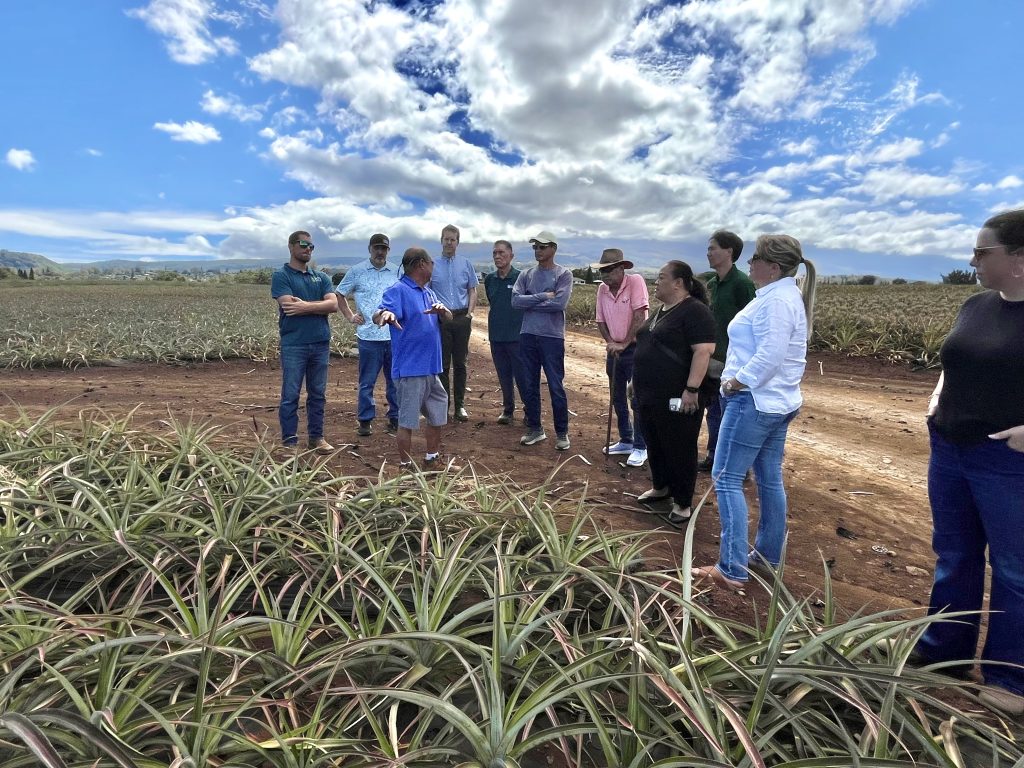
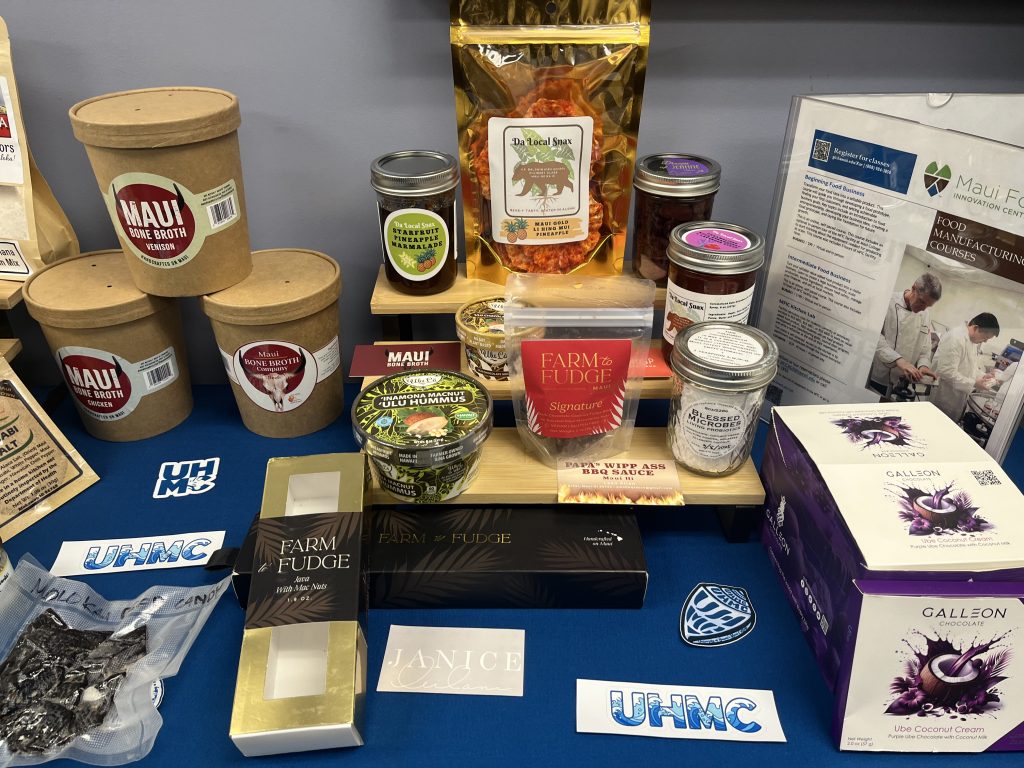
While on Maui, the ADC Board also toured the Maui Gold Pineapple Farm and the University of Hawai‘i Maui College Food Innovation Center, the state’s first college-based food business incubator. Both visits underscored the importance of scaling up local food manufacturing and processing capacity.
The ADC Board will continue its neighbor-island outreach with its next meeting on Hawai‘i Island in November 2025 to gather public input on regional agriculture and irrigation priorities. Meeting details and livestream links are posted at dbedt.hawaii.gov/adc/meetings.
Sponsored Content