

Shoreline coconut trees at Baldwin Beach Park removed due to decline from coastal erosion, salt water
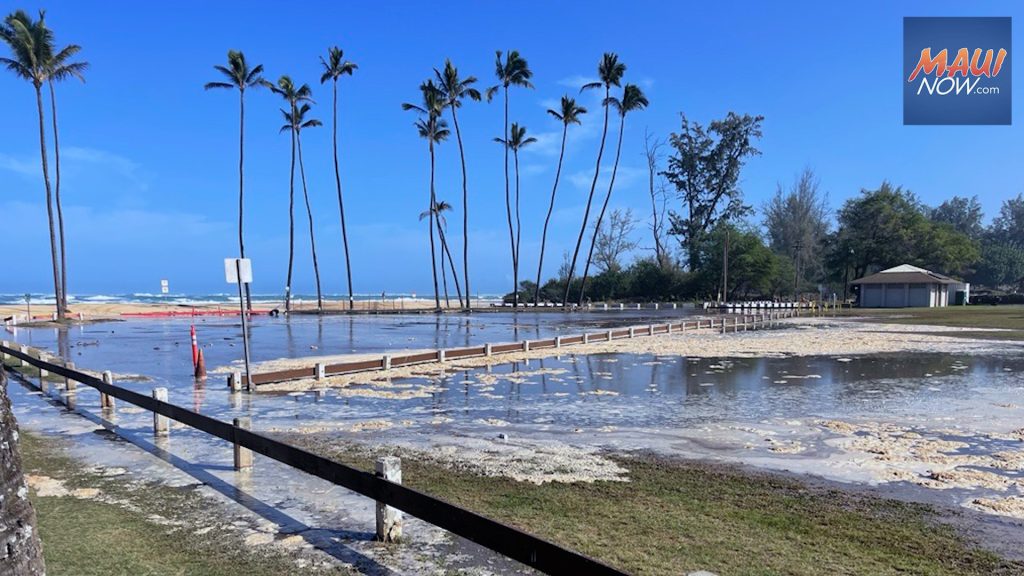
Eighteen of approximately 70 coconut trees at Baldwin Beach Park in Pāʻia were removed this past week after coastal erosion and saltwater intrusion caused the gradual decline and death of the trees closest to the shoreline, according to the County of Maui arborist and the Department of Parks and Recreation.
Tree expert and County arborist Timothy Griffith said coconut trees, unlike mangrove trees, are saltwater tolerant, but not saltwater resistant or impervious. Over years, the shoreline coconut trees were repeatedly submerged during high tides and flooding from coastal erosion, similar to the Baldwin Beach pavilion that was damaged and later removed.
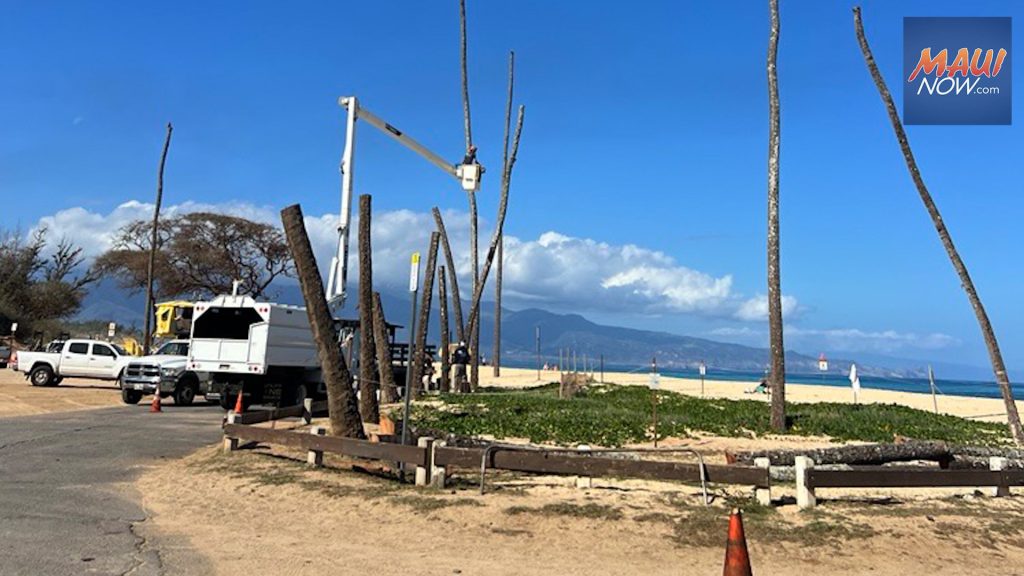
Griffith added that 50 coconut trees located farther inland remain protected from shoreline impacts.
“Our County has cultivated, maintained and pruned more than 30,000 trees countywide, including 1,600 coconut and palm trees, over many decades,” Griffith said. “The issue at Baldwin Beach Park is isolated to the shoreline area due to the negative impacts of climate change and salinization. If these trees had died due to over-trimming, we would be seeing similar losses across the island.”
Griffith noted that County trees are pruned twice a year in accordance with industry standards.
DPR Director Patrick McCall said his department is committed to adding trees at Baldwin Beach Park in the future.
“The Department of Parks and Recreation continues dune restoration work at the site to slow erosion and protect park space,” McCall said. “Looking ahead, the Baldwin Beach Park Master Plan places the pavilion and new trees significantly closer to Hāna Highway.”
Sea-level rise has contributed to shoreline recession, about a quarter mile over the last 100 years, according to the DPR Vulnerability and Adaptation Study in 2022.
Sponsored Content