

Case votes for defense, labor and transportation measures, but against the Homeland Security measure
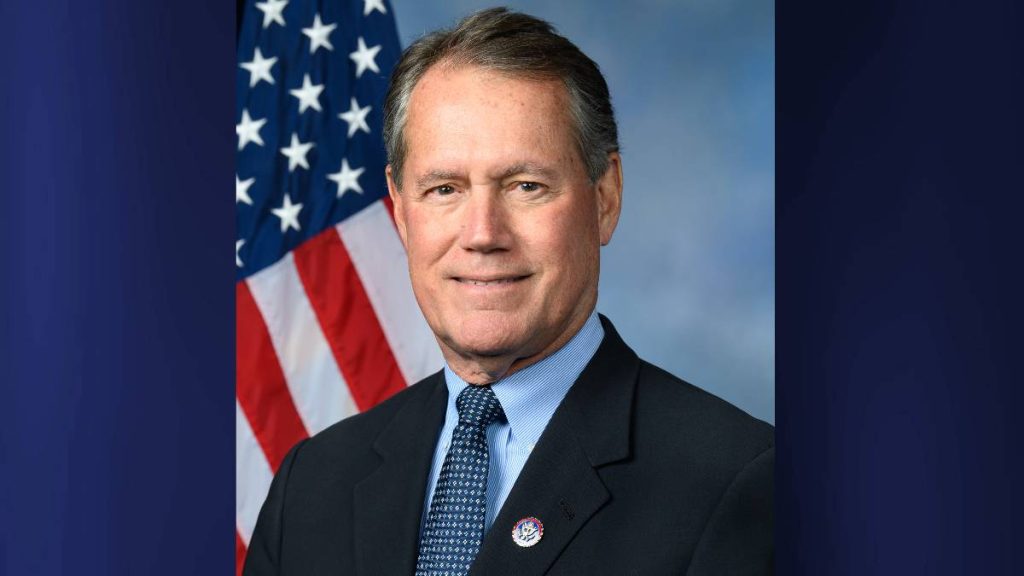
US Rep. Ed Case (HI-01), a member of the key House Committee on Appropriations, responsible for all federal discretionary funding, today supported House passage of three of the four final annual appropriations bills for the current Fiscal Year (FY) 2026 (commencing Oct. 1, 2026) but opposed the fourth.
The first measure which Case voted for included three of 12 annual appropriations measures:
- The first bill includes $839 billion to fund the Department of Defense and the US intelligence community, including the Central Intelligence Agency and the National Security Agency. Case’s Subcommittee on Defense is responsible for developing the bill.
- The measure also includes $224 billion for federal labor, health, human services and education programs – $50 billion more than President Trump’s budget request.
- The third funding bill appropriates $103 billion for the Department of Transportation and the Department of Housing and Urban Development, a historic $7.2 billion increase for HUD despite the administration’s call to cut the department in half.
The second measure against which Case voted included $64 billion – a decrease of $800 million below current funding levels – for the Department of Homeland Security.
“The Homeland Security measure includes many provisions for which I advocated throughout our appropriations process,” said Case, a member of the Appropriations Committee’s Subcommittee on Homeland Security with jurisdiction over the bill. “However, I voted against the measure largely because it did not include any effective oversight over the actions of Immigration and Customs Enforcement despite widespread concerns.”
The DHS funding measure also passed the House, meaning that the House has now passed all 12 of Case’s Appropriations Committee’s annual funding bills. If as expected they pass the Senate next week and are signed into law by the President, another federal government shutdown will be averted.
Through his assignment on the Appropriations Committee, Case also secured the seven Member-designated Community Project Funding projects totaling $7.5 million across the bills that specifically focused on local needs in Hawai‘i.
Details on each of the four bills are as follows:
Defense
The FY 2026 Defense bill proposes to spend $838.7 billion, an increase of less than one percent over the FY 2025 enacted level, for federal agencies and programs in the DoD, including the military services and intelligence community, including the Central Intelligence Agency and the National Security Agency.
“The Department of Defense measure not only funds programs critical to our national security interests in the Indo-Pacific but also continues to recognize the critical role Hawai‘i plays in the region,” said Case, who is in his eighth year on Appropriations.
Case currently serves on its Subcommittee on Defense with jurisdiction over defense and intelligence community funding.
Case highlighted programs and provisions that he requested and secured in the Defense funding measure that are especially critical to Hawai‘i, including:
- $30 million to continue efforts to replace O‘ahu’s outdated air surveillance radar, which is needed to defend Hawai‘i from missile attacks.
- Directing the Navy to support a program to control and eradicate invasive coral at naval installations, which is in response to the invasive coral found at the mouth of Pearl Harbor.
- Protecting the special contracting preference for Native Hawaiian businesses.
- $369 million for the Navy’s Environmental Restoration program plus an additional $235 million for the cleanup of Formerly Used Defense Sites. These funds will help accelerate efforts to remediate per- and polyfluoroalkyl (PFAS) contamination and remove unexploded ordnance and discarded military munitions in Hawai‘i and throughout the nation.
- Funding for two Virginia-class fast attack submarines, which are critical to protecting the Indo-Pacific and are maintained at the Pearl Harbor Naval Shipyard.
- $171 million for the Defense POW/MIA Accounting Agency, which maintains critical scientific laboratories at Joint Base Pearl Harbor-Hickam.
- $167 million for the Sea-Based X-Band Radar, which helps defend Hawai‘i from ballistic missile threats.
- Over $267 million for “Civil-Military Programs,” which will support Hawaii’s Youth Challenge Academy.
- $70 million for Impact Aid programs, which help Hawaii’s public schools by partially reimbursing the cost of educating military children.
- Blocked efforts to change the command and control structure of the U. Pacific Fleet. There have been efforts within the department to streamline control of forces under one command structure, which would limit the ability of Navy forces in Hawai‘i to respond quickly to changing threats in the Indo-Pacific region.
Case requested and supported other programs and provisions in the measure that are especially critical to the broader Indo-Pacific, including:
- $8 million for the Asia Pacific Regional Initiative (APRI) Program, managed by US Indo-Pacific Command. APRI supports a wide range of exercises, humanitarian assistance, programs and training symposiums that help expand US influence in the Indo-Pacific. The initiative is an important tool for the US military to strengthen relationships throughout the Indo-Pacific region.
- Continued support for providing humanitarian and other assistance by US military Civic Action Teams in the Freely Associated States.
General military-related programs and provisions supported by Case
related to the DoD overall include:
- 3.8% basic pay increase for all military personnel.
- $1.3 billion for the Congressionally Directed Medical Research
Program (CDMRP). The CDMRP fills research gaps by funding high
impact, high risk and high gain projects that other agencies may not
venture to fund.
A summary of the defense provisions is here.
Transportation and Housing
The Transportation-HUD Appropriations bill incorporated important wins for Hawai‘i requested by Case including $5.5 million for Case’s Community Funding Projects (described below), as well as $22.3 million for the Native Hawaiian Housing Block Grant and $28 million for the Native Hawaiian Housing Loan Guarantee Fund (for both of which programs the President’s budget had proposed eliminating).
It also included Case’s request to continue funding for the National Transportation Safety Board (NTSB), which plays a crucial role in enhancing the safety of the helicopter and small aircraft industry through accident investigation, analysis and recommendations to prevent future incidents, including several fatal accidents throughout Hawai‘i.
Through his assignment on the Committee, Case secured the following six Member designated Community Project Funding projects that specifically focused on local needs in Hawai‘i:
- $2 million for the Hawai‘i Department of Transportation to repair Aloha Tower, including replacing its 40-foot mast, repairing the crown of the tower and replacing its windows to weatherproof the landmark. This funding is essential to maintain Aloha Tower’s structural integrity, enhance public access and ensure that it remains a celebrated symbol of Honolulu’s history for generations to come.
- $1 million for the City and County of Honolulu for its Waikīkī Vista Project. This project converts former Tokai University and Hawai‘i Pacific University classrooms into a consolidated, family-friendly emergency shelter and additional affordable housing units for low-income families. This investment will directly enhance the City’s ability to reduce family homelessness and expand affordable housing inventory in one of Hawaii’s most housing-challenged areas.
- $850,000 for the City and County of Honolulu to support its Safe Harbor Support for Housing Survivors of Domestic Violence project. This funding will expand the Domestic Violence Action Center’s successful housing program by supporting property acquisition and staffing to increase safe and stable housing options for survivors and their children.
- $850,000 for Kalihi Waena Elementary School to construct a new single-span pedestrian bridge with American with Disabilities Act-compliant access between Kūhiō Park Terrace and the school. The new bridge will replace dangerously deteriorating infrastructure and ensure safe and equitable access for students and community members.
- $300,000 for Highlands Intermediate School to modernize and expand its media center infrastructure. The renovation will create a collaborative, technology-driven learning environment that fosters student creativity, innovation and digital literacy.
- $250,000 for the Hawai‘i State Parks System and Hawai‘i Nature Center to upgrade educational and operational facilities, including classroom expansion and replacement of a sustainable wetland wastewater system supporting environmental education for thousands of Title I students annually.
- $250,000 for the Hawai‘i State Broadband Office for broadband infrastructure development in our local community centers. Funding will be used toward essential network enhancements, including rewiring, electrical system upgrades and the installation of Wi-Fi access points to ensure reliable, high-speed connectivity.
The House’s Community Project Funding rules require that each project must have demonstrated community support, must be fully disclosed by the requesting Member and must be subject to audit by the independent Government Accountability Office.
Case’s disclosures are here: https://case.house.gov/services/funding-disclosures.htm.
The bill also includes the following funding requested by Case for programs to improve access to affordable housing in Hawai‘i and nationwide:
- $22 million for the Native Hawaiian Housing Block Grant Program, which supports the building, acquisition and rehabilitation of affordable homes.
- $1.3 billion for the HOME Investment Partnership Program, the only federal program dedicated to developing affordable housing.
- $5 million for core housing research partnerships with Native Hawaiian serving institutions among other minority serving institutions.
- $18.5 billion for project-based rental assistance.
- $7 billion for the Community Development Fund, which includes $3.3 billion for the Community Development Block Grant formula programs.
- $4.4 billion for the Homeless Assistance Grants, which includes restored funding for the comprehensive approach to serving homeless youth.
Other transportation and infrastructure programs requested and secured by Case include:
- $390 million for the Maritime Security Program, $103 million for the Port Infrastructure Development Program and $35 million for assistance to small shipyards like Kalaeloa/Barbers Point.
- $145 million for the NTSB, which plays a crucial role in investigating civil transportation accidents like helicopter crashes, and issues safety recommendations to prevent future incidents.
- $18.6 billion for the Federal Aviation Administration (FAA), including
- $13.7 billion to fully fund air traffic control operations and allow the FAA to hire 2,500 air traffic controllers to replace the retiring workforce.
- $64.3 billion for the Federal Highway Administration to improve the safety and long-term viability of our highways.
- $16.5 billion for the Federal Transit Administration.
A summary of this funding measure is here.
Labor, Health and Human Services and Education
The annual appropriations bill for the Department of Labor, the Department of Education, and much of the Department of Health and Human Services includes various related agencies such as the Centers for Disease Control and Prevention (CDC).
“This measure funds many critical Hawai‘i priorities I requested, especially for Native Hawaiians,” said Case. “National programs that are so key to advancing virtually all Americans across multiple fronts to realize the full opportunities of our country that the administration proposed be decimated have been funded by my Committee.
“This includes support for youth from preschool through higher education, public health research and delivery through the National Institutes of Health and Centers for Disease Control and Prevention, workforce development through the Employment and Training Administration and Job Corps, maternal and child health and family planning, and substance abuse.”
Through his assignment on the Committee, Case was able to gain inclusion in the measure for his funding requests for federal programs and services especially important for the State of Hawai‘i including those affecting Native Hawaiians, workforce development, education, and community health care.
These include:
- $64 million for Native American Nutrition and Supportive Services grants to promote the delivery of nutrition and home and community-based services to Native American, Alaska Native and Native Hawaiian kupuna.
- $63 million for Native American job training programs authorized under the Workforce Innovation and Opportunity Act of 2014.
- $46 million for the Native Hawaiian Education Program.
- $25 million for the Strengthening Alaska Native and Native Hawaiian-Serving Institutions Program. These funds will support tutoring, mentorships, internships, faculty development and other activities to support Alaska Native and Native Hawaiian students at the collegiate level.
- $27 million for the Native Hawaiian Health Care Systems, with $10 million being included for Papa Ola Lōkahi.
- $5 million to establish a Native Hawaiian/Pacific Islander Health Research Office within the National Institute on Minority Health and Health Disparities. These funds will be used to address Native Hawaiian/Pacific Islander health disparities as well as supporting research being done by Native Hawaiian/Pacific Islander investigators.
- $6 million for the Center for Indigenous Innovation and Health Equity within the Office of Minority Health to advance Indigenous solutions to achieve health equity and encourage the Department of Health and Human Services to partner with universities in these efforts.
- $4 million for the Native American/Native Hawaiian Museum Services Program, which provides grants to Native American-serving organizations and federally recognized tribes to sustain indigenous heritage, culture and knowledge through museum-related services.
- $1.8 billion for the Job Corps Program, which provides career training and education for 16-24 year olds.
- $285 million for the Registered Apprenticeship Program.
- $105 million for the YouthBuild program to provide at-risk youth with basic education and job skills training in the construction field.
- $66 million for the Homeless Veterans Reintegration Program.
- $47 billion for the National Institutes of Health, to support a wide range of biomedical and behavioral research.
- $1.5 billion for the Advanced Research Projects Agency for Health within the Department of Health and Human Services, to accelerate the pace of scientific breakthroughs for diseases such as ALS, Alzheimer’s disease, diabetes and cancer.
- $1.9 billion for Community Health Centers, to provide high quality cost-effective health care to predominantly low-income and medically underserved communities.
- $12.4 billion for Head Start, equal to the FY 2025 enacted level.
- $8.8 billion for the Child Care and Development Block Grant, equal to the FY 2025 enacted level.
- $1.5 billion for Career, Technical and Adult Education.
- $1.2 billion for the Federal TRIO Program, to provide academic support to low-income individuals, first-generation college students, veterans and individuals with disabilities.
- $129 million for McKinney-Vento Education for Homeless Children and Youth Program, which provides homeless youth with the health services and academic support they need to succeed in and out of the classroom.
- $65 million to continue and expand Strengthening Community College Training Grants, which offer training to workers in in-demand industries at community colleges and four-year institutions to help meet local labor market needs.
- $22.5 billion for federal student aid programs to provide $7,395 for the maximum Pell Grant award.
Also included in the bill are multiple bipartisan provisions focused on pharmacy benefit manager reform through transparency and reporting requirements.
There is also an extension of Medicare telehealth flexibilities through the end of 2027 to ensure Medicare beneficiaries can continue to access telehealth services.
A summary of this funding bill is here.
Homeland Security
The $64.2 billion Homeland Security Appropriations bill supports the Federal Emergency Management Agency (FEMA), US Customs and Border Protection, Immigration and Customs Enforcement, US Citizenship and Immigration Services, Cybersecurity and Infrastructure Security Agency (CISA), Transportation Security Administration (TSA), the US Coast Guard, the US Secret Service and more.
Despite his no vote on this funding bill, Case, through his assignment on the Subcommittee, secured $1 million for the Hawai‘i Emergency Management Agency’s (HIEMA) Emergency Operations Center IT Modernization Project. This is one of Case’s Member-designated Community Project Funding projects that specifically focuses on local needs in Hawai‘i. The project will fund the procurement and installation of touchscreen monitors for a new information wall at the emergency operations center to facilitate emergency response communications and instantaneous information sharing.
“These facilities will share information in real time so that emergency responders can make informed decisions and take necessary actions to save lives and protect property in the event of a disaster,” said Case.
The bill also responds to concerns raised about the Trump administration’s immigration efforts by:
- Rejecting the funding increase request for ICE.
- Reducing funding for ICE’s enforcement and removal operations by $115 million.
- Lowering Border Patrol funding by $1.8 billion (22%).
- Strengthening oversight of ICE and other DHS federal funding through a $37 million increase (20 percent) to Office of Inspector General.
- Including funding for both the Office for Civil Rights and Civil Liberties and Office of the Citizenship and Immigration Services Ombudsman, two offices the Trump administration shuttered last year.
Case also secured a number of other key programs and provisions for Hawai‘i, including:
- $337 million for Emergency Management Performance Grants, which support state and local emergency management agencies like HIEMA.
- $342 million for FEMA’s Assistance to Firefighters Grant Program, which is a major source of funding for county fire departments.
- $342 million for FEMA’s Staffing for Adequate Fire and Emergency Response Grant Program.
- $116 million to support the Coast Guard’s expanding mission in the Indo-Pacific.
- $15 million for the Coast Guard’s Honolulu Homeport Project, which funds expansion of operations and cutter maintenance activities at Base Honolulu.
- $100 million for the National Domestic Preparedness Consortium, a $9 million increase over FY 2025, which funds University of Hawaiʻi’s National Disaster Preparedness Training Center.
- $65 million for the National Computer Forensic Institute, through which 397 state and local law enforcement officers from agencies in Hawai‘i have received a host of forensic training courses.
- $48 million for FEMA’s Next Generation Warning System.
- Language requiring a report on the opportunity for the Coast Guard to acquire additional pier and related space at Base Honolulu.
- Language requiring a report on unmet requirements for the infrastructure at the Coast Guard’s Air Station Barbers Point.
- Language encouraging TSA to address potential degradation of security scanning equipment at open-air airports.
The measure also includes the following national priorities requested by Case:
- $13.9 billion for the Coast Guard.
- Report language supporting the growth of CISA support in the Pacific Islands.
- Language requiring a report on Coast Guard engagement and needs in the Indo-Pacific.
- Language requiring a briefing on the Coast Guard’s role in combatting illegal, unreported and unregulated fishing, which is a major issue in the Indo-Pacific.
- $584 million for the Urban Area Security Initiative under FEMA.
- $494 million for the State Homeland Security Grant Program, which provides funding to protect against terrorism and other threats.
- $124 million for the Emergency Food and Shelter Program.
- $95 million for FEMA’s Port Security Grant Program.
- $50 million for the TSA Law Enforcement Officer Reimbursement Program.
A summary of the bill is available here.
The measures now move to the full US Senate for its consideration.
Sponsored Content