


Draft EIS published for Hoʻonani Village development in Puʻunēnē
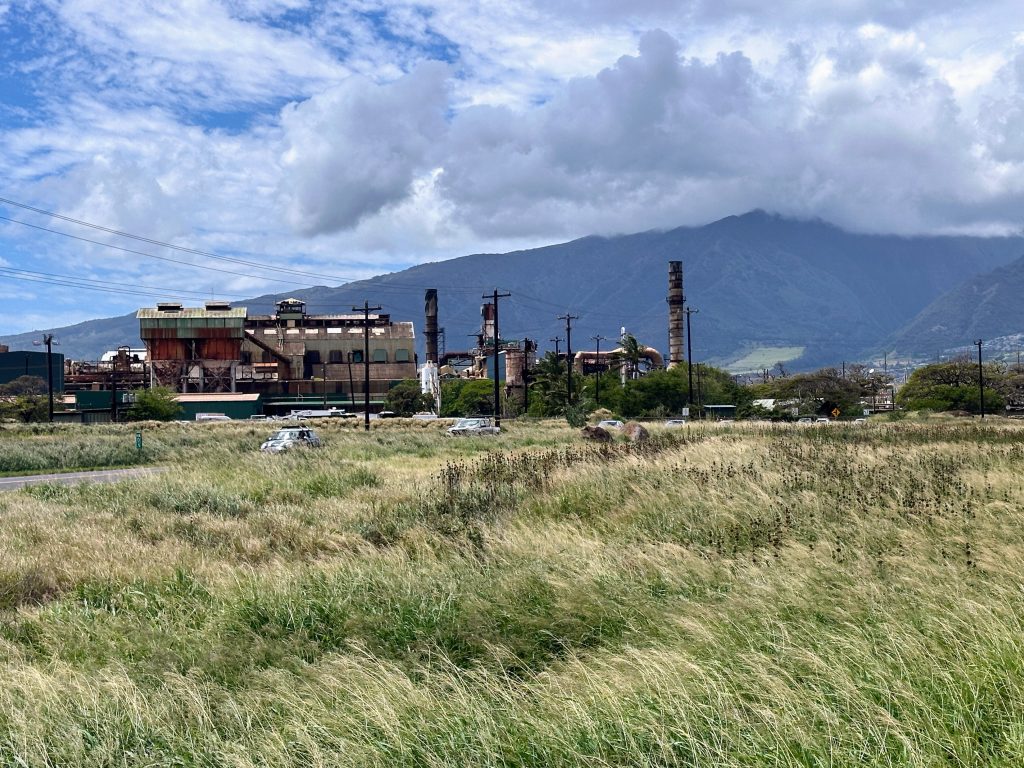
The Maui Planning Commission called for an environmental impact review for the proposed 1,608-unit Hoʻonani Village development in Puʻunēnē, and developers have delivered a draft study with public comments due May 7.
The state Office of Planning and Sustainable Development published the three-volume document Monday, initiating a 45-day public review period for the project planned by Hoʻonani Development LLC.
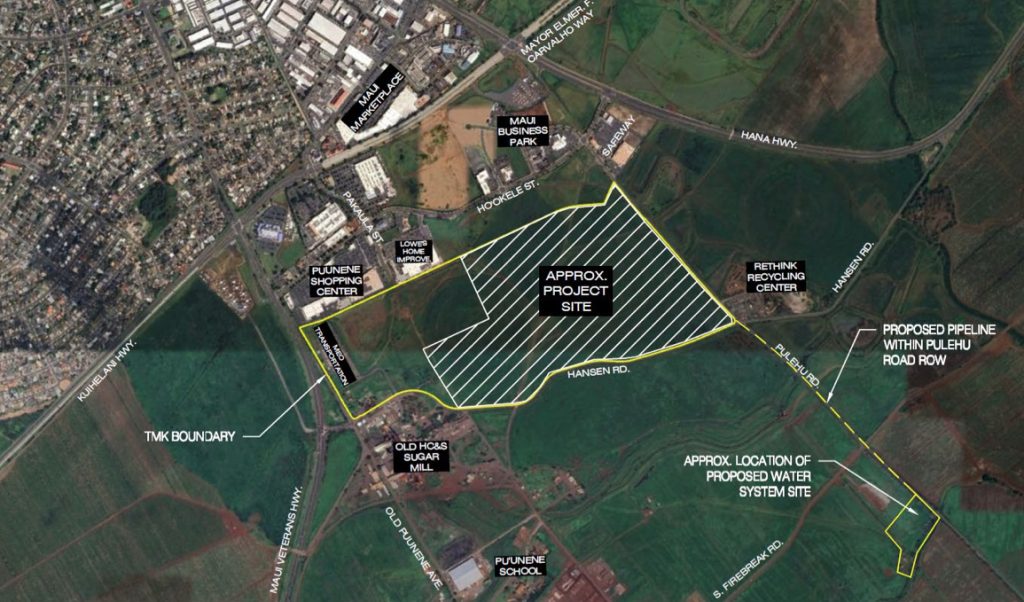
The developer plans to build 100% affordable rentals along Pūlehu and Hansen roads. Project documents show the master-planned community includes low-rise multifamily residential buildings, retail shops, office spaces, light industrial uses and parks.
The project’s overall cost at full build-out is estimated at $820 million, although it would be phased in over approximately 17 years.
The document’s publication directly addresses a Jan. 13 Maui Planning Commission vote recommending the Maui County Council pause the project until developers released a draft study.
Commission Chair Kim Thayer proposed the draft requirement as a compromise to balance fast-tracking post-disaster development against standard reviews. “You still think you need something, so don’t go blind,” Thayer said at the time.
During that previous meeting, the Department of Water Supply reported the project sits above the Pā‘ia aquifer. Regulators estimate current water withdrawals pump the aquifer at nearly double its sustainable yield.
To address persistent infrastructure questions, developers plan to construct an onsite wastewater treatment plant, build internal roadways, and modify an existing offsite water system.
Commissioners also questioned the proposed location directly under the approach flight path for Kahului Airport.
The draft environmental review acknowledges that the project is the “aircraft noise influence area of Kahului Airport.”
The study says that aircraft noise was identified as “a dominant contributor to the (project) site’s noise profile.” Noise was measured with three long-term site survey locations to assess the impacts on the community.
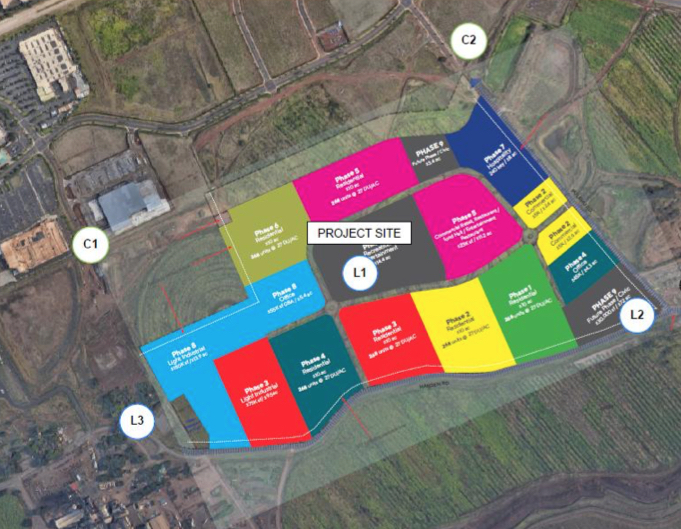
The noise impacts are most intense in what the draft study refers to as survey site “L1,” which runs through the middle of the proposed development and lies directly underneath the flight path of Kahului Airport’s main runway, 2/20.
“The site falls within the 60 dBA Ldn contour based on the airport’s 2010 and 2020 noise forecast maps, though not within the more severe 65 dBA contour,” the study says. Day and nighttime sound levels vary. Study details are available on Page 106 of the draft EIS’s Volume 1.
“The aircraft noise will be variable based on the takeoff and landing directions of the aircraft traffic and will be largely dependent on the weather conditions and type of aircraft activity at Kahului,” the study says.
Concerns also have been raised about the project’s impact on the Kahului aquifer, which currently has a state-approved sustainable yield of 1 million gallons per day.
According to the draft EIS: “The project would increase groundwater demand within the Kahului Aquifer, which is currently pumped above its designated sustainable yield. However, the Water Resource Assessment concluded that pumping from the Puʻunēnē Pump 6 Well at the proposed rates would not adversely impact nearby wells or impair the overall utility of the aquifer system. Groundwater withdrawals will be subject to Commission on Water Resource Management permitting, monitoring, and reporting requirements.”
The draft study noted that the project’s design incorporates aquifer recharge features, including stormwater retention and infiltration systems and reuse of treated wastewater for irrigation. These are expected to contribute 0.099 million gallons per day in returning water to the underground aquifer and another 0.102 from treated wastewater percolation, “partially offsetting groundwater withdrawals.”
“Actual recharge rates may vary depending on rainfall, irrigation practices, soil conditions, and long-term system performance,” the study says.
The project’s water demand is estimated at 1,097,170 gallons per day, on average, per day, withy a maximum daily demand of 1,645,755 gallons per day.
During the Planning Commission’s meeting in January, then Planning Director Kate Blystone told commissioners the Council-initiated legislative process skipped essential agency checks.
“We need to be thoughtful and planful so our jobs as planners is to see around corners,” Blystone said.
Council Member Nohelani Uʻu-Hodgins urged the commission in January to advance the project quickly to address the island’s severe housing shortage. “I am tired of waiting for housing providers to come to us,” Uʻu-Hodgins said.
The commission previously advised the council to require developers to build at least 1,000 residential units and price all homes at or below 140% of the area median income.
The Maui County Council holds final authority to approve or deny the land use requests. The State Land Use Commission serves as the accepting authority for the environmental study.
Public comments on the draft study can be submitted to project consultant Emily Ballard at eballard@pdg-hawaii.com.
Sponsored Content