 Hawai'i Journalism Initiative
Second Kona low storm showed flood risks in Lahaina’s fire-bared landscape
As heavy rains from the second Kona low storm in March pelted Lahaina on Saturday, Kaliko Storer watched as hourly photo updates from the stormwater basins above her Leiali‘i home showed them close to overflowing.
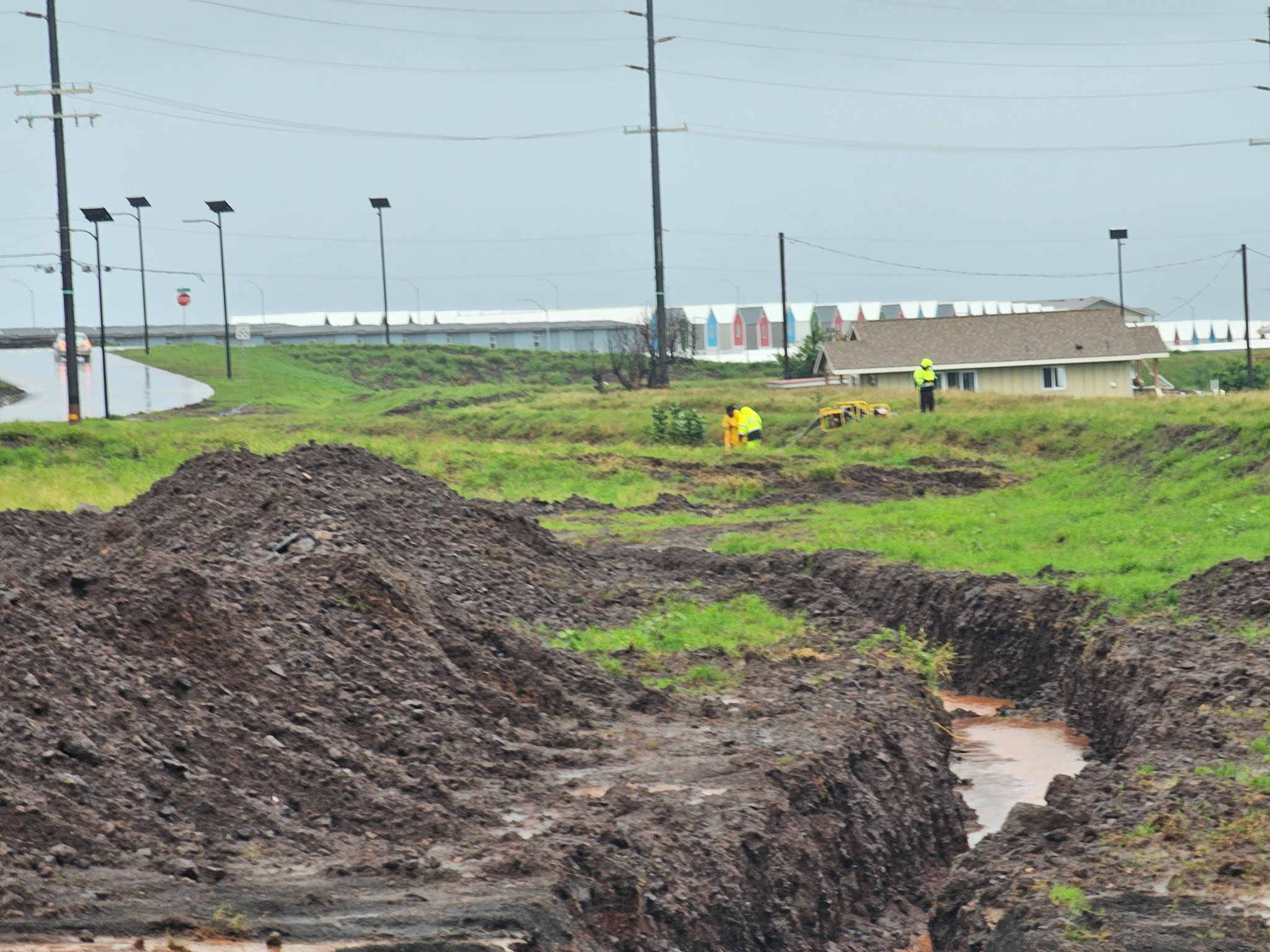
The basins grew full enough for Maui County to start pumping out water and issue evacuation warnings to residents in Leiali‘i and Wahikuli.
While Storer didn’t end up having to flee, the close call was a reminder of the flooding risks in an area where much of the landscape is still barren as people rebuild after the August 2023 wildfire scarred the land.
“We think about evacuation routes when it comes to a fire,” Storer said. “And now we say, when are we going to really sit down and talk about these (flood) controls?”
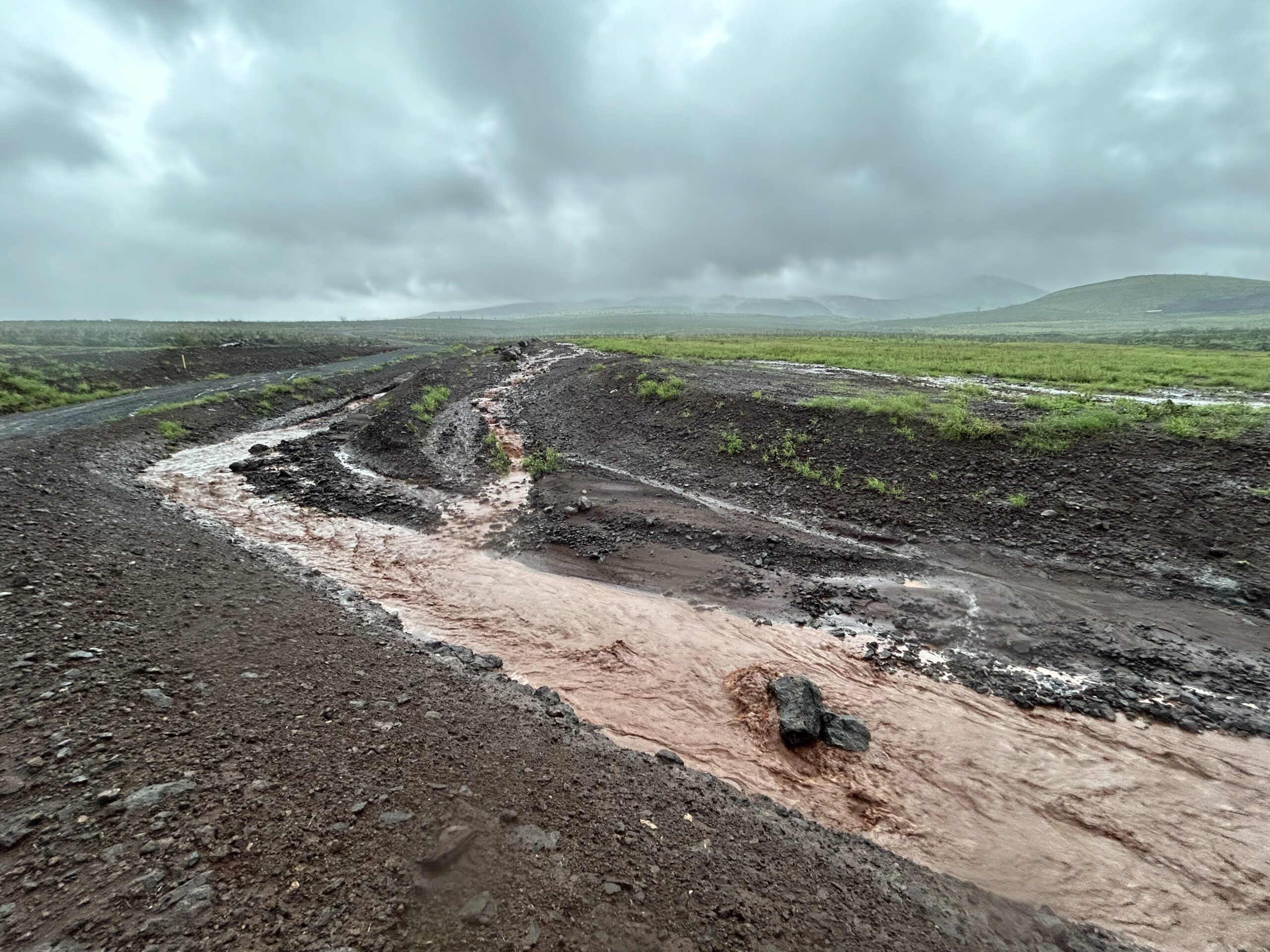
West Maui received some of the most rain on the island during the second Kona low to wallop Hawai‘i in two weeks. Two rain gauges in Lahaina logged more than 6 inches each from 8:45 a.m. Saturday to 8:45 a.m. Sunday, while Honolua recorded more than 7 inches and Olowalu saw over 5 inches, according to the National Weather Service.
Areas of Mauna Kahalawai, also known as the West Maui Mountains, saw some of the heaviest rainfall on Maui over the weekend, with 8.08 inches in the Hanaula gauge and 8.41 inches in Pu‘u Kukui.
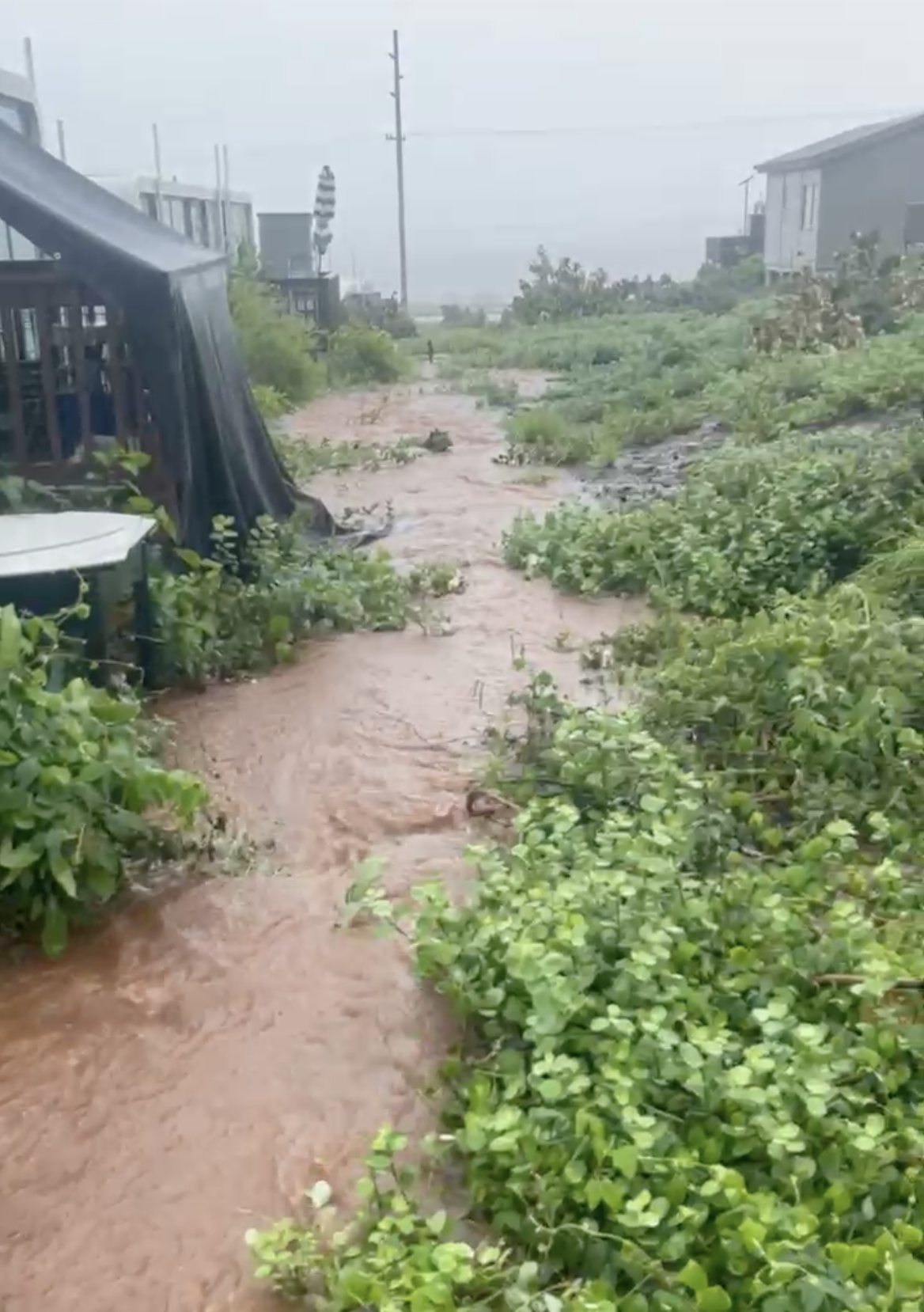
In Lahaina, muddy floodwaters rushed down hills, pooled around homes and cracked some portions of the road. State Rep. Elle Cochran, who lives on Lahainaluna Road, said the open land left by the fire’s destruction has put the area more at risk for flooding.
“There’s nothing to hold it back,” Cochran said. “And of course, the first storm saturated the ground. Second storm just rushed on down.”
While rebuilding is in full swing, it may be years before the homes and full vegetation return to a town that’s mostly been filled with gravel-lined, leveled properties after the fire. Hundreds of homes are still undergoing reconstruction with 169 completed in a town where over 2,000 structures burned and over 1,500 properties were cleared of debris.
Brandy Cajudoy, who co-owns Cajudoy Construction with her husband, said because final grading and landscaping is not completed at some of the homes they’ve built, the rain displaced some soil and resulted in “minor erosion and mud movement on certain properties.”
“This has required us to return to a few sites to install additional barriers and stabilization measures to better retain soil and prevent further movement,” said Cajudoy, who is also the construction management coordinator of the Ho‘ōla iā Mauiakama Disaster Long-Term Recovery Group.
Weather conditions have also delayed rebar installation at one of the Cajudoys’ Lahaina projects. But overall their homes survived the Kona low. Her husband went out to visit the sites after the storm and confirmed “all projects are performing well.”
“Flood mitigation is always at the forefront of our planning and building process,” Cajudoy said. “While we strictly adhere to code requirements, we often go beyond them to ensure that the homes we build will provide lasting security for families. Our goal is to build in a way that gives both us and the homeowners peace of mind for years to come.”
Blake Ball was grateful he hadn’t started rebuilding his home yet after seeing the impacts of the storm. At his one-bedroom modular home at Ka La‘i Ola, the temporary project built for fire survivors on the north side of town, water started leaking from the roof during the first Kona low storm that hit on the weekend of March 14.
He used some towels to soak up the water and asked management for repairs. They sent a team to fix it, but when the storm hit Saturday, the same two leaks sprouted again, along with three other leaks in his bathroom and bedroom.
“Fortunately, nothing was damaged and I had enough towels to soak up everything,” Ball said, adding that it was a “little scary” because the temporary units are not built to last forever.
Ball could see the two stormwater basins built below Ka La‘i Ola and said if they had overflowed it likely would have been destructive for a lot of the homes below it in Wahikuli. He said crews were “working around the clock” to pump them out.
“After the stress with the fire, you kind of have to think the worst,” he said.
Storer, a member of the Lahaina Advisory Team that Mayor Richard Bissen created after the 2023 fire, said there were four or five trucks pumping as much water as possible throughout the storm. Despite the warnings, she said she felt “very confident because of all the people that were in the community giving real-time information.”
In her neighborhood, someone was posted at the stormwater detention basins, sending her hourly updates of the water levels that she provided to the county. It helped put her mind at ease to know that the decisions county officials were making were informed directly by people on the ground in her community. Even kūpuna stuck indoors were asked to send pictures from their homes to help show what the drainage in Leali‘i looked like.
With so much heavy machinery sitting in the neighborhood at active rebuilding sites, operators “jumped on their own machines and started building berms in places to protect homes,” Storer said.
“We did a lot of problem-solving as a community,” she said.
Storer said one benefit to come out of the 2023 disaster was the improved communication and relationships between government officials and the community. The response to the storm as compared to the fire was a “100% turnaround.”
“All of us are on one page now,” Storer said. “Many of our frontline leaders are on one group thread. But also … it’s just knowing where the pressure points are, knowing who to call that can make sound decisions.”
Storer added that Lahaina residents are gearing up to help people in Kīhei, ‘Īao Valley and on Moloka‘i who were hit hard by the storm, wanting to return the kindness shown to them during the 2023 fire’s aftermath.
“Lahaina recognizes and Maui recognizes what Hawai‘i did for us,” Storer said. “Our aloha to everyone, and we too will do our best to help islands and towns to rebuild as well.”
During the storms, another benefit from the fire was newer infrastructure that included stronger utility poles that were able to stand up to the strong winds and heavy rains, said Cochran, who didn’t lose water, cable or cell service this time.
But Cochran said there’s a need for more storm infrastructure, particularly the Lahaina Flood Control Project that’s been decades in the making.
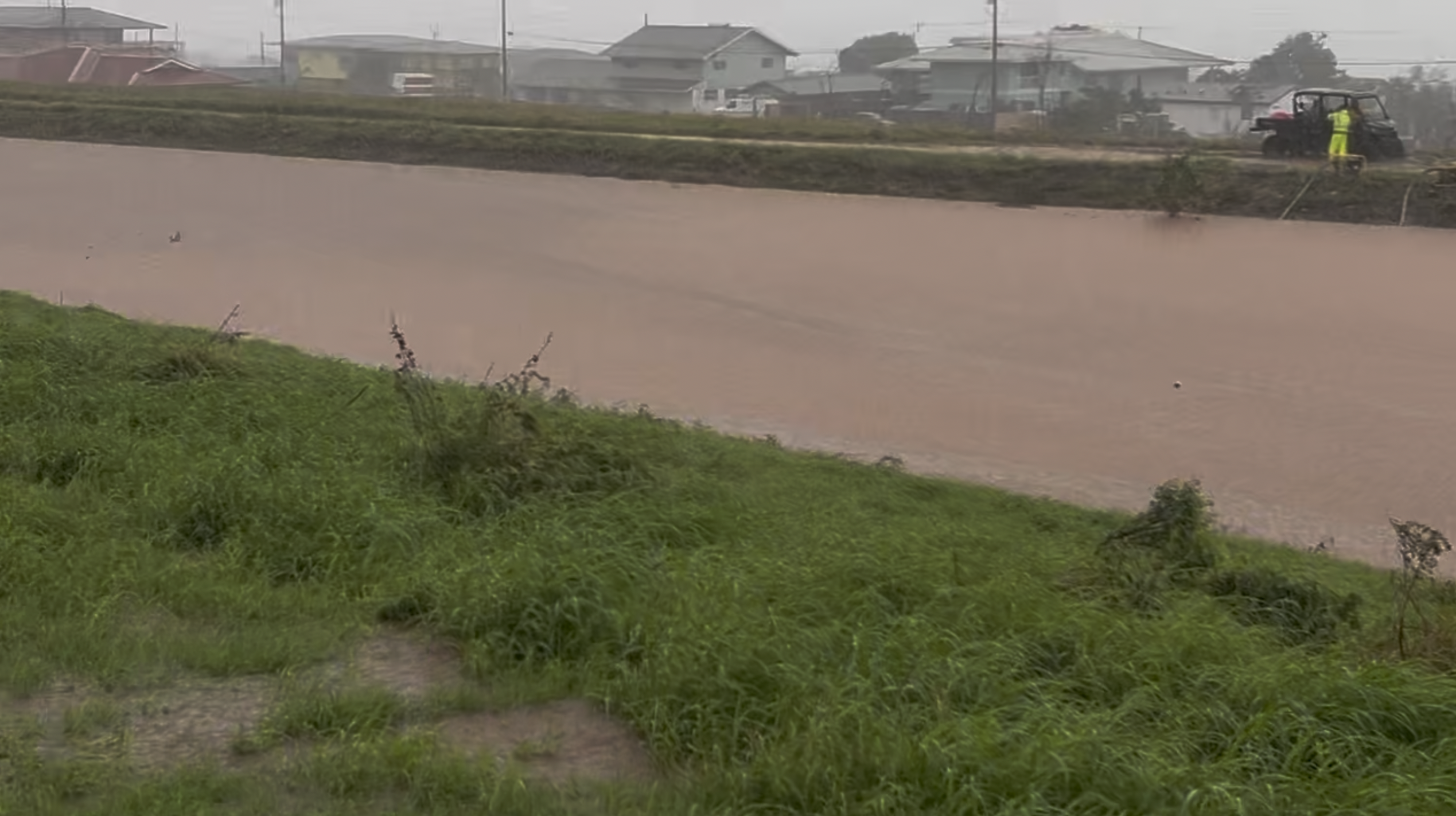
During the State of the County address on March 5, Bissen named it as a key project, which would “strengthen long-term flood resilience.” The project, originally planned as a floodwater diversion system south of Lahainaluna Road, is currently in the planning phases, according to Maui County, which is undertaking the project with the U.S. Department of Agriculture’s Natural Resources Conservation Service.
The county also is working on designs for a 100-million-gallon raw water storage facility above the Mahinahina Wastewater Treatment Plant that could capture high-flow rainwater runoff.
On Saturday, about 200,000 gallons of partially treated wastewater overflowed at the Lahaina Wastewater Reclamation Facility above the Kā’anapali resort area and likely made its way into a storm drain and into the ocean, the county said. Warning signs were posted and the state Department of Health was notified.
U.S. Rep. Jill Tokuda, whose district includes Maui County, visited Maui sites impacted by the storm on Sunday and said the back-to-back Kona low systems were “a cautionary tale” that it doesn’t take a hurricane to cause extreme weather and devastating damage.
“We are accustomed to saying, ‘Well, this was a 100-year flood,’ right?” Tokuda said. “Well, 100-plus-year floods are happening every few years. We literally have to throw away the book in terms of the way we used to look at weather patterns in Hawai‘i.”
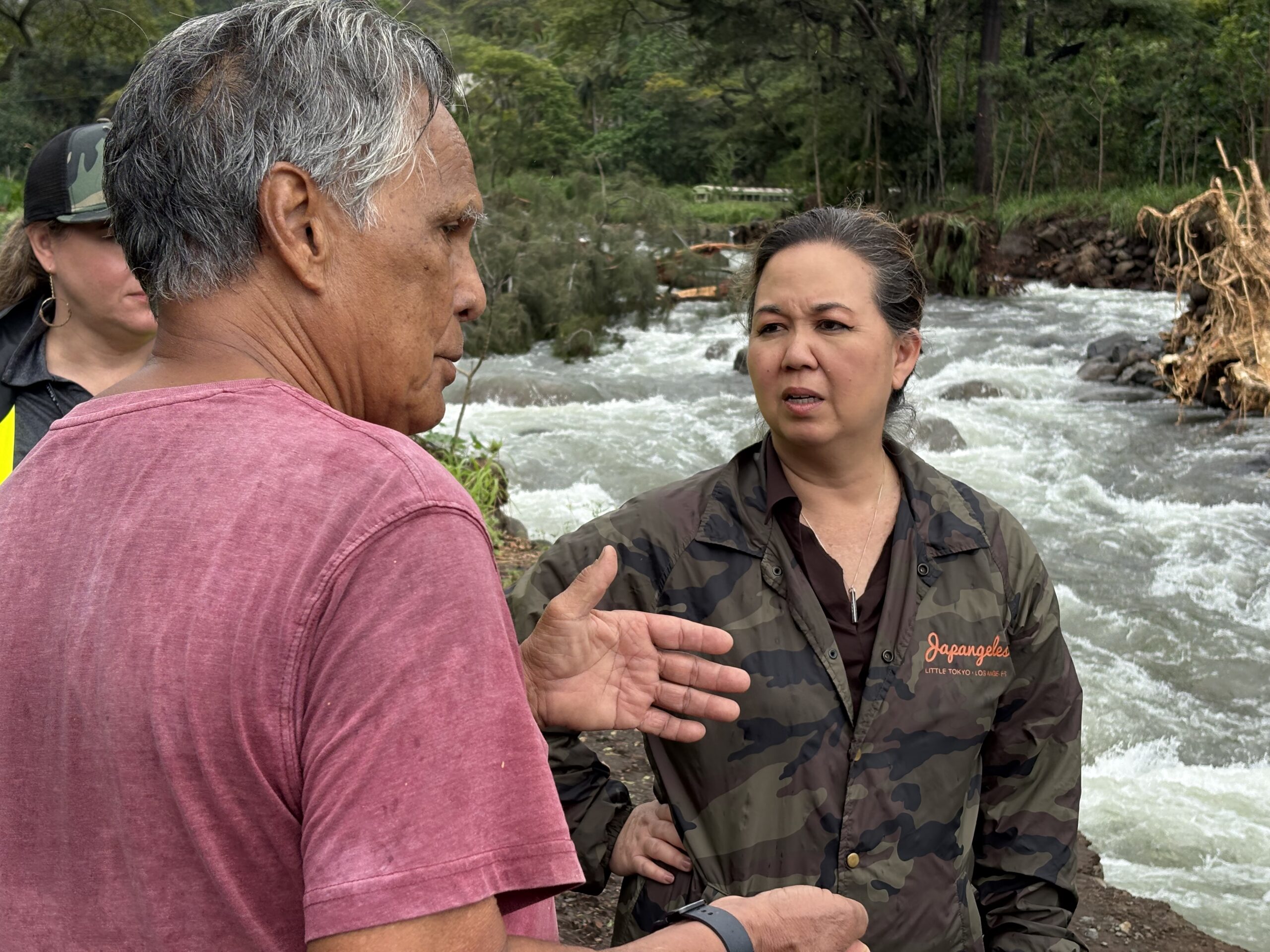
Tokuda said once the state gets a disaster declaration from the federal government, which Gov. Josh Green requested on Tuesday, Hawai‘i’s delegation in Congress will get to work to “pull on every single lever that we’re familiar with from the fires” for support, whether that’s funding for water quality testing, soil monitoring, small business assistance or aid to farmers.
Tokuda didn’t think the partial government shutdown, which includes the Department of Homeland Security that oversees the Federal Emergency Management Agency, would impact Hawai‘i’s chance to get funding for disaster relief.
She pointed out that federal agencies were still “at the ready” to help with the storm, with the Coast Guard assisting in the search for a 71-year-old Maui woman believed to have been swept away in ‘Īao floodwaters, and FEMA communicating with emergency operation centers, per her conversations with Bob Fenton, the administrator for FEMA’s Pacific region.
Last week, the Maui County Council also approved $12 million in emergency funding after the first Kona low.
As for whether better stormwater management is needed, Tokuda said “some kind of postmortem” analysis is needed to understand what parts of the system failed and what Hawai‘i could do better.
“Especially at this time when we are rebuilding Lahaina, let’s understand that the threats that we’re going to face, it’s not just fire,” Tokuda said. “It’s going to be things like flooding as well, and how do we make sure that where we place people, it’s going to be out of harm’s way should this happen again.”