Maui fire survivors to see settlement money, but ‘not better off,’ economist says

Wildfire survivors in Maui County can expect to receive settlement money for the first time this year. However, economists say the payments won’t make most families whole, especially as higher electricity bills and gas prices intensify pressure on households still rebuilding their lives.
That assessment stems from a finding in today’s University of Hawaiʻi Economic Research Organization’s second-quarter forecast, which projects that Maui County residents will see an income spike tied to wildfire settlement payments.
The $4 billion global settlement for the Maui wildfires was finalized in April, after the Hawaiʻi Supreme Court blocked further insurer intervention with a ruling in February. UHERO projects that the first payments reaching Maui households will push the county’s real personal income up roughly 5.4% in 2026 — by far the largest gain of any county and one of the strongest single-year income jumps in recent state history.
UHERO estimates approximately $550 million in cash reaching households in 2026, with payments continuing through 2029 for a cumulative $2.8 billion — figures the organization calculated after accounting for roughly $1 billion in attorneys’ fees and approximately $200 million in insurance liens. In the model, the payouts raise total transfer income on Maui by more than a quarter of the 2025 level.
During a press briefing Thursday morning, UHERO Executive Director Carl Bonham cautioned against seeing the payouts as a windfall for fire survivors.
“They’re better off than if they didn’t get the settlement, but they’re not better off than before the wildfire — for sure,” he said. “The payouts are covering losses that already occurred, and they’re not covering all of those losses, especially as we deal with rising costs.”
Co-author Steven Bond-Smith added that the settlement money is essentially replacement income. “It’s really a bump in replacing the costs of the wildfire to those assets,” he said. “It’s not income per se, like regular income.”
Overall, economists report that Hawaiʻi’s outlook has worsened since UHERO’s last report, driven largely by higher oil prices from the Iran war.
“No one can tell you what’s going to happen in the Persian Gulf right now,” Bonham said. “Really, that’s the main takeaway this quarter.”
The forecast presents a mixed picture for the Valley Isle: wildfire settlement money flowing to households, tourism recovery outpacing the rest of the state and construction surging at a near-record pace. But it also describes an economy absorbing multiple large economic hits at once, with the worst oil disruption in 50 years and higher airfares threatening to slow the visitors’ return to Maui. “The cumulative burden is substantial and equally uncertain,” the UHERO report says.
Headwinds slow tourism recovery
Maui will see the strongest tourism growth in 2026 as the island’s recovery from the post-wildfire decline continues. Hotel occupancy on Maui averaged 63% to 66% through most of 2025, still well below pre-pandemic norms, but early 2026 occupancies approached 70%, according to UHERO. Maui’s average daily visitor count continued to trend upward. Second-quarter forecasts nearly 59,000 daily visitors this year compared to about 55,000 last year. Economists predict Maui’s daily visitor numbers will reach and top 60,000 in 2027 and 2028.

UHERO projects Maui County’s average daily visitor census will grow 7.5% for 2026 as a whole — more than four times the statewide rate.
However, the forecast reports that jet fuel prices have roughly doubled from pre-conflict levels. Airlines have already begun passing costs on through surcharges and fare increases. Both Japan Airlines and ANA have imposed fuel surcharges for new bookings in May and June, in the range of 20% to 25%. Transpacific routes are among the most fuel-intensive in commercial aviation, and Hawaiʻi’s near-total dependence on air travel leaves the state vulnerable.
United cut about 5% of its planned flights systemwide in the near term, while Delta will not add summer seats, leaving roughly 3.5% fewer seats than originally planned.
“For Hawaiʻi, the combination of higher fares and reduced capacity poses a direct threat to arrivals,” the UHERO report says.
Bonham noted that, through July, total airline seats into the state remain up about 6% year over year, and there is little evidence yet of travelers canceling bookings to the islands, especially among high-end visitors.

“To the extent that the US economy continues to power along with these almost weekly stock market records, driven almost exclusively by AI optimism, those wealth gains translate into additional spending by households that are in very high income brackets with large amounts of wealth,” he said. “They have the ability and potential to drive spending forward even in the face of rising costs.”
Meanwhile, economists say the lackluster arrival numbers from Canada and Japan are particularly concerning. The decline in Canadian visitor arrivals, which began after the Maui wildfires accelerated throughout last year amid trade tensions and antipathy toward the policies of the Donald Trump administration. After the president suggested that Canada should become the 51st US state, Canadian arrivals fell by nearly 7% in the first quarter of 2026 compared with the same period last year. Across the Pacific, Japanese visitors face the weakest yen purchasing power in decades. Today, the yen has just 60% of the dollar purchasing power it had in January 2020.
Construction leads all sectors
Construction is a bright spot for Maui’s economic outlook. Payroll growth for construction workers ranges from more than 2% on Oʻahu to nearly 6% in Maui County, driven by wildfire rebuilding, government contracts and post-storm repairs following the March Kona low storms that caused widespread flooding.

On Maui, 634 permits have been issued to rebuild permanent structures on 473 fire-affected parcels, with more progress for single-family residences than commercial or multi-family properties. However, only a quarter of non-owner-occupied residential properties show ongoing permit activity.
“Non-residential rebuilding continues to trail, with only very few permits issued for commercial and industrial properties,” the report says. “This slower pace likely reflects the greater complexity of rebuilding business and industrial sites, particularly in Lahaina’s historic commercial core, where shoreline regulations, historic district requirements, floodplain standards and special management area rules add permitting challenges.”
UHERO projects that commercial rebuilding should pick up as settlement, insurance and recovery funds reach property owners.
Bonham acknowledged uncertainty about the source of Maui’s construction workforce. “I’m not sure where all the construction workers are coming from,” he said, noting that workers flying in from Oʻahu or other islands to address labor shortages would themselves face higher costs as energy prices rise.
March storms expected to add to Maui’s insurance costs
The federal Major Disaster Declaration for the two March Kona Low storms, approved April 15, covers Honolulu, Hawaiʻi and Maui counties. Among the consequences for Maui: the indefinite closure of Kula Hospital. And, residents can anticipate insurance premium increases.
“These storms caused severe wind and flood damage, with projected losses exceeding $1 billion according to state and insurance industry estimates,” the UHERO report says. “They also temporarily displaced many residents from their homes, which may place additional pressure on the rental market.”
The Federal Emergency Management Agency will reimburse 75% of eligible public costs, but some disbursements can take a year or more.
Energy costs rising for Maui households
Hawaiian Electric has informed customers that residential electricity bills will rise 20% to 30%, with the pass-through reaching Maui County in June. Combined with gasoline prices that stood at $5.66 per gallon statewide at the time of the report’s writing, the typical Hawaiʻi household faces roughly $100 more per month in energy costs. Those costs are higher on Neighbor Islands where baseline electricity bills exceed those on Oʻahu.
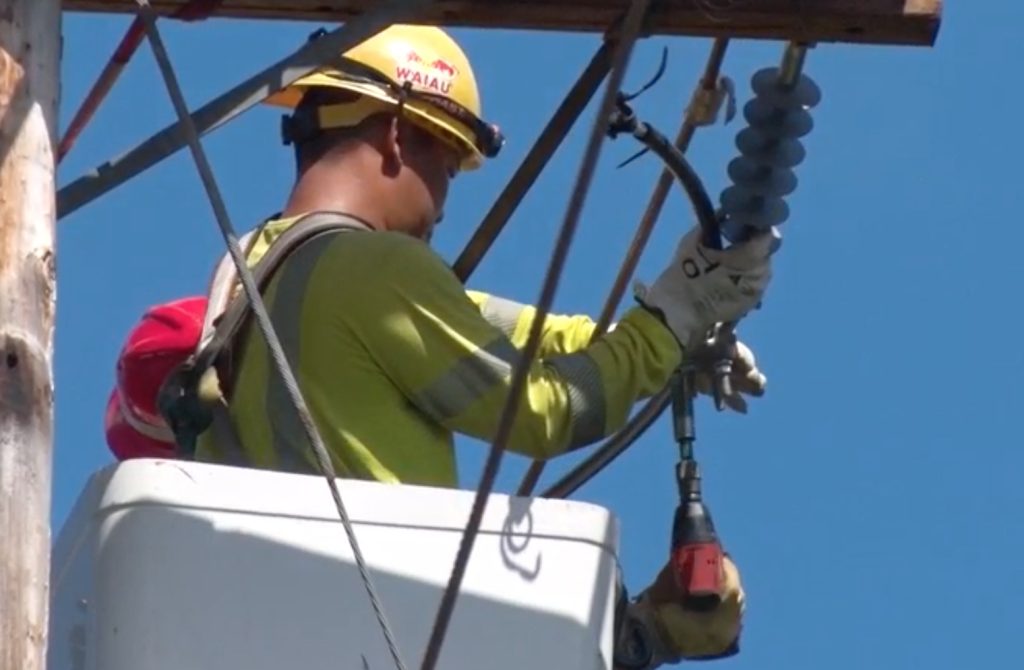
Bonham said gas prices in Hawaiʻi have not yet risen as fast as on the Mainland and are likely to climb further. “If the average household is facing a hit to their expenses for just energy of something on the order of a thousand dollars a year, that’s what’s going to be top of mind for the next six, nine months,” he said.
Housing affordability at historic lows
Maui’s housing market remains one of the least affordable in the state. In 2025, the gap between what the median household could afford and the median single-family home price exceeded $700,000 in Maui County — the largest affordability shortfall in the state.

Insurance premiums, already up 13% since the Maui wildfires, may face further increases following the March storms, exacerbating what UHERO describes as historically poor affordability.
Federal tax dollars at work
Bonham framed the current moment as unprecedented in one key respect: unlike past periods of multiple simultaneous economic shocks, the current pressures largely result from federal policy decisions—tariffs, immigration restrictions and the Iran war—all piled on top of cuts to federal employment and spending.
“What’s really different is these were all policy choices from the US government,” he said. “You have three to four or five different things that the national government is doing that is negatively impacting the economy — nationally, globally and certainly in Hawaiʻi.”
No recession, yet
UHERO’s bottom line for the state is cautious. Hawaiʻi real gross domestic product will grow 1% this year under the baseline forecast, recovering to 1.6% by 2028. Under a pessimistic oil price scenario — in which the Strait of Hormuz remains closed into July or August and oil prices average $170 per barrel — gross domestic product growth could slow to 0.4%, consistent with a recession in the Islands.
For Maui specifically, UHERO projects nonfarm payrolls will grow 0.6% in 2026 — the strongest county rate in the state — though the unemployment rate is expected to tick up slightly to 2.6%. After the settlement-boosted income year, real personal income growth is projected to slow to 2.9% in 2027 and 1.5% in 2028, returning toward the state’s historically modest trend.
The UHERO forecast is released quarterly by the University of Hawaiʻi Economic Research Organization. The full report is available at uhero.hawaii.edu.
Sponsored Content