


Maui Council advances Honuaʻula project amendments with a slim 5-4 vote in marathon session
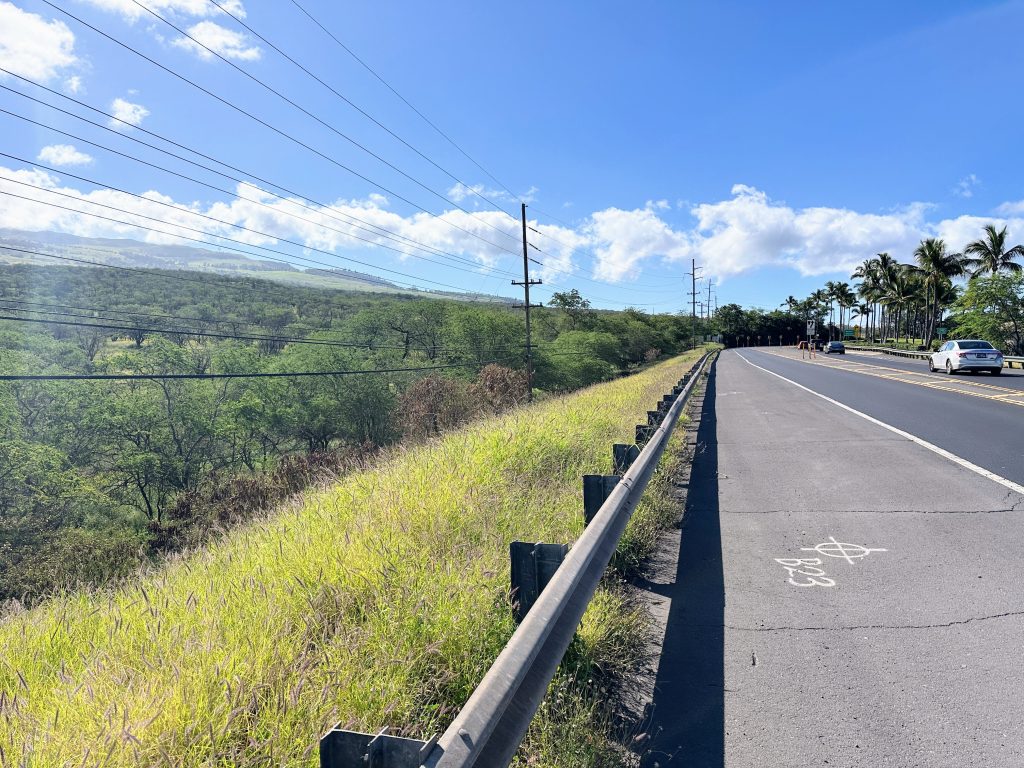
In a marathon session that stretched from Friday morning to past midnight Saturday, the Maui County Council narrowly approved amendments to the controversial Honuaʻula project in a 5-4 vote at 12:26 a.m. Saturday.
The decision followed several hours of passionate public testimony with most of the approximately 50 speakers opposed to the development. The Council’s vote advances the former Wailea 670 project, a development first approved 17 years ago for 1,400 homes (later reduced to 1,150), which has since languished on 660 acres that remain undeveloped wildland south of Maui Meadows and mauka of the Wailea Resort.
The amendments sought by the project included removing what the developer identified as “outdated geographical references” to 450 affordable units in the Kīhei-Mākena Project District 9 ordinance. The amendments eliminate provisions for a golf course and related facilities, instead incorporating cultural and educational centers as permitted uses.
Voting to approve the amendments to Bills 171 and 172 were Council Members Alice Lee, Yuki Lei Sugimura, Tasha Kama, Tom Cook and Nohelani Uʻu-Hodgins. Opposing the measures were Council Members Tamara Paltin, Keani Rawlins-Fernandez, Gabe Johnson and Shane Sinenci. The familiar majority-minority Council split vote highlights ongoing deep divisions, both in the community and Council itself, on the hotly debated project.
Majority Council members rejected Rawlins Fernandez’s proposed amendment to require 450 affordable units in the project district. And, they did not approve Johnson’s amendment calling for lottery preference on workforce housing units to Maui residents.
However, they did approve proposed amendments regarding the extension of the affordability period for workforce rentals and longer period for the owner-occupancy requirement for the for-sale workforce units.
Opponents decry ‘bait and switch’
The Maui Tomorrow Foundation, a nonprofit that advocates for ecologically sound development, views the 450 affordable home commitment from 2008 as a promise that has been broken through bad faith by developers.
“I feel sorry for the South Maui community,” said Maui Tomorrow Executive Director Albert Perez. “They have been begging the Council to make this developer uphold the promise they made in 2008 to build 450 affordable homes within their project district, but their pleas have fallen on deaf ears.”
“This is a classic case of bait and switch,” he said. “In 2008, the developer’s representative said that building 700 affordable homes would be no problem, because they would make enough profit from 700 market-priced homes. Now they’re claiming that they can only afford to build 288 affordables, and need to build 862 at market price. The Council should not be willing to so easily give up affordable housing, simply based on the developer’s word. The Council needs to fight for the Maui community by making the developer open their books and prove that ‘it won’t pencil out.'”
“In addition, the Planning Commissionʻs recommendation for the South Maui Community Plan would allow for almost 8,000 more already-approved and proposed housing units – likely 80% luxury units – without adequate plans to handle traffic, wastewater, or water supply,” Perez said. “This is a recipe for gridlock and a much reduced quality of life for our South Maui friends. People need to know what’s planned and make their voices heard.”
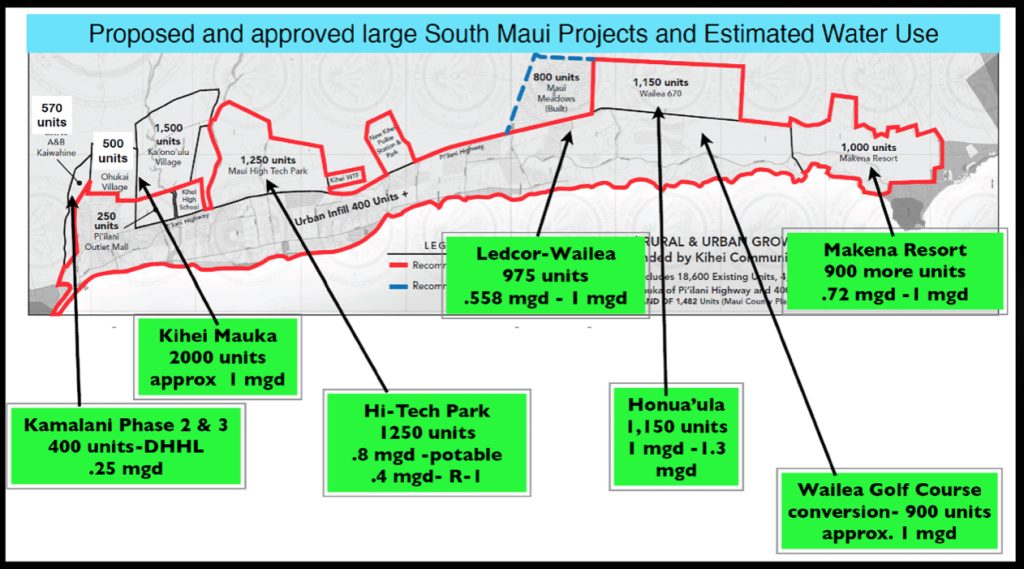
Most of Friday’s public testimony echoed Maui Tomorrow’s opposition to proposed amendments for the project.
For example, Kay Anderson testified that “it seems whenever the developer returns to the County for more concessions, the County Council caves and grants them their concessions over the ʻāina. Why?”
She noted that the development was already approved, but “the developer continues to chip away at the public benefits and request changes to the original plan… These proposed changes makes the project worse by reducing affordable housing from 700 units down to 288, removing the community benefits and setting a dangerous precedent for all future Maui projects.”
450 homes: A requirement or ‘purely locational provision’
When the Council approved the former Wailea 670 project in 2008, Maui County’s affordable housing requirement was to build 50% affordable units. So, math determined that half of the former Wailea 670’s 1,400 planned units, or 700, would be affordable. Of those, 450 would be located within the project district and another 250 elsewhere.
In 2014, the County Council amended the County’s affordable housing ordinance, reducing the affordable housing requirement from 50% to 25% of market-rate units. (Only a handful of housing developments were built in Maui County under the 50% requirement, which had been established in 2006.)
With the developer reducing the proposed units from 1,400 to 1,150 in 2022, the minimum required workforce housing then became 230 units, under the updated 25% workforce housing requirement. The developer has pledged to construct at least 288 workforce units, exceeding the minimum by 58 homes.
A legal interpretation
A key legal point in the debate revolves around the interpretation of the 2008 ordinance. While one section states that “450 affordable units shall be within the project district,” another says the project “shall comply with affordable housing requirements duly adopted by the County of Maui.”
The Maui Planning Commission determined in November 2022 that the 450-unit reference is “purely a locational provision” that does not mandate a specific number of units.
“The number of affordable housing units required to be developed in connection with the project will be determined by the (now former) Department of Housing and Human Concerns at the time of subdivision or building permit approval, whichever is applicable and occurs first,” the Planning Commission said in 2022.
This finding was affirmed by 2nd Circuit Judge Peter Cahill on Jan. 2, 2024, although the ruling remains under appeal — a process that could take two to four years.
Project developers maintain that market-priced units subsidize affordable ones. Requiring 450 units doesn’t “pencil out” for the project’s economics and would doom it from ever becoming a reality.
Council debate
In discussion among council members after public testimony, Paltin said the project site is a more appropriate place to preserve Native Hawaiian cultural sites. There are also questions about the long-term reliability of water sources and the developer’s clear title to the property, she said.
Paltin said she didn’t “see the rush” to make a decision and alluded to an upcoming court case “where they might decide that 450 (affordable units) is perfectly legal and why would we take it out?”
“I think we’re really doing a disservice to our community, by rushing this through, skipping steps, taking the process out of order, not returning to committee for a deep in-depth decision, doing committee work on the floor at, five to midnight, and not to mention the war crimes and the illegality of the occupation, because everybody already knows about that part,” she said.
Later, Paltin said: “I guess I feel like I’m at a train wreck… I got a front row seat to the destruction of old Hawaiʻi and it’s a weird privilege, I guess, and responsibility to be here at this moment.”
Council Chair Lee said the Catch-22 dilemma of accepting market-priced homes to get affordable units is rooted in how housing is developed in Hawaiʻi.
“We have to face reality when it comes to paying and providing affordable homes,” she said. “And the truth of the matter is the market homes and the higher-priced homes subsidize the lower-cost homes. And that is how it happens.”
Lee said residents pay low property taxes, while others, including owners of short-term rentals, pay much more.
“We are heavily, heavily subsidized,” she said. “So, you know, we have to balance our checkbook. We cannot provide homes for free. It has a cost, and that cost comes from the market homes. And so, we have to — unfortunately, because the county doesn’t do its share — rely too much on the market homes, and this is the situation we’re in.”
Honuaʻula’s response
After the Council’s final vote, Honuaʻula attorney Cal Chipchase said: “Honuaʻula Partners deeply appreciates the hard work of the County Council to find common ground and adopt positive changes to the Wailea 670 project for the benefit of the community. The project has been moving forward with the final design of the housing and the permitting for the widening of Piʻilani Highway.”
Chipchase said the amendments pending before the Council are not necessary for the project to be completed. However, they “will make the project better in lots of ways, including by enabling the project to provide more workforce housing than it currently could support, to provide the workforce housing sooner than currently allowed and to collaborate with the community and the administration on the development of a cultural center and native plant nursery.”
The project includes 170 acres in perpetuity under a conservation easement, with 137 of those acres fenced and actively managed for conservation and cultural access under the guidance of a full-time site manager and a cultural committee. At least 6 acres will be parks. About 19 acres will required to be landscaping buffers, including along Piʻilani Highway and the project’s shared border with Maui Meadows. Approximately 95 acres will be preserved as open space.
Piʻilani Highway widening
The developer is working with the state Department of Transportation to take over the project to widen a portion of Piʻilani Highway from two to four lanes from Kilohana Drive to Wailea ʻIke Drive, with the developer’s projected share put at $42 million.
If the state takes over that obligation, the developer has pledged to add 50 workforce housing units to the project, increasing the number from 288 to 338 units, at an estimated cost of $77 million, including lost revenue, the cost of providing land (without cost) to a workforce housing developer and subsidizing each unit. (The number of market-priced units would fall from 862 to 812.)
Other amendments
(References to Maui County Code Chapter 2.96 are to the County’s residential workforce housing policy. It determines the number of affordable units based on the count of market-priced homes.)
- Remove the condition relating to electric vehicle parking requirements.
- Revise the deed restriction period for residential workforce housing units to be 10 years or subject to the Maui County Code’s Chapter 2.96 requirements, whichever is greater.
- Change the income brackets for the residential workforce housing units to match Chapter 2.96.
- Require a light detection and ranging drone archaeological survey on the developable area before ground-disturbing work occurs.
- Disallow the developer to use or receive housing credits for the project.
- Require swimming pools to have pool covers, to be enforced by the homeowners’ association. Each offense is a $300 fine to be deposited into the Affordable Housing Fund.
- Once the deed restriction period for the residential workforce housing rental units ends, allow the units to be offered to a limited equity housing cooperative.
Next steps
As the amendments advance to a second-and-final reading, Paltin successfully requested a combined public hearing and full Council meeting. Council members discussed holding that session July 25 in South Maui to allow for more community input from residents most directly impacted by the project. However, the time, date and location will be officially announced later.
Sponsored Content