Lucky you live Hawaiʻi: Free South Maui beach parking for residents
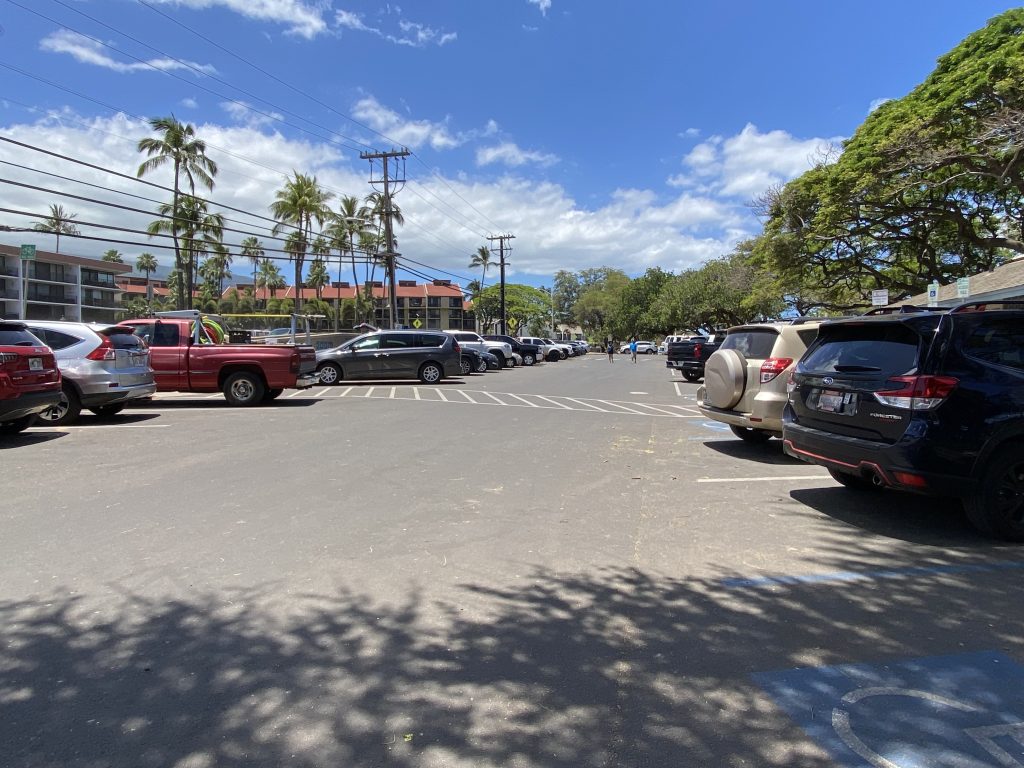
PC: County of Maui
The Maui County Council’s Water and Infrastructure Committee unanimously recommended approval Monday of a bill to establish paid parking zones at South Maui beach parks. The measure ensures local residents with a valid Hawaiʻi driver’s license get free parking and first dibs on spaces at popular South Maui beach parks.
The committee, chaired by Council Member Tom Cook, voted 7-0 to recommend passage of Bill 79. The measure helps create the legislative underpinning for implementation of the county’s Park Maui program. The program is being phased in, with the first phase including paid parking at Kamaʻole beach parks and updated existing paid parking zones in Wailuku town.
“I fully expect to get pushback from the tourists, but I look at this program as part of our visitor management,” Cook said. “And so there’ll be some friction, but this is the opportunity for local residents to get the benefit of being local residents and especially the kids and the family being able to go to the beach early on the weekend” and have parking available.
Under the plan, Hawaiʻi residents will maintain free parking at South Maui beaches, with priority access before 10 a.m. on weekends and holidays.
Non-residents will pay a flat rate of $10 per day, and they can take stalls only after 10 a.m. on weekends and holidays. That gives Hawaiʻi residents a two-hour morning window to grab parking spaces first.
The system will use both a mobile app and physical kiosks where users can scan their Hawaiʻi driver’s licenses to verify residency. Parking ambassadors will patrol the areas to assist users and eventually enforce compliance after an initial education period.
Violators would be subject to citations, impoundment or both.
Park Maui officials anticipate launching the program in South Maui by early 2026, pending completion of permitting processes and app testing.
Neil Nakamoto, program manager for Park Maui, explained that the initiative would roll out in phases, with Kamaʻole I, II, and III beaches included in the first phase.
“Monday through Friday, (Hawaiʻi residents) can park there the whole day if they want for free,” Nakamoto said. “On weekends and on county holidays, they get first priority before 10 a.m.”
Maui County Department of Transportation Director Marc Takamori emphasized that the program is designed to be sustainable, with revenue generated invested back into county improvements.
“The intent is that it’s supposed to be at least bringing in more revenue than the actual cost of the program itself,” Takamori said.
Several council members expressed support for the program while raising questions about implementation details.
Council Member Gabe Johnson asked about coordination with the county’s bus system. “Do you folks plan to have longer routes, longer time periods, more bus routes… buffing up the bus system to make it more convenient so people will actually just say, ‘I’m not even gonna drive?’” Johnson asked.
Takamori responded that while immediate changes to bus routes weren’t planned, discussions about service improvements were ongoing.
Council Member Shane Sinenci inquired about possibly expanding the program to East Maui, where tourists often create traffic congestion at popular sites.
“I could think of two areas in East Maui that, you know, if as a potential pilot program… we could put up one of the scanners to get some revenue to help and hopefully to help mitigate traffic in the future,” Sinenci said.
Council Chair Alice Lee questioned the financial viability of the program, asking for detailed revenue projections. Takamori acknowledged that while the program was expected to generate revenue as it expands, the loss of West Maui locations due to the Lahaina fires had impacted initial projections.
The bill included amendments to resolve conflicts with parking pass fees set in the fiscal year 2026 budget and to ensure the parking zone maps were properly adopted via ordinance.
Council Members Keani Rawlins-Fernandez and Nohelani Uʻu-Hodgins were absent and excused at the time of the vote. The measure now moves to the full County Council for the first of two readings.
Sponsored Content