


Hawaiian Moment: ‘Lauʻī pekepeke — Short-leaved ti plant’

Lauʻī pekepeke – Short-leaved ti plant –ʻŌlelo Noʻeau: An insult applied to the kauwā (outcasts). Like small-leaved ti, they werenʻt of much use. Longer leaves were better liked because they were useful as food wrappers.
Kī – Ti is a wooded plant from the lily family.
Lauʻī also Lāʻī – leaf of the ti plant, which is a contraction of the two words lau and kī.
Kī is native to tropical Asia and Australia, and should not be mistaken with the drinkable type called tea.
Besides green-leaved tis, which rarely fruit, many ornamental varieties are grown in gardens having leaves wide to narrow, large to small, the colors purple, crimson, scarlet, rust, pink, or green, striped or plain.
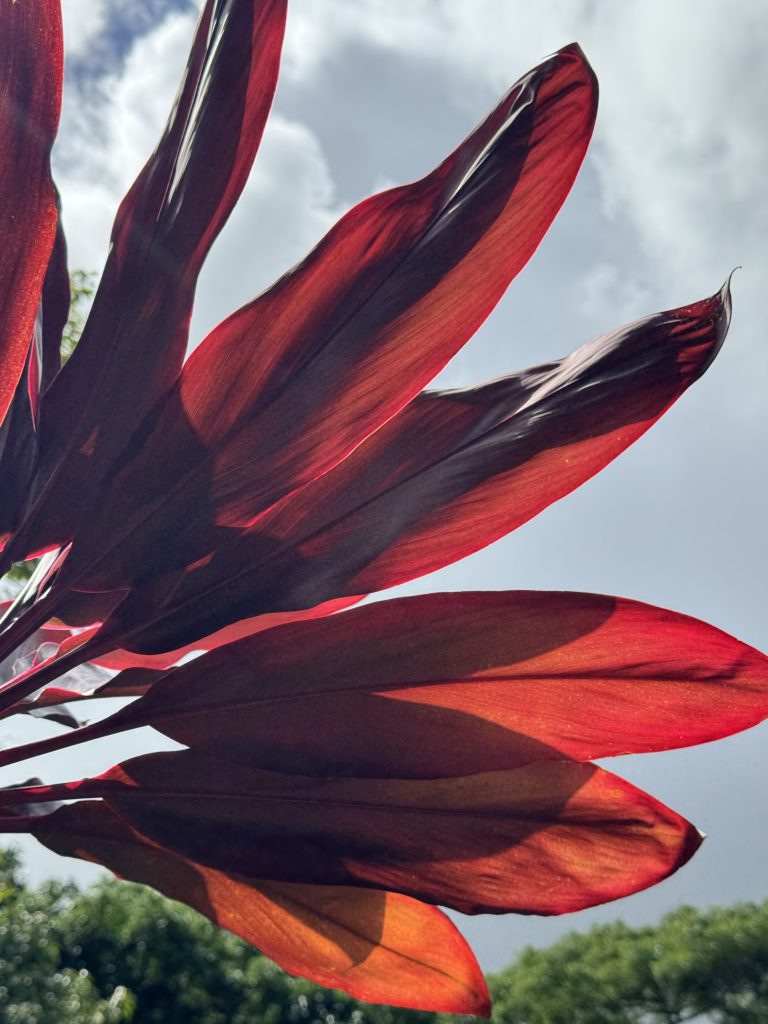
Listed are some of the many uses of the parts of the kī.
Lāʻi or ti leaf
- Cooking – used to wrap meet and and lūʻau when steaming laulau, used as flavor and protecting food when cooking in an imu, and used to wrap prepared food in bundles.
- Daily uses – Thatching for houses, to make slippers, to make raincoats, dried leaves are tied to the rope used in the hukilau, and for healing powers.
- Ceremonial – Hula skirts, wrap offerings for hoʻokupu, haku or wili lei and used to bless people, places, or things as it represents protection.
The root was cooked and eaten or distilled to create a type of brandy.
What other uses do you know of for kī or lāʻī?
Sponsored Content





Subscribe to our Newsletter
Comments