Pulelehua zoning condition amendment gains Council committee approval, despite West Maui water scarcity concerns
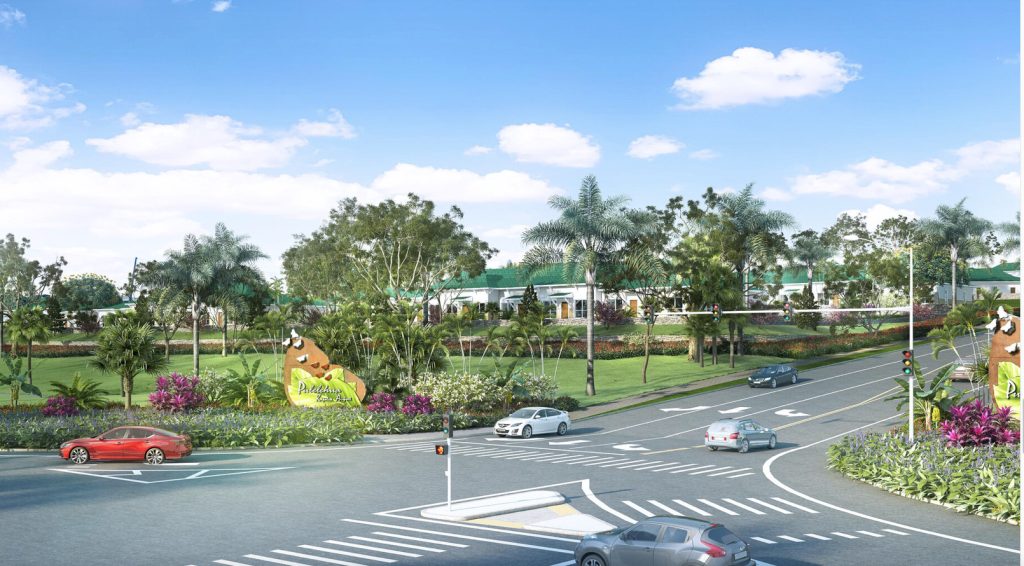
A Maui County Council committee tried to breathe life Wednesday into the languishing 304-acre Pulelehua development in West Maui, a “shovel ready” housing project with the promise of hundreds of affordable units but long dying of thirst.
Chaired by West Maui Council Member Tamara Paltin, the Disaster Recovery, International Affairs and Planning Committee voted 7-1, with Council Member Yuki Lei Sugimura dissenting, to recommend first-reading passage of Bill 132.
The measure could enable the allocation of 75,000 gallons of water per day, and support 240 affordable homes within a few years as temporary housing phases out, Paltin said in opening remarks.
The measure would allow developer Paul Cheng of Maui Oceanview LP to begin seeking construction permits, despite ongoing concerns over water scarcity in arid Māhinahina near the Kapalua Airport.
“This project is still grossly misunderstood by the public, which is amazing after eight years,” Cheng said. “Originally, the entitlement was for 50-50, 50% market rate, and 50% affordable. What changed after the fire was that we were willing to change it to 100% affordable for phase one, and that’s 240 units.”
The bill amends Condition No. 2 of the project’s 2011 conditional zoning ordinance. The amendment would clarify the project’s eligibility for exemptions under the Maui County Code’s water availability ordinance, (Chapter 14.12,) also known as the “Show Me the Water” bill.
The bill would still require the developer to provide water for the development. However, the requirement “shall not preclude” the project from gaining any exemption from the requirements of Chapter 14.12 and receiving subdivision and civil permits for infrastructure construction.
Cheng told committee members the amendment is necessary because the Department of Water Supply’s current interpretation of the water availability ordinance has become the bottleneck preventing the 500-unit housing project (240 affordable in phase 1) from proceeding after grading has already been completed.

The project has been “literally sitting on go” for years, he said. “The whole reason why we haven’t started construction, and I wish we had years ago, is because of this water issue.”
Cheng explained that he’s spent years and millions on project preparations, including site grading and digging two water wells, but the project cannot receive the necessary building and civil permits due to the “Show Me the Water” requirement. The situation is creating a county approval “loop” in which other department approvals are meaningless until the water issue is settled.
Cheng said he already has water use permit applications pending before the Hawaiʻi Commission on Water Resource Management. The commission has oversight over water withdrawals in the region, which was designated as both a surface and groundwater management area in June 2022.
The Council has backed the Pulelehua project by providing $15 million in Affordable Housing Fund support for the project this fiscal year. West Maui housing is desperately needed after wildfires destroyed more than 2,200 structures in Lahaina in August 2023.
Water Department warns of ongoing water scarcity
Eva Blumenstein of the Department of Water Supply said the department has no objection to the zoning amendment for Pulelehua, but it doesn’t change the fundamental underlying issue — there isn’t water available for water service because of a lack of capacity in the West Maui system.
While the department could sign off for the development to get subdivision approval, “it doesn’t mean that there’s water available when they come in for water requests,” she said. “We were at capacity before the wildfire, and we have to reserve whatever remaining capacity we have for reconstruction of Lahaina town.”
Committee debate
Sugimura opposed the measure, arguing that granting the amendment was misleading to the public because County water is not available for Pulelehua, and the developer’s prevailing wage compliance for past work remains questionable.
“I am not supporting this because of what the department said,” Sugimura told committee members, reiterating the department’s position that available water should go toward fulfilling “the requirements of those residents who are building back slowly.”
“This project is not a county project, and the water is not coming from the County of Maui,” she said. “It’s coming from a private source. And I do not believe that by us trying to, you know, now say, ‘Oh, it will be 100% affordable.’ I just think if they wanted to, they could probably figure out how to get water on their own for this many years, but that . . . never happened.”
Chair Alice Lee expressed “full support” for the zoning amendment, advancing the idea that — to push the housing project forward — “it appears… we have to remove these obstacles one by one… then, that’s what we need to do in order to prepare for… the end goal of getting water, even though there may not be a confirmed source at the moment.”
“There are a lot of areas where people are working on various solutions,” she said, including the “development and use of (reclaimed wastewater) to open up the use of potable water or by other means,” she said. “I think we’re on the cusp of getting water, so we need to prepare for that time.”
Council Member Tom Cook supported the bill, saying that the zoning amendment allows the developer to push forward at his “own cost and own risk to get the building permits and get everything in alignment,” which expedites the needed housing development process.
The bill now heads to the full Council for consideration. If it passes two readings, the measure would advance to Mayor Richard Bissen for final action.
Hoʻonani Village development
In other action, committee members discussed but postponed action on land-use bills to make way for the 166.5-acre Hoʻonani Village development near Hansen Road. The project would include 1,600 apartment units, with half designated as workforce housing.
Deputy Corporation Counsel Michael Hopper expressed concern that the Council did not receive a recommendation on the project from the Maui Planning Commission, which did not meet to consider it.
“I think the best advice that I can give you at this point is to obtain a recommendation from the commission before proceeding with final action on this,” he said.

The Maui County Charter requires planning commission review of such projects, but the Maui Planning Commission did not have such an opportunity with the Hoʻonani Village development. Also, the state designation of the property is agriculture, and the state Land Use Commission has not considered changing its designation to light industrial.
Public testimony on the project was mixed, with proponents arguing it would address the critical need for housing to keep local families on Maui while critics expressed concerns about its close proximity to Kahului Airport and high noise levels from being underneath the flight path of aircraft descending for landing. Other concerns included traffic impacts and infrastructure capacity.
The meeting was recessed until 9 a.m. today. (See its agenda here.) The meeting can be seen on Microsoft Teams at http://tinyurl.com/DRIP-Committee, on cable Channel 53 or on the Maui County Council’s YouTube channel.
Sponsored Content


_1768613517521.webp)


Subscribe to our Newsletter
Comments