


Kona Low storm damage estimated at nearly $100 million
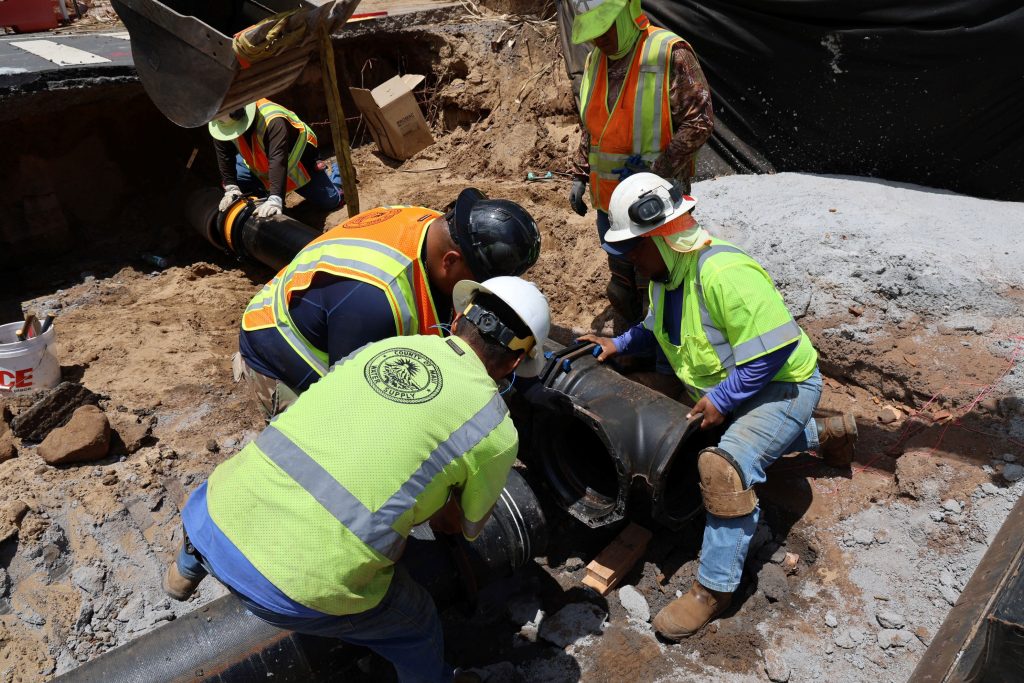
Members of the Maui County Council’s Disaster Recovery, International Affairs and Planning Committee were told Wednesday that estimated damage from the March Kona Low storms has reached roughly $100 million.
Office of Recovery Administrator John Smith displayed a slide that showed the $100 million-plus cost of Kona Low recovery and mitigation lands on top of $2.36 billion in wildfire recovery and mitigation needs — for a total of $2.47 billion in infrastructure and recovery needs, so far.
That $100 million Kona Low damage “wasn’t really budgeted” in the $1.6 billion fiscal year budget passed on second and final reading June 5, Smith said. “So, when we come back later in the fiscal year and give another update we’ll be able to tell you how much of that $100 million is gonna hit (fiscal) 2027, or maybe it’ll be a (fiscal) 2028 project.”
Maui County must pay for repairs up front and then seek reimbursement from the federal government, from agencies such as the Federal Emergency Management Agency, after going through an extensive application, review and reporting process, according to Smith. Typically, the federal government reimburses 75% of costs while the county pays for the remaining 25%.
In response to a question from Council Member Keani Rawlins-Fernandez, Smith said he does not believe FEMA helps pay for debt service on bond-funded projects.
“I think the answer is ‘no,’ but we can follow-up,” Smith said.
“I believe in you; you can change their mind,” Rawlins-Fernandez said.
Widespread damage
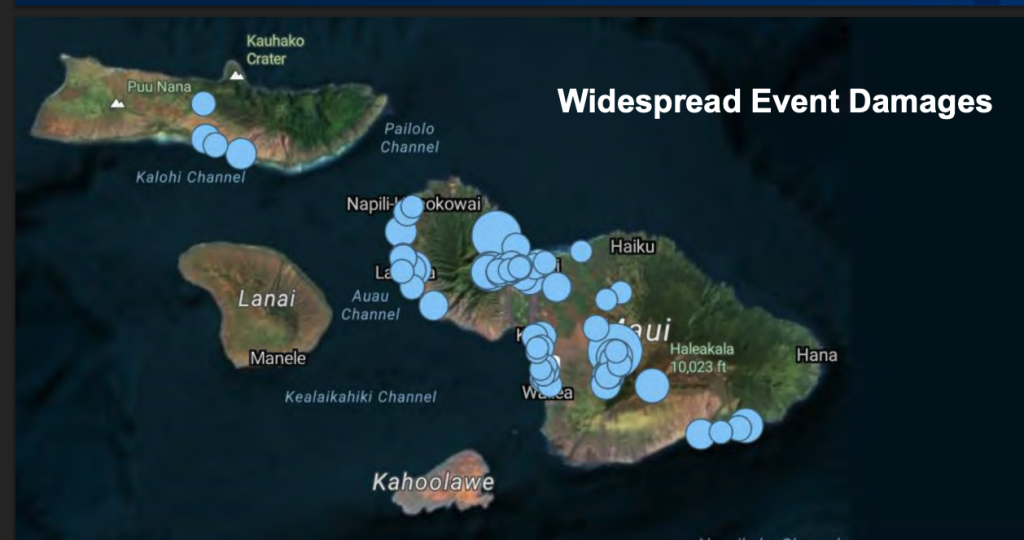
Smith reported Kona storm damage to 92 county-owned infrastructure sites spanning East, West, Central and South Maui, Upcountry and Molokaʻi.
During his presentation, Smith showed council members a map with damage sites.
“Every circle on there represents damaged infrastructure that the county owns, and the bigger the circle, the bigger the problem,” he said.
Smith emphasized that the damage in Maui County was widespread. “When the storms hit, it impacted all of Maui very significantly,” he said. “We had sinkholes everywhere.”
Significant damage included the Central Maui Landfill where flood waters tore apart some walls that have since been repaired, and homes flooded and damaged in Hāna, Molokaʻi and ʻĪao Valley, where extensive rain and flooding were comparable with the inundation there in 2016.
“Kīhei was overwhelmed with sediment and debris, along with sinkholes and other issues associated with roadway and infrastructure failures,” Smith said.
Kula Gym
The Kula Upcountry Gym appears to be a total loss and likely cannot be repaired, Smith said. A structural engineer’s evaluation is expected within 60 days.
For assistance approved so far from FEMA in Maui County, 737 applications for $4.25 million were approved for individuals and households. Another 249 applications for $2.23 million were provided in housing assistance, and other needs assistance was granted to 737 applicants amounting to $2 million, according to Smith.
South Kīhei Road sinkhole
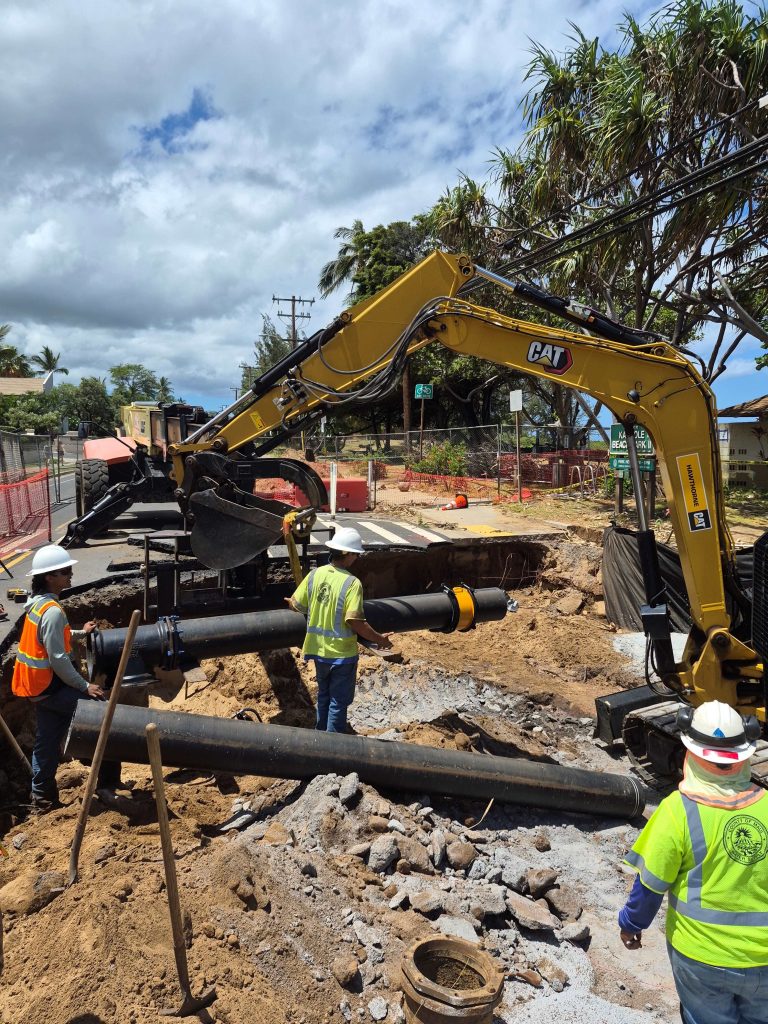
The South Kīhei Road sinkhole remains one of the most significant ongoing challenges. Smith explained that the failure began with a water main break that storm runoff and ocean surge then overwhelmed, worsening the damage. Repair crews have since replaced the water main. Officials expect crews to complete storm line repairs within two weeks, after which workers will install engineered geotextile reinforcement under the roadway.
More information on South Kīhei Road repairs is available here.
Meanwhile, roughly 300,000 cubic yards of sediment — the equivalent, Smith said, of several football fields stacked 100 feet high — has accumulated in Kīhei’s gulches, primarily Kūlanihākoʻi, Waipuʻilani and Waiakoa. (As a frame of reference, officials estimated the amount of debris from the West Maui wildfire at 400,000 cubic yards.) Maui County has applied for a US Department of Agriculture Emergency Watershed Protection Program grant of more than $20 million to fund removal.
Small Business Administration relief
Elizabeth Vargas, public affairs specialist for the US Small Business Administration, told committee members that while the initial loan application deadline of June 14 has passed, a 60-day grace period allows homeowners, renters, businesses and nonprofits to submit late applications through Aug. 13. Economic injury loans for businesses and nonprofits remain open until Jan. 7.
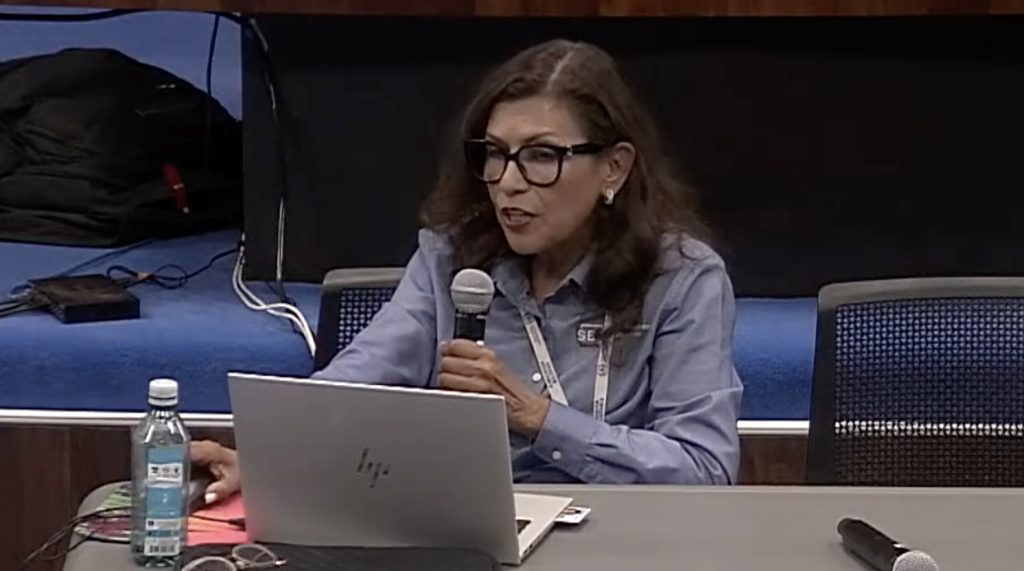
“SBA offers disaster loans to homeowners and renters, besides businesses,” Vargas said, noting that many residents remain unaware of this eligibility. “There is no cost to apply, no prepayment penalty, and no obligation to take a loan if you are approved.”
Vargas confirmed that SBA representatives visited Molokaʻi last week and will return as needed. For East Maui residents who lost power and food during the storms, Smith and Vargas clarified that residents should direct food losses to FEMA, while residents can claim personal property losses — including furniture, clothing and vehicles — through SBA disaster loans.
As of Wednesday, the SBA had approved 170 loans totaling more than $11 million. Homeowner and renter loans carry interest rates as low as 2.875%, while business loans start at 4% and nonprofit loans at 3.625%, with repayment terms extending up to 30 years. The SBA requires no payments for the first 12 months after borrowers receive their initial disbursement. No interest payments are due for the first year of the loan. A Disaster Loan Outreach Center at the South Maui Community Gym operates from 9 a.m. to 6 p.m. Monday through Friday at 1501 Liloa Drive in Kīhei.
The SBA’s Customer Service Center’s phone number is 1-800-659-2955. Vargas is the local contact via email at Elizabeth.vargas@sba.gov.
Smith reported significant changes to the Federal Emergency Management Agency’s reimbursement timeline. Historically, FEMA has taken seven or more years to complete reimbursements, but now — in response to criticism that that process has been too slow — is pushing to compress that process time to as little as a year, and no more than two or three years, Smith said.
Officials consider Maui County, designated as FEMA Disaster 4909, as “ahead of schedule” in validating damaged sites with FEMA and the Hawaiʻi Emergency Management Agency.
However, Smith said federal officials excluded parks facilities from FEMA reimbursement under this disaster declaration. The state of Hawaiʻi has appealed that determination. Officials reclassified the Kula Upcountry Gym — where high winds blew off the roof and rain saturated its wooden structure — in another category to preserve its eligibility.
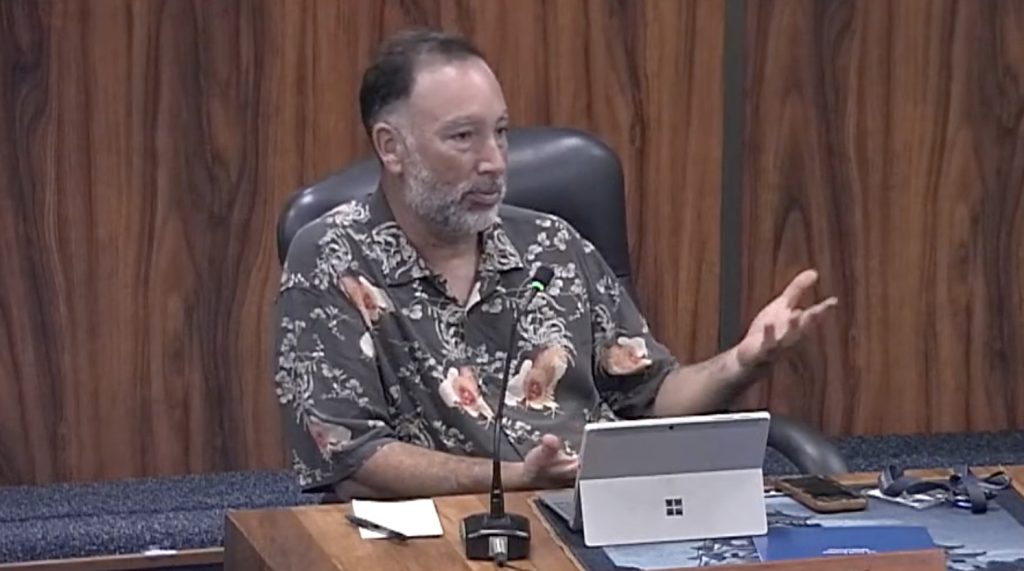
Council Member Gabe Johnson asked whether the Office of Recovery was adjusting its planning in light of an anticipated El Niño and the hurricane season, which started this month and continues through November.
Smith said the office now embeds itself earlier in the emergency response cycle — coordinating with the Maui Emergency Management Agency during active events rather than waiting for recovery to begin — and that staff are gaining critical real-time experience from the current disaster.
Johnson also asked whether any Maui County Code changes could help accelerate recovery. Smith pointed to roughly nine to 10 ongoing coordination directives the County posts on its website, each intended as a precursor to formal code revisions. He noted that the county should continue expanding the housing code simplifications it enacted after the Lahaina wildfire.
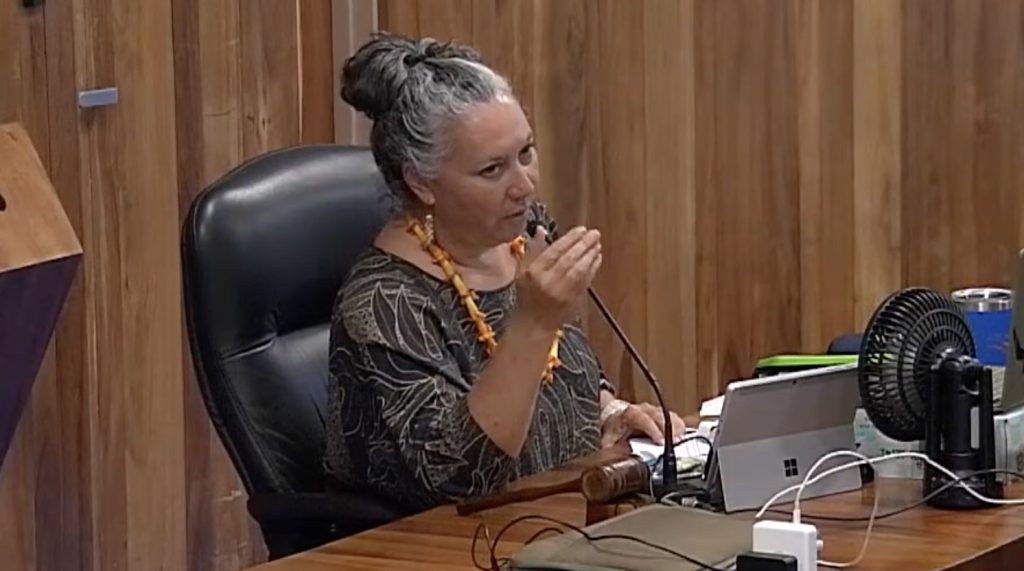
Committee Chair Tamara Paltin asked whether the County could extend to Kona Low-affected areas the factory-built home allowances it enacted for the Lahaina burn zone, and whether future disasters might qualify as well.
“I think that’s a good example of something that we should consider,” Smith said. “We would definitely be open to supporting or helping craft the language to make it work with the existing code.”
Sponsored Content