


Council postpones vote on Waiehu housing project after debate over public input
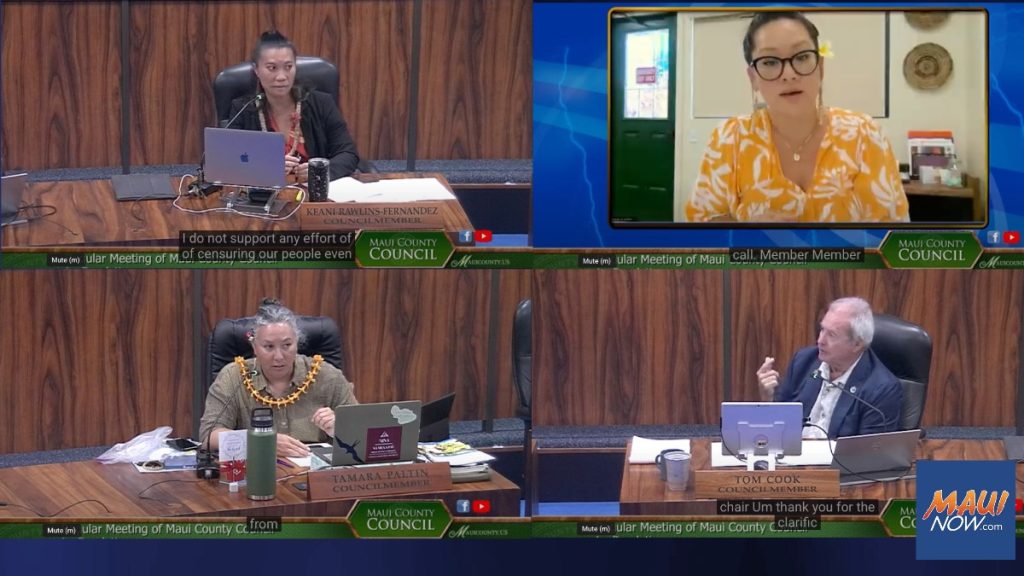
After a lengthy debate over process and public input, the Maui County Council delayed action Tuesday on a resolution that would grant exemptions and modifications to the Hale Mahaolu Ke Kahua affordable housing project in Waiehu. The Council agreed to lay the measure on the clerk’s table until its next regular meeting on Sept. 8, a compromise reached after testifiers raised questions about land title and other issues.
The decision followed more than an hour of sometimes impassioned discussion among all members who make up the current 5-4, majority-minority Council split. Majority members favored taking immediate action, and minority members wanted to send the matter to committee for further review and public testimony.
The delay will allow further public testimony at the next full Council meeting. However, it’s unlikely to change the 5-4 majority’s support for the housing project moving forward. The project has a lengthy, contentious history, and Council Member Tasha Kama said she didn’t want to revisit it.
The case for immediate action
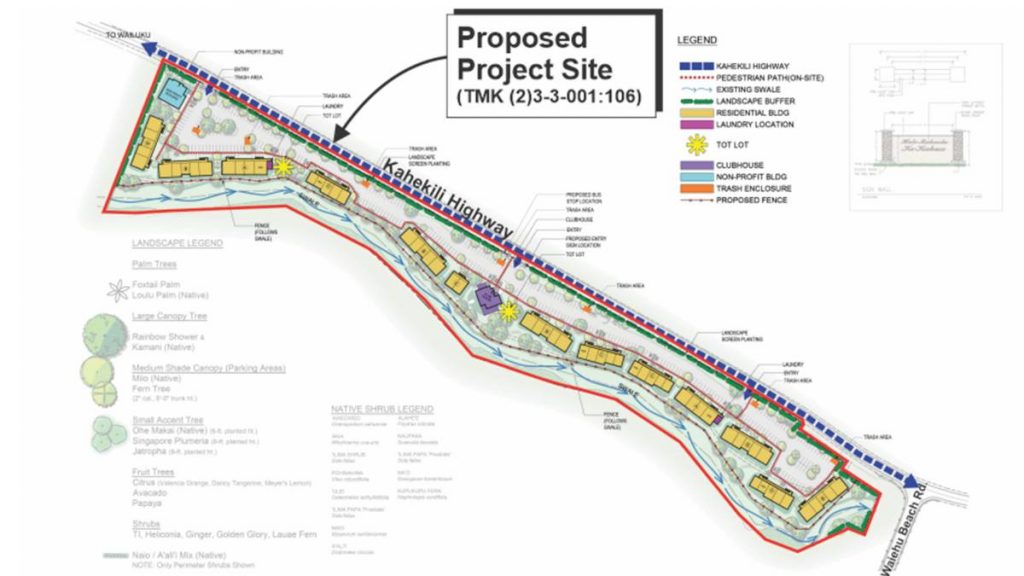
Kama, chair of the Housing and Land Use Committee, introduced Resolution 25-167 and urged its immediate adoption, saying it was necessary “so we can keep this project moving forward.” The 119-unit affordable rental project in Waiehu was initially approved in 2023. The project has returned to the Council seeking specific exemptions from the Maui County Code related to a $6 million loan approved in fiscal year 2024.
Project developers said the resolution is time-sensitive. Anders Lyons, executive director of Hale Mahaolu, and Moe Mohanna, president of Highridge Costa Development Co., explained that securing the exemptions is critical for the project to apply for competitive Low-income Housing Tax Credits. These credits are considered once a year in February by the Hawaiʻi Housing Finance and Development Corp.
“If we miss February, we get to go to next February for the project, for funding the construction portion of the project,” Lyons said.

Council Member Tom Cook said that the project had already been “thoroughly reviewed” and vetted by county departments. He said he viewed the Council itself as an “impediment” to building much-needed affordable housing and stressed the need to move forward immediately.
Council Member Nohelani Uʻu-Hodgins said she would not support sending the matter back to committee.
“I think this is probably why we have an affordable housing crisis… because it takes so long to get things permitted,” she said. “And I understand it took a little while to get to this point, but at the same time, we have the ability right now to make it happen, to ensure it doesn’t take longer to house people.”
Concerns over transparency and process
The push for immediate action met strong resistance from Council Members Tamara Paltin and Keani Rawlins-Fernandez, who argued the matter was being rushed and the public was being denied an opportunity to be heard.
Paltin said there seemed to be confusion about the matter, noting that different housing projects are handled differently. “I’d either like a written analysis of why we’re considering those and not in other projects or I’d like to further discuss in committee because a little bit it seems each new housing project… comes with a different justification than the previous projects,” she said.
Rawlins-Fernandez, who has previously opposed the project, expressed offense at the idea of moving so quickly. She noted the resolution was only received on Aug. 18, and that the administration and developer had eight months to review the changes before bringing the resolution to the Council.
“Now we’re being asked to approve this in less than one hour, which is highly inappropriate, that we’re being denied the opportunity for even committee referral at this point,” she said. “Just because some committee members… do not want to hear what the public has to say about this project does not mean that we should deny them the opportunity to speak.”
Rawlins-Fernandez had strong words opposed to the project itself.
“This project sickens me,” she said. “It proposes to sever kanaka from the ʻāina that they have stewarded and have been servant to for generations. And, while we acknowledge that there is a need for workforce housing and affordable housing, that there are other places and we don’t have to deprive kanaka continuously, especially the government.”
A compromise is reached
Despite a 5-4 vote against a motion to refer the resolution to committee, a compromise was reached to delay a final decision. Uʻu-Hodgins, who earlier said she would prefer to act on the resolution immediately, ultimately became the swing vote to lay the matter on the clerk’s table, doing so “in the spirit of compromise” and to give concerned residents at least one more opportunity to testify at the next meeting.
“That’s not my first option, but I realize I don’t like to fight with my council members unnecessarily,” Uʻu-Hodgins said. “I’d rather find a way to happily make us all a little bit unhappy and find a way forward… It gives us space to work politely with each other for the rest of the day and rest of our working life. But fighting over all this stuff for me is not worth it, and that’s for this project and all things moving forward.”
Sponsored Content