 Hawai'i Journalism Initiative
Ghost guns tough to regulate in Hawaiʻi, police and legislators agree after one used in fatal shooting of Maui officer
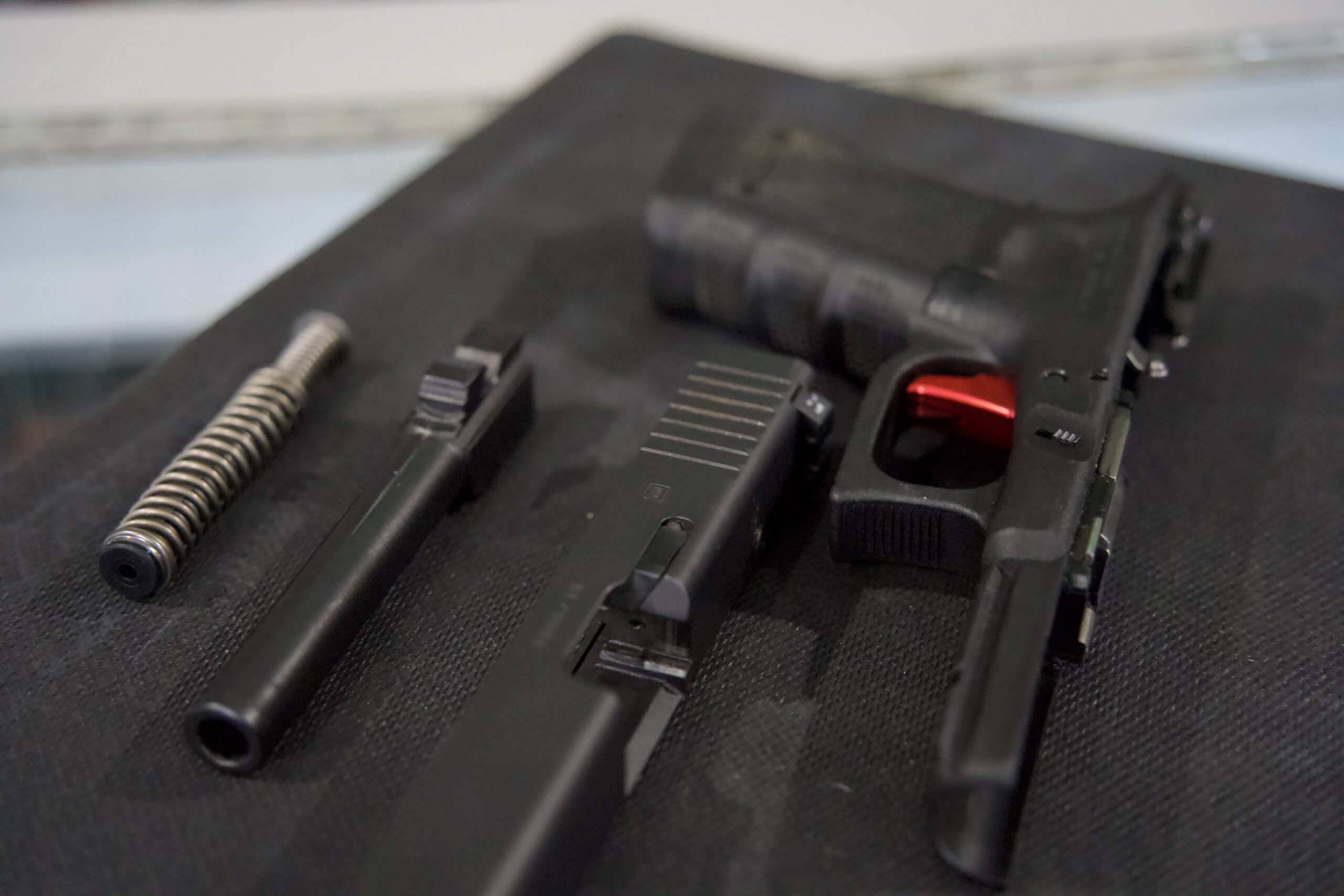
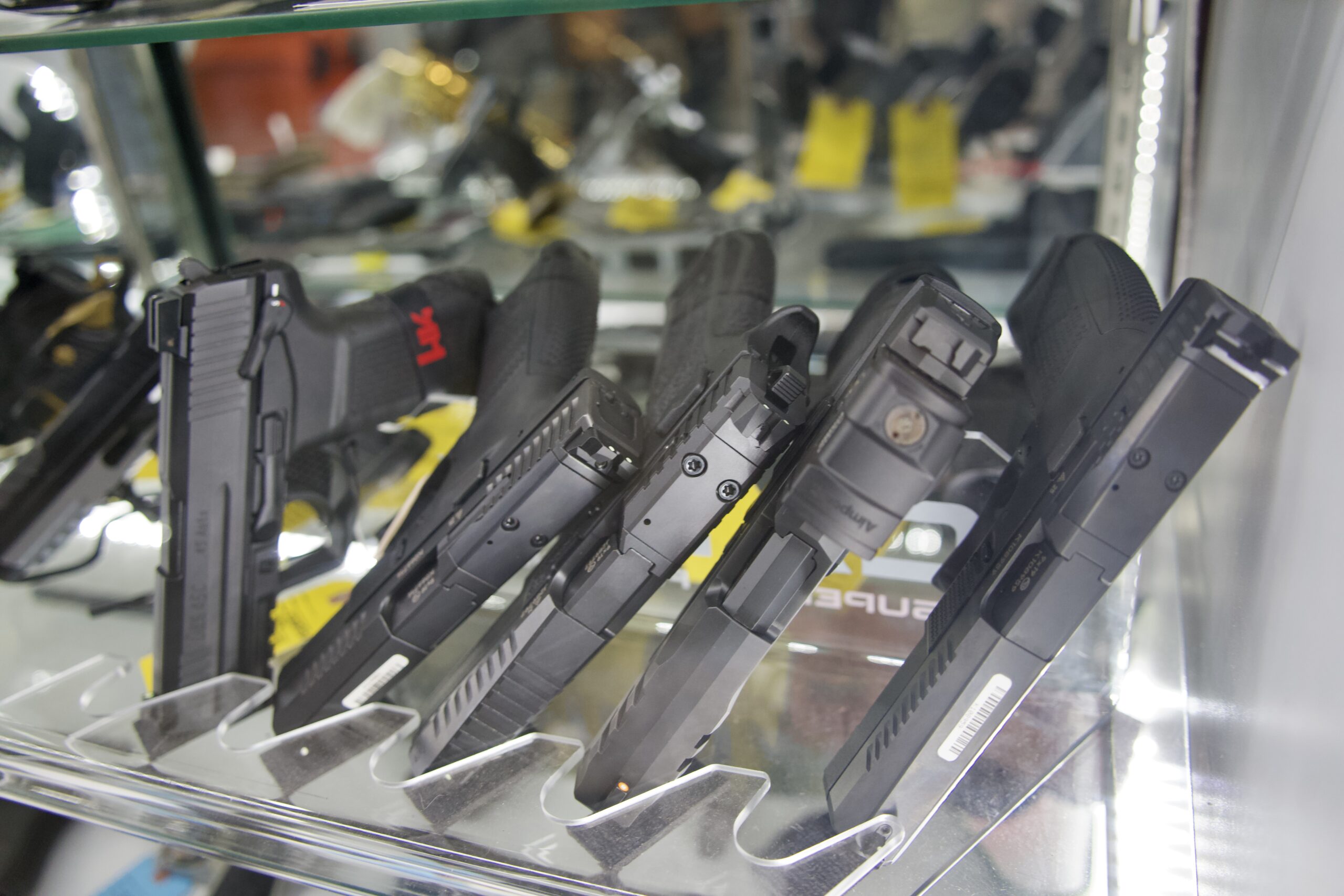
Angelena Handley Campos lays a Glock on the glass countertop of her family’s Kīhei gun shop. She dismantles the handgun with ease, carefully placing the slide, barrel and spring next to the lower receiver.
Just two weeks ago, a gun similar to this was used in the fatal shooting of Maui police officer Suzanne O. But unlike the pre-owned firearm in Handley Campos’ shop, it wasn’t serialized or registered.
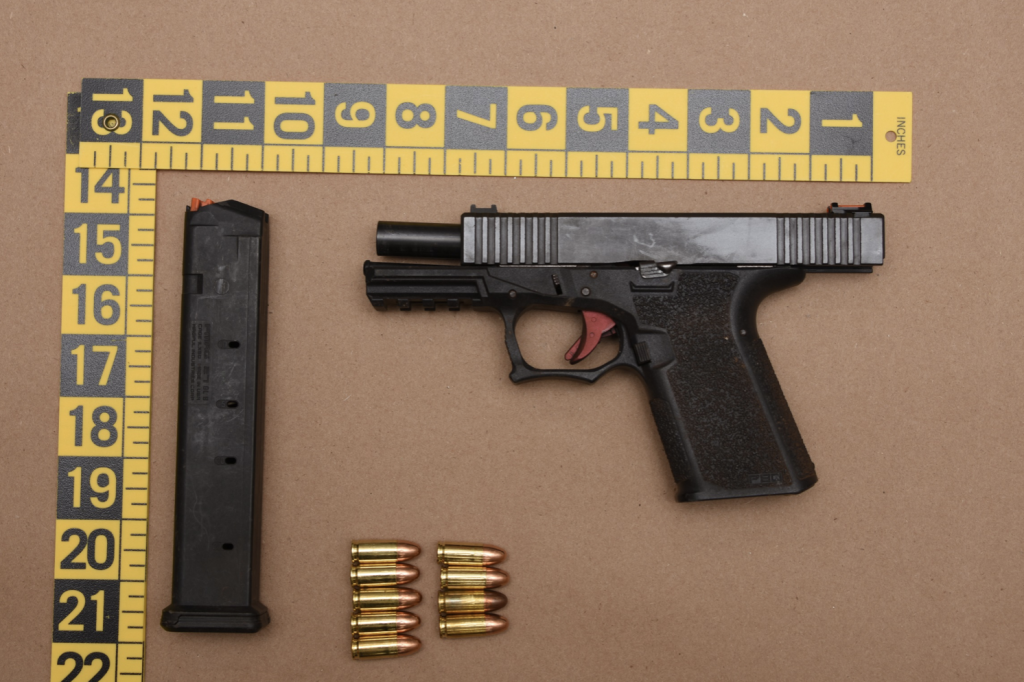
The weapon was a “ghost gun” that was untraceable until the suspected killer — a convicted felon who police say should never have had a gun — allegedly used it to fire at O as she responded to a call at the Pā‘ia Sugar Mill.
It’s all too easy to buy the parts to make a gun like this on the internet, Handley Campos explained. She pulled up gun distribution websites where the unassembled pieces go for far less than the $600 to $700 it would cost for a brand-new, ready-made Glock.
“There are thousands of manufacturers and people making them in their own homes,” Handley Campos said.
“How can they (law enforcement) hit everybody? … It’s just not possible.”
Ghost guns can be either a firearm frame or receiver that doesn’t have a serial number registered with a federally licensed manufacturer. Making, manufacturing or obtaining parts to make a gun without a serial number has been illegal in Hawai‘i since 2020, and lawmakers have made recent pushes to crack down on them even more.
Earlier this year the State Legislature passed a bill to require mandatory minimum sentencing for felonies committed with a ghost gun, and U.S. Congresswoman Jill Tokuda, whose district includes Maui County, proposed a measure in May that would create a system to observe interstate shipments of gun kits.
While gun shop owners, police officers and lawmakers agree the state has strict rules on the books, they say it’s tough to enforce against something that’s so easy to acquire and keep under the radar.
How to improve the crackdown on ghost guns is “the million-dollar question,” said state Sen. Troy Hashimoto, who represents Central Maui. “If we could solve that, I think we’d be spreading it across the United States.”
Hawai‘i has some of the strongest gun laws in the country — the gun violence prevention organization Everytown for Gun Safety ranks it No. 7 overall for laws that include 21-year-old age minimums to buy firearms and most ammunition. From 2017 to 2021, the state had the lowest number of requests to trace guns used in a crime, according to a 2024 U.S. Bureau of Alcohol, Tobacco and Firearms report.
Hawai‘i’s rate of gun-related deaths also ranked fourth-fewest in the country with 4.9 per 100,000 people in 2023, though the overall gun death rate increased 81% from 2014, according to the John Hopkins Center for Gun Violence Solutions.
But incidents like the recent fatal shooting of O, which shook a department that hadn’t seen an officer killed in the line of duty since 1999, serve as a reminder of how difficult it can be to keep ghost guns out of the hands of even convicted criminals.
On the night of Aug. 15, O was one of six officers responding to a call from the caretaker of the Pā‘ia Sugar Mill that someone had trespassed onto the private property and fired a weapon at him. O, Officer Mousa Kawas and a relief officer were searching the area when Kawas said he heard “a pop” and a scream from O, who was shot an inch above her load bearing ballistic vest.
The officers returned fire and struck the suspect, 38-year-old Clembert Kaneholani, in the left hip.
Kaneholani was arrested and charged with six counts that include first-degree murder, attempted first-degree murder, carrying a firearm in commission of a separate felony, two counts of prohibited ownership or possession by a felon and ownership of an automatic firearm prohibited detachable ammunition magazines. He has pleaded not guilty to all counts and is being held without bail.
Two guns were recovered, including a Polymer 80 Glock ghost gun with an extended high capacity magazine and nine rounds of live ammunition. Polymer 80 has been a major manufacturer of “80% frames” that include near fully assembled guns that buyers can then finish themselves.
The Maui Police Department did not respond to multiple interview requests about the issue of ghost guns on Maui.
In an Aug. 21 news conference releasing the body camera footage of the incident, Police Chief John Pelletier said: “There’s no way I can sit here and tell you that there’s nothing that I could have done to prevent this.”
“But here’s what I can tell you… If you’re an ex-felon, you should not have access to firearms. There should be mandatory prison time to be an ex-felon with a firearm. You should not have the ability to have a TRO (temporary restraining order) and have a firearm.”
Nick Krau, chair of the Maui chapter of the State of Hawai‘i Organization of Police Officers, said O’s death has been hard on officers.
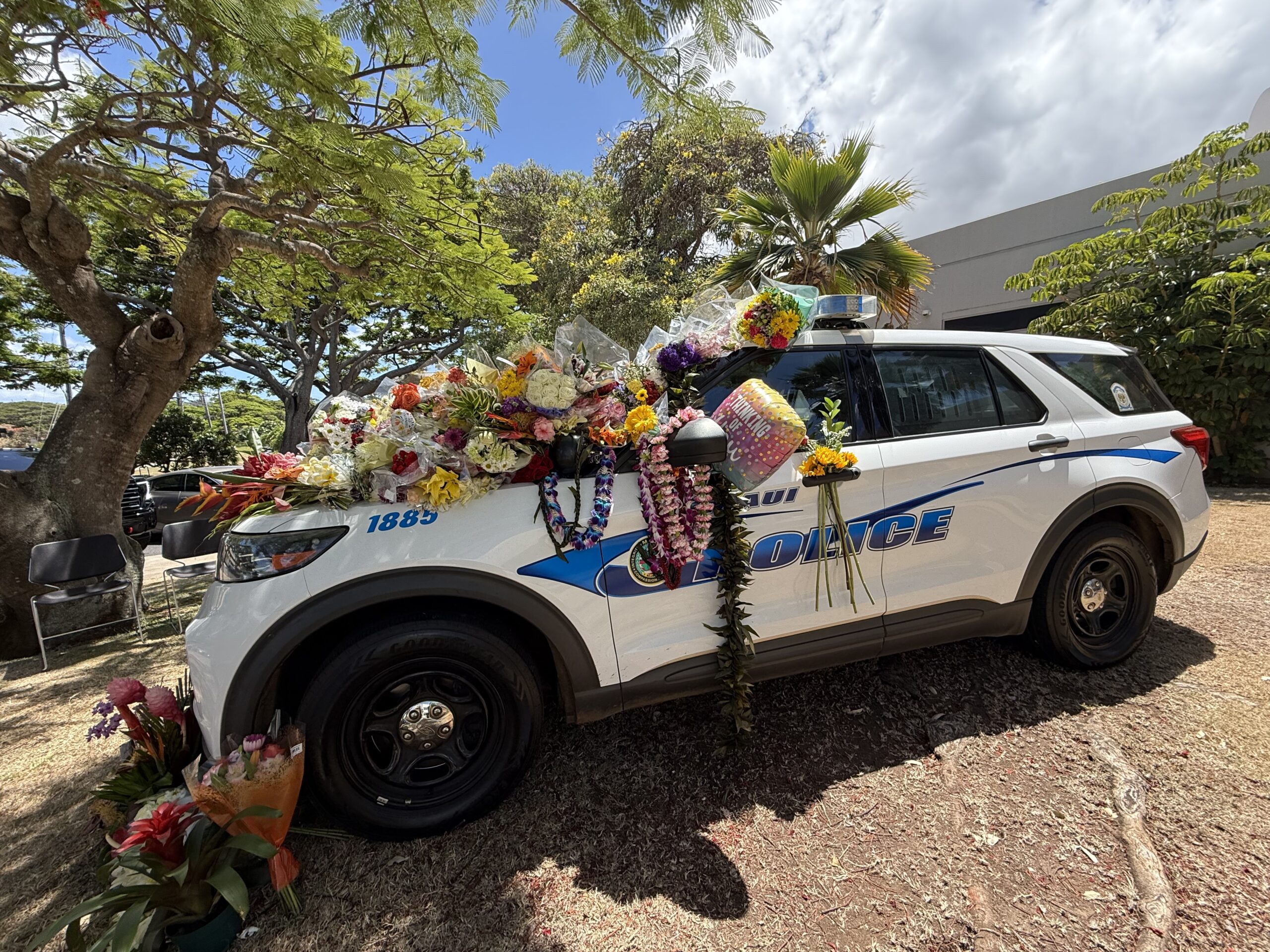
A procession and heartfelt memorial service was held for O on Friday at the Maui Arts & Cultural Center,
“Losing one of our family members, it really affects the entire department as well as their families,” Krau said. “It’s been difficult and I think it has some people reconsidering their career choices.”
Krau said cops are seeing ghost guns used in everything from robberies to illegal hunting. They’re not only assembled from a kit or printed but also can be legally owned firearms that have been stolen and had their serial number removed, “which is why we always encourage firearm owners to please be responsible and purchase a safe that’s very secure that they can store these firearms in.”
Once a serial number is removed from a firearm, it becomes a ghost gun, making it a challenge for law enforcement to trace them back to the owner, or where they came from, or how they even got into the State of Hawai‘i, Krau said.
The recent bill passed by the State Legislature that sets mandatory minimum sentencing for ghost gun felony crimes is “definitely a step in the right direction” with punishment for these crimes more consistent and a better deterrent, Krau said.
“In the state of Hawai‘i, we have some of the most strict gun laws in the country,” Krau said. “So I think we have the right laws, we just need the right penalties, and severe penalties for those violating the laws that are already on the books.”
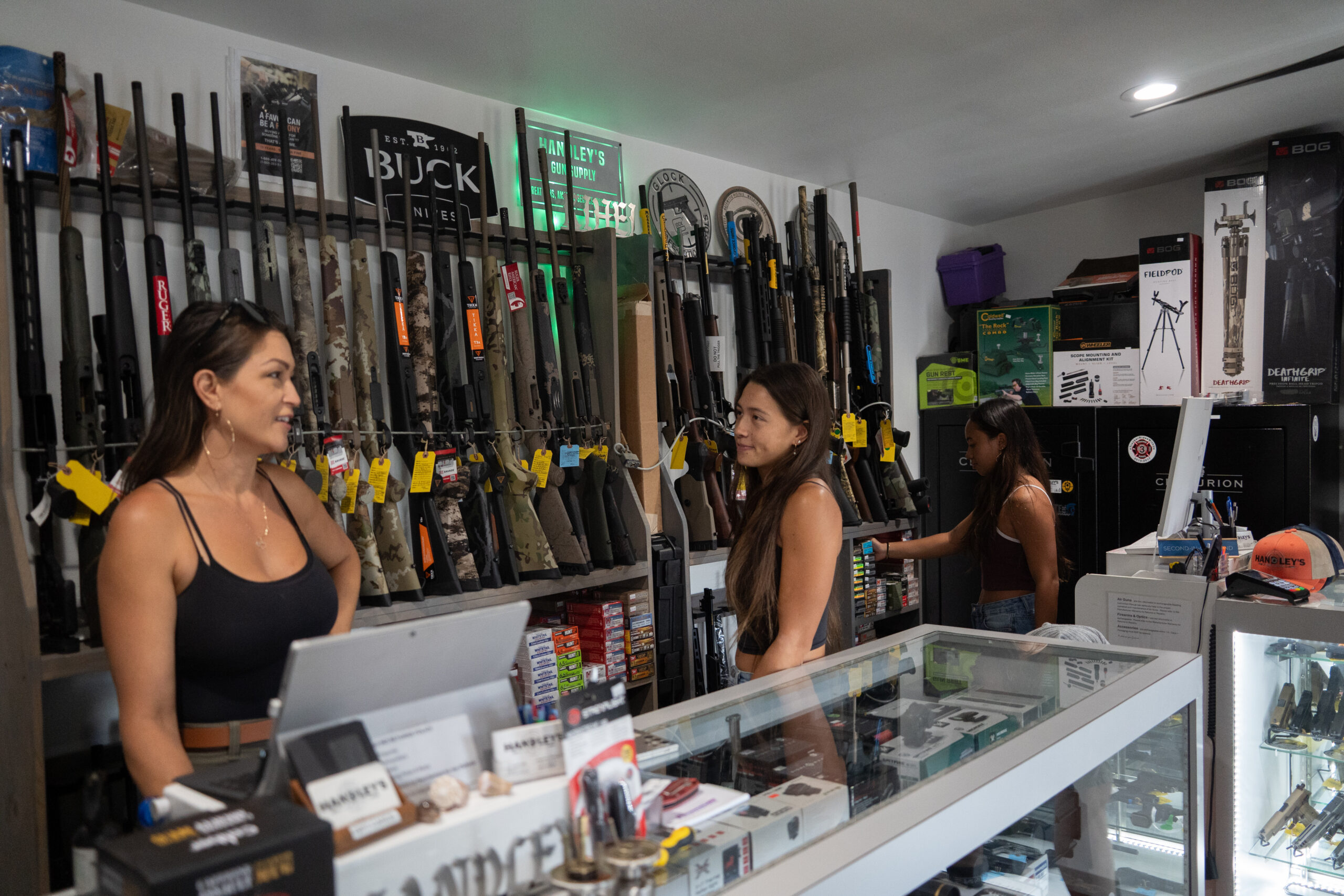
Handley Campos says it’s not easy to get a gun legally in Hawai‘i — sometimes it can take months to go through the process. As a licensed instructor and owner of Handley’s Gun Shop, she often walks people through the steps.
First, a person has to go through training with an instructor authorized by the Maui Police Department, which will issue a certificate allowing them to apply for a handgun or rifle permit. The applicant needs to provide proof of identification and residency, pay a fee of $42, and complete a number of questionnaires, forms and fingerprint card with MPD’s Records Division. There’s then a waiting period, which can range from 14 to 40 calendar days, during which they will undergo a background check. If approved, they can purchase any gun listed on the permit. Newly acquired firearms must be registered within five days.
“Fortunately for us in Hawai‘i, we do not issue the background checks,” Handley Campos said of local gun shops. “We are provided with the approved permit that’s issued by the police department. So the police department is doing the due diligence for us.”
Handley Campos said she is also cautious when new buyers come into the shop, assessing their demeanor and looking for signs of possible substance abuse. The job comes with risks — she recalled one man who pulled out a knife and threatened to kill her when she wouldn’t sell him a gun without a permit.
When a person’s answers to her questions about why they want to buy the gun “seem suspicious,” Handley Campos said, “I make my determination on whether I want to sell to them or not.”
“Sometimes it’s just lack of knowledge and I don’t want to be rude, so I will help educate them,” she said. “But if they can’t look me straight in the eyes and tell me a little bit about why they’re here and why they don’t know what they want, then I have the right to refuse.”
Handley Campos says responsible gun owners also don’t want legal firearms getting into the wrong hands and being used in crimes that reflect badly on all owners. She encouraged people to purchase safes, put locks on their guns and keep ammunition and magazines separate from their firearms.
“We aim to ensure that the law-abiding firearms community is not unfairly associated with the negative connotations of the word weapon,” Handley Campos said. “We follow all legal requirements for ownership and are fully committed to preventing firearms from reaching those who intend harm or should not have access.”
Of all four counties, Maui County has the lowest number of active licenses to carry firearms, with 183 out of the 2,207 total active licensees statewide as of Dec. 31, according to an annual report by the state Attorney General Department. Honolulu had the most with 1,356, followed by Hawaii County at 425 and Kauai County at 243.
In June, the Maui Police Department launched a new online application system to streamline the process and expedite background checks and overall processing times. That same month, the department held a gun buyback event that netted 129 firearms, of which three were illegal.
While general gun laws are heavily partisan, oversight of ghost guns is popular across the aisle. A national January survey by the John Hopkins Center for Gun Violence Solutions found the majority of respondents across the political spectrum — Democrats, Republicans, Independents and gun owners specifically — back regulating do-it-yourself gun kits like regular firearms. Still, Hawai‘i is one of only 15 states to regulate ghost guns.
In 2022, the U.S. Justice Department under then-Democratic President Joe Biden issued a new rule making kits that can be readily converted to firearms subject to the same regulations as traditional firearms. The department cited data from the Bureau of Alcohol, Tobacco, Firearms and Explosives showing law enforcement recovered 19,344 privately made firearms in 2021, a drastic increase from the 1,758 recovered in 2016. Earlier this year, the conservative majority U.S. Supreme Court upheld the Biden-era rule in a 7-2 opinion.
Hashimoto agrees that Hawai‘i has more regulations in place than other states, but those are primarily for guns that are registered and traceable. Ghost guns present a whole other issue.
“People know that we are serious about the sale and the transfer and the possession of ghost guns, but at the end of the day, if you look at the incident that happened, I’m not sure that this would’ve really stopped this person from doing it,” Hashimoto said. “I think that they wanted to get their hands on something. … We have to think about what are other things that we can do to disincentivize the use.”
The mandatory minimum bill is “a start” that Hashimoto hopes will send a message, but only time will tell. He said lawmakers will need to keep communicating with prosecutors and revisiting the issue.
“I think we’re in a little bit of a quandary, but I think it’s not going to stop us from trying to find some other solutions,” Hashimoto said. “I think we have to work closely with the prosecuting attorney’s office to figure out, OK, what are the loopholes if the legislation that we pass this year is not enough?”
It also will take investment in services like housing and mental health so that people are in stable situations and in the right frame of mind “so that they don’t even decide to pick up a ghost gun” and resort to violence, Hashimoto said.
Maui County Deputy Prosecuting Attorney Ronson Ibarra, the Circuit Court supervisor in the felony trials division, has tried several cases involving ghost guns. In the cases he’s dealt with, he said it’s most common to see guns that were made with a kit and never had a serial number.
When asked whether laws or penalties for ghost guns need to be tougher, Ibarra said it depends on the case, adding the mandatory minimum law is “a step in the right direction.”
“As of right now it appears that the lawmakers have done what they could to criminalize the conduct that they believe is an issue with ghost guns, and the penalty does address the protection of the public. It takes probation off of the table,” Ibarra said. “Someone who is charged and convicted … with that mandatory minimum will not be out in the public potentially committing repeat offenses with ghost guns. So that would be a deterrent.”
One measure that he thinks directly addresses a significant loophole in existing gun laws is Tokuda’s Gun Hardware Oversight and Shipment Tracking (GHOST) bill that creates an oversight system for gun kits being shipped interstate.
It would “give law enforcement a new tool to proactively monitor the supply chain of ghost gun parts, rather than just reacting after a crime has been committed with an untraceable weapon,” Ibarra said.
Federal law requires background checks for the purchase of finished firearms. But the individual parts needed to build a ghost gun often can be acquired legally and without a background check.
“This allows individuals who are legally prohibited from owning a firearm — such as convicted felons or minors — to easily bypass the system and acquire a deadly weapon,” Ibarra said. “The GHOST Act aims to close this loophole by regulating the sale and shipment of these parts, making it more difficult for prohibited individuals to build their own guns.”
He said there’s only so much regulation Hawai‘i can do, because it also has to balance the Second Amendment rights to bear arms. And even when laws change, Ibarra said, there are many repeat offenders.
“We’ve seen it time and time again with different types of cases, with different types of offenses,” Ibarra said. “But we’re just doing the best that we can to prosecute them to the full extent of the law.”