Still no parking for Safe Parking project; no overall homeless plan

More than four years after Maui County set aside $200,000 to create an overnight parking program for people living in their vehicles, the pilot program has yet to provide a safe haven for homeless people. And the administration of Mayor Richard Bissen acknowledged Monday that it has no comprehensive plan for managing homelessness — although the Mayor’s Office says that’s been to assess needs and prioritize immediate services, not neglect.
Meanwhile, during a June 29 meeting of the Maui County Council’s Water Authority, Social Services and Parks Committee, council members reported chronic constituent complaints about homelessness and expressed frustration with the lack of progress in finding solutions.
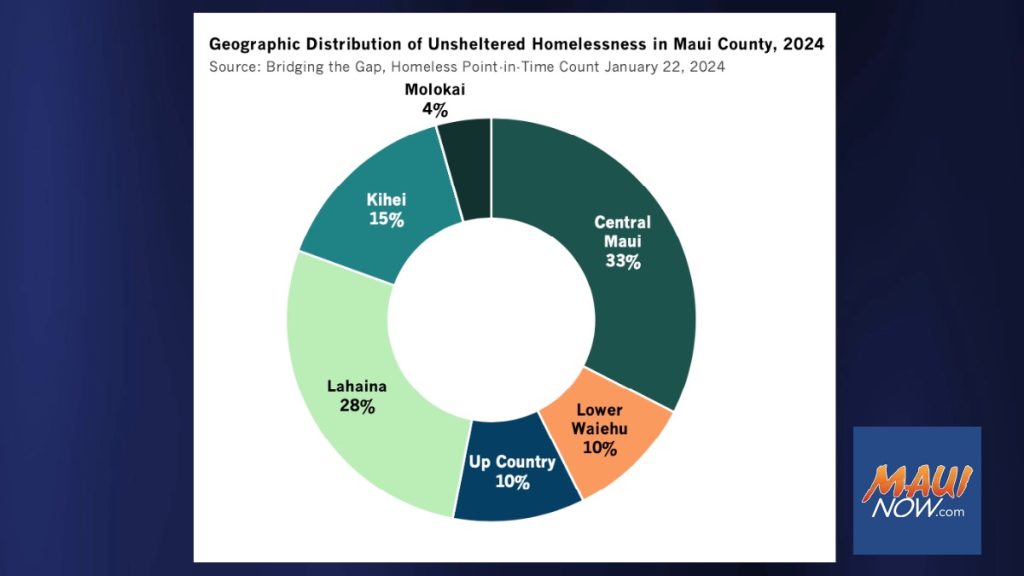
The 2026 Homeless Point-in-Time Count, released in May, found 651 people experiencing homelessness in Maui County on Jan. 25 — nearly unchanged from 654 in 2024. But unsheltered homelessness jumped 39.6% from 285 to 398, while sheltered homelessness fell 31%, from 369 to 253, a drop advocates attribute to people moving into housing.
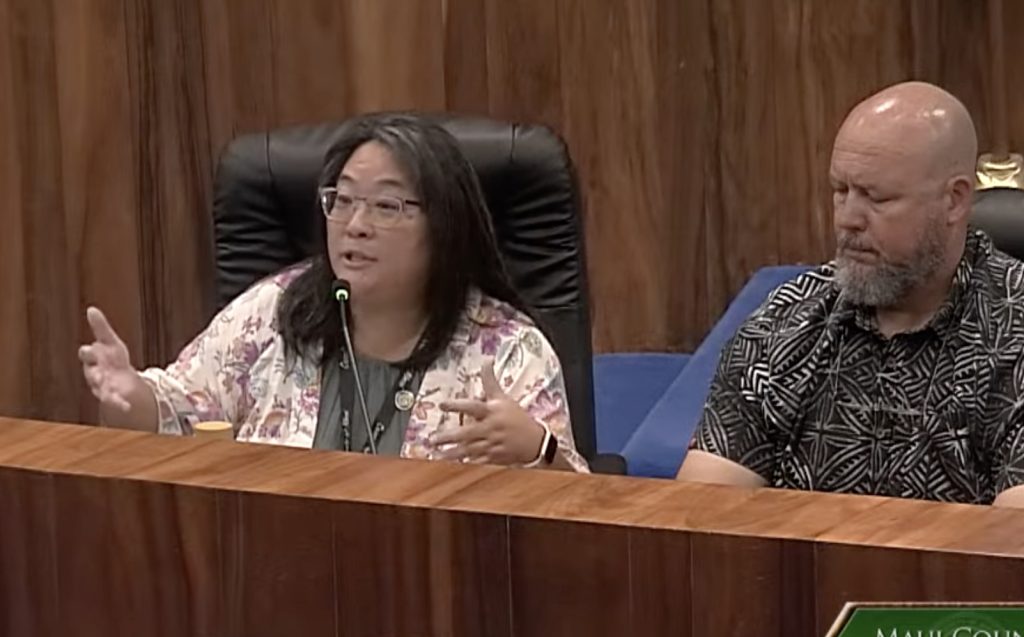
Department of Human Concerns Director Margaret Willis, who was sworn into office April 1, told council members that the County has been working with the program’s contractor, Aegaeon, a locally operated company that was awarded the safe parking project contract and received a notice to proceed in December 2025.
The contractor is ready to operate the project but cannot launch because the proposed site — a parcel owned by Maui Economic Opportunity off of Hansen Road in Kahului — sustained significant flood damage during the Kona Low storms in March, she said. The Kahului Target store closed for several days because of flooding.
“The delays really center on site readiness, largely due to the unforeseen issues caused by the Kona Low,” Willis said.
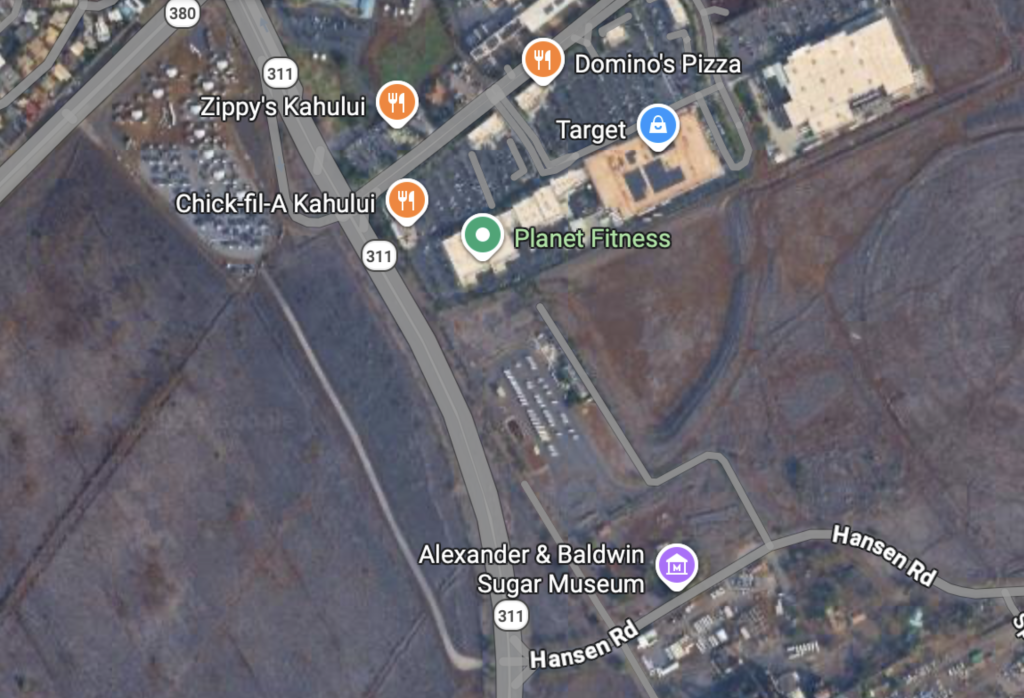
According to MEO, the project site adjacent to its Kahului bus baseyard is only available for temporary use because the agency has long-term plans for use of the property. Willis told council members the county’s agreement with MEO allowed use of the property at no cost to Maui County.
Willis estimated it will take approximately five months to make the MEO site usable: four weeks for topographic mapping, a couple more weeks for engineering, three to four weeks for permitting, and an additional 60 days for grading and road work. No county funds have been spent on the program yet, she said.
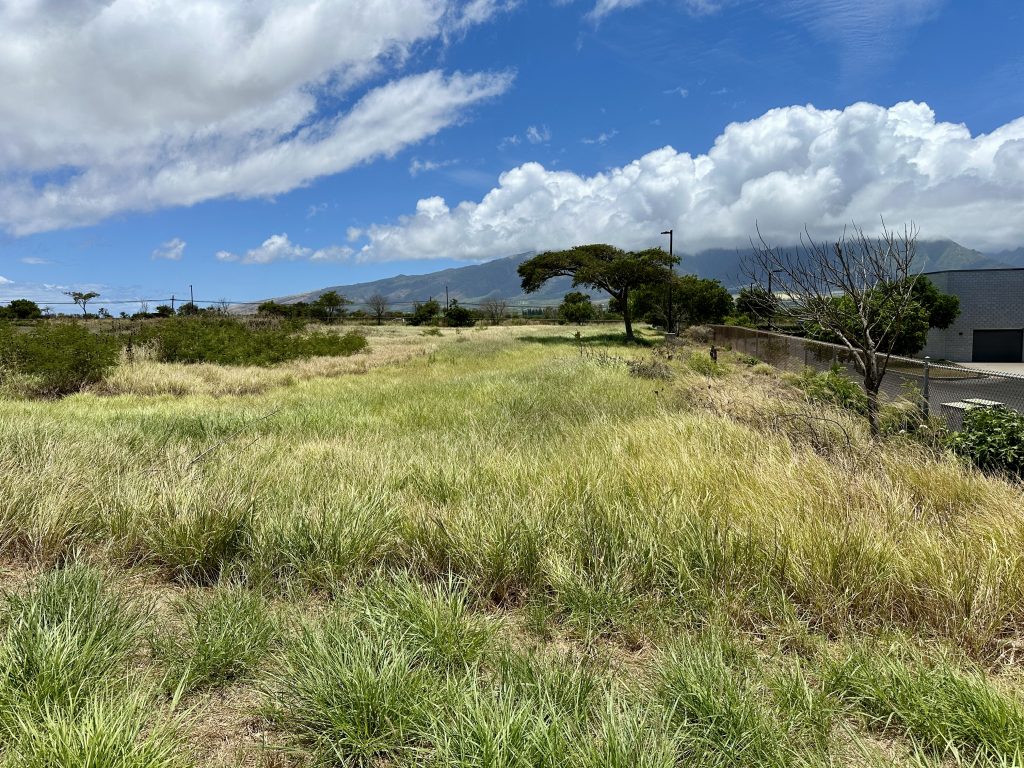
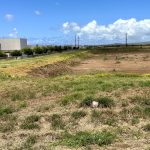
 A fence line at right separates property owned by Maui Economic Opportunity from the Planet Fitness side of the Puʻunēnē Shopping Center. The west side of the property is adjacent to Maui Veterans Highway. PC: Brian Perry
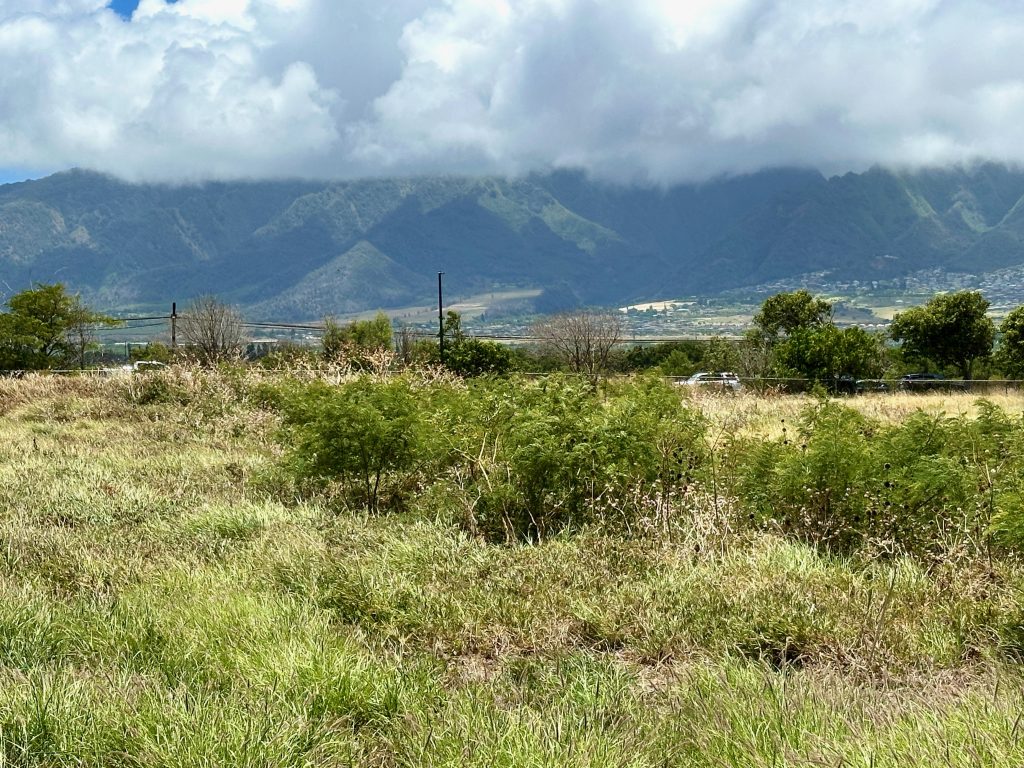
- Overgrown grass and brush are predominant features of the MEO property next to its bus baseyard. PC: Brian Perry
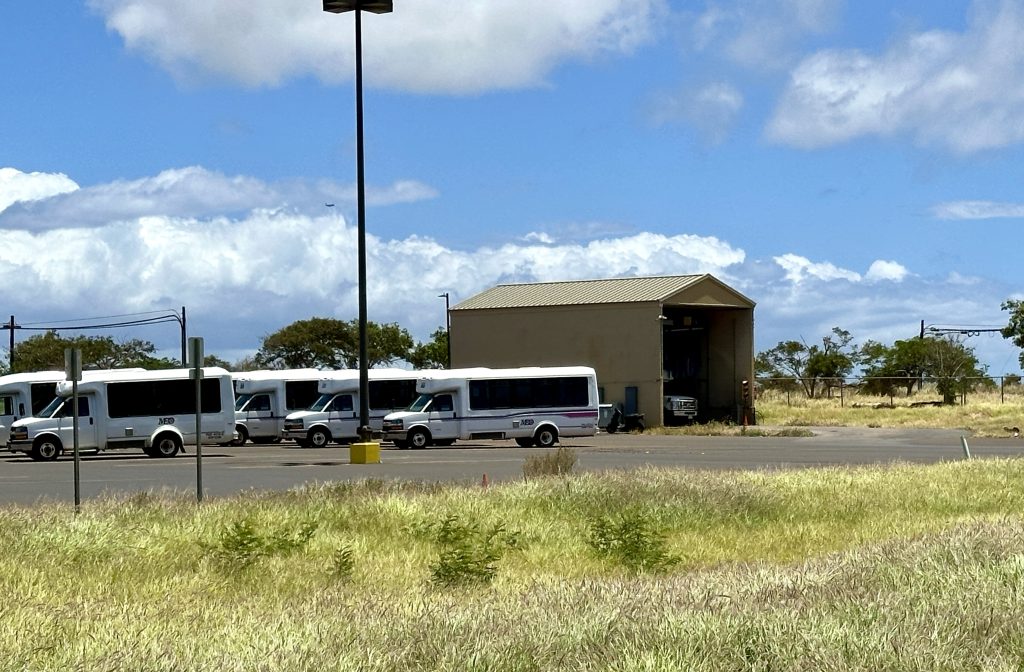
- A close-up view of the MEO bus baseyard. PC: Brian Perry
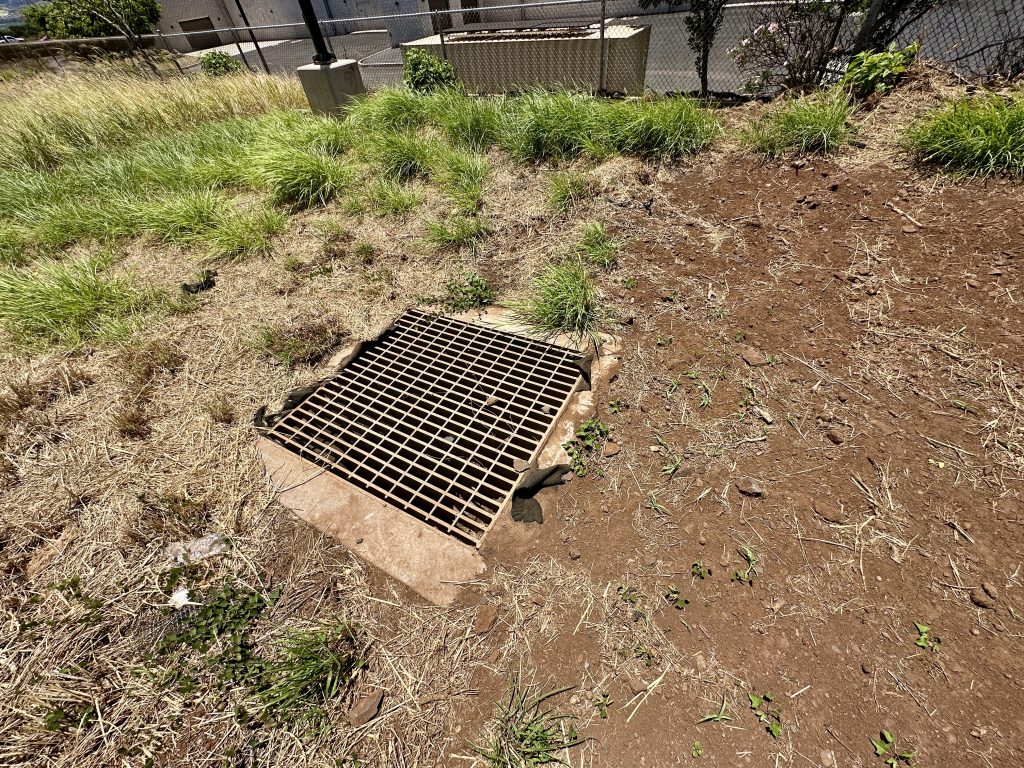
- A metal grate prevents large debris from flowing into a storm drain located on the northeast corner of MEO’s property in Kahului. PC: Brian Perry
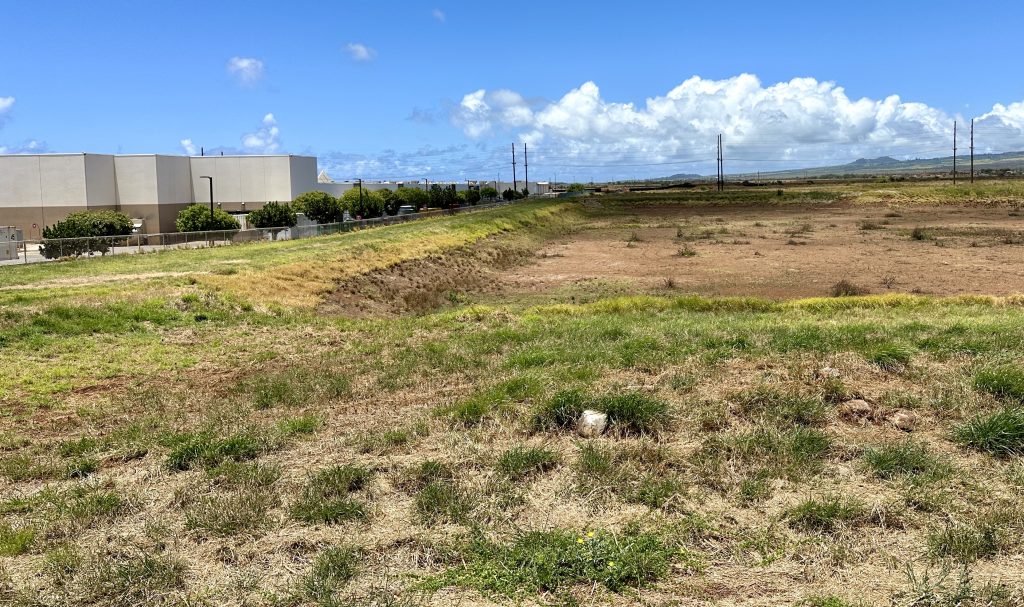
- A stormwater retention basin lies on the Hansen Road side of the Puʻunēnē Shopping Center, including the Kahului Target at the far back side (center, left). March Kona Low storms inundated and overwhelmed this retention basin, leading to extensive flooding at the Target store. PC: Brian Perry
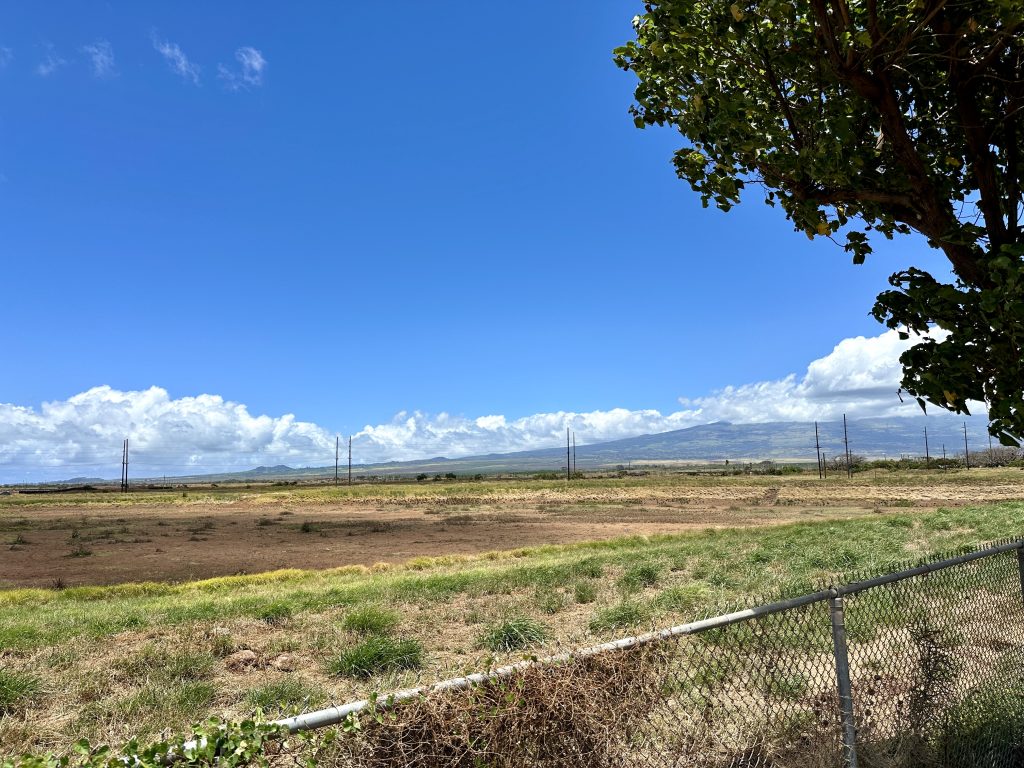
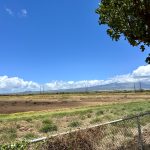
- Another view of the stormwater retention basin shows a fence line separating it from the Maui Economic Opportunity bus baseyard property. The northeastern flank of Haleakalā can be seen in the background. PC: Brian Perry
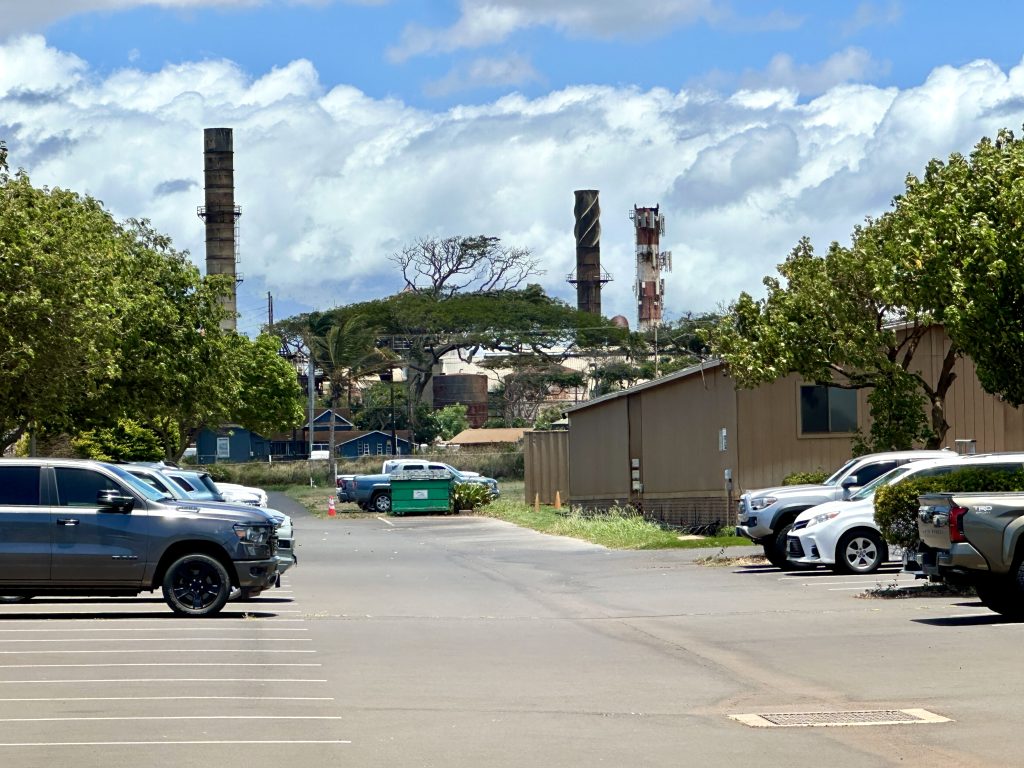
- The parking lot at Maui Economic Opportunity’s Kahului bus baseyard, with the old Puʻunēnē Sugar Mill in the background. PC: Brian Perry




Four plus years of delays
The safe parking project history stretches back to April 2022, when the County Council voted to add $200,000 to the fiscal year 2023 budget for what was then described as a “safe zone or sleeping space” for houseless residents. Months later, in August 2022, the Council passed Bill 108 amending Maui County Code to authorize a pilot program allowing people experiencing houselessness to temporarily use their vehicles for overnight shelter in designated county-managed parking lots.
That was under former Mayor Michael Victorino. Bissen took office as mayor in January 2023 and has been in office for more than three-and-a-half years.
A request for safe parking proposals wasn’t issued until late March 2025, and closed in May 2025. A contractor was selected in August 2025, with a contract signed and notice to proceed issued in December 2025. The administration also sought a $162,500 budget amendment to cover additional site costs, which the Council approved — but the money went unspent and will now lapse back into the County’s general fund because the project hasn’t moved forward, and the site situation has changed.

Council Member Keani Rawlins-Fernandez noted that in 2022, the county came close to launching the program at the Cameron Center in Wailuku. However, opposition to that site and a legal requirement to solicit service provider bidders derailed that site location.
“We would have been able to gain some experience and learn how to improve in the four years if we had just started in 2022,” she said. “But we didn’t, and so we don’t have a program, and that’s where we are now.”
No master plan — and why
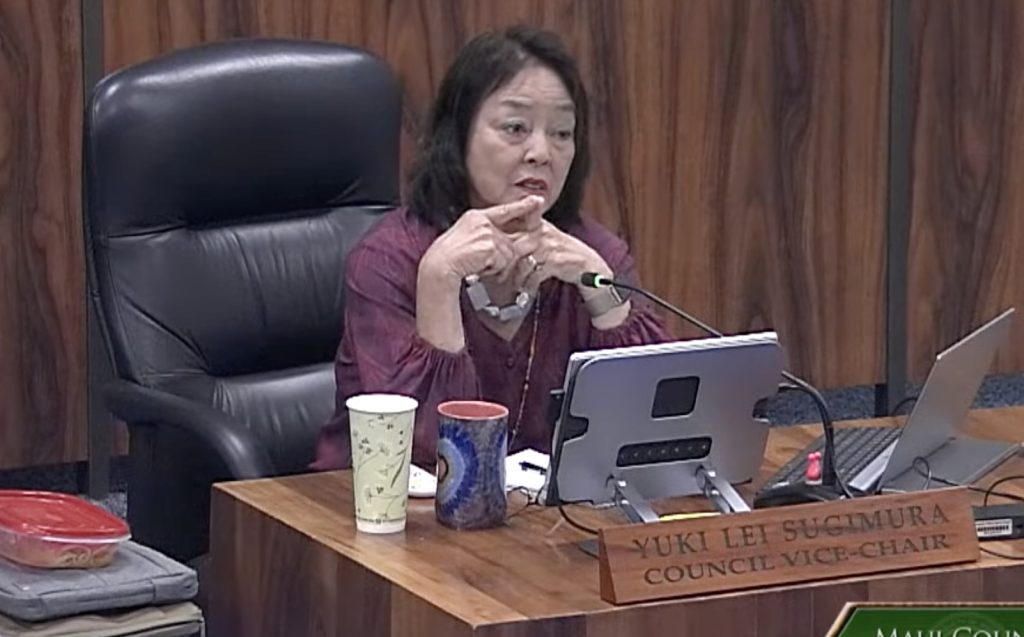
A pointed exchange came toward the end of the meeting when Council Vice Chair Yuki Lei Sugimura asked Willis directly whether the department has an overall plan to address homelessness in Maui County.
“So, as a department, do you have a plan?” Sugimura asked Willis.
“Do I have a plan right now? Does the department have a plan right now? No, we are working on it,” Willis said. “We’ve got bits and pieces together.”
Willis said she has spent her first 90 days meeting with community stakeholders, service providers and people living in encampments, and is working to compile their input into a coherent strategy.
The department is pursuing several parallel efforts, including expanding substance use treatment beds, launching street medicine through Project Vision, developing mental health diversion programs in partnership with the Partners in Healing Initiative, and supporting programs to prevent kūpuna from losing their housing, she said.
“I don’t want to dictate to the community what the solutions are,” Willis said. “I want to work with the community, hear from them, and then work together to develop this plan.”
Sugimura pressed her on when a plan would be ready.
“When we did your confirmation, you said you’re going to hit the ground running,” Sugimura said, adding that Willis has expertise in homelessness, “which is why we hired you.”
“When are we going to hear what the plan is?” she asked. “We need to know when you’re going to have it ready.”
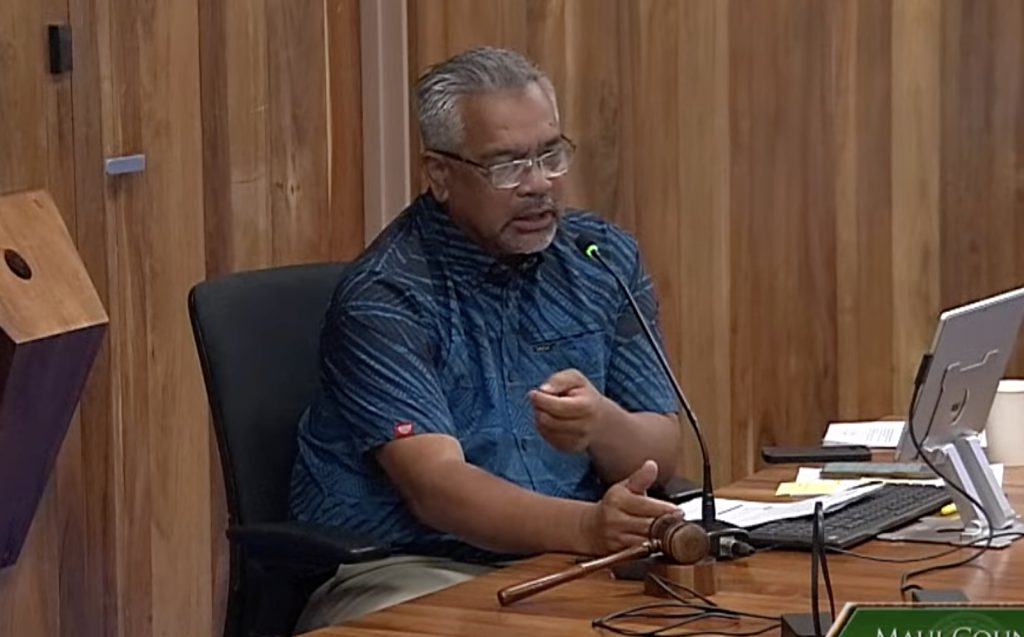
Willis did not give a specific date, but committee Chair Shane Sinenci directed staff to draft and send a letter to homeless coordinator Charleen “Naomi” Crozier for an answer to Sugimura’s question about an overall homeless plan.
Committee Vice Chair Gabe Johnson said he was frustrated by the slow pace, noting that he doesn’t believe the current path — which involves grading permits, topographic surveys and engineering work — adequately addresses the urgency felt by homeless residents and their advocates. He also raised the possibility of enlisting faith-based organizations. “I think the churches need to practice what they preach.”
Willis said engaging the faith community is on her list of priorities, and she would like to reconvene church and faith groups that had previously met with the county on these issues.
On June 29, Maui Now asked the Office of the Mayor’s Communications Team why the County still doesn’t have a comprehensive homelessness plan.
The Mayor’s Communications Team gave a fuller accounting of what happened before Willis arrived.
According to a written response from the administration, the County retained the consulting firm ECOnorthwest in November 2022 — before Bissen took office in January 2023 – to assess Maui’s homelessness system. The consulting team included Koné Consulting and Munekiyo and Hiraga.
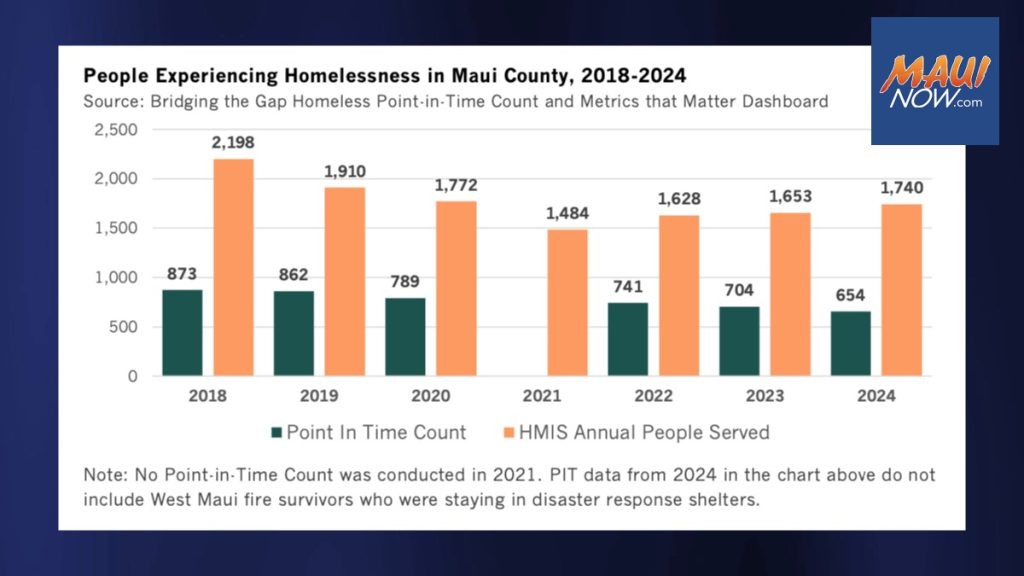
That work expanded after the August 2023 Lahaina wildfire to address the housing displacement and homelessness challenges the disaster created. The resulting report, “Recommendations to Address Homelessness in Maui County,” wasn’t released until December 2024 — more than two years after the consultant was retained.
The report laid out more than 30 recommendations and concluded that the county’s homelessness response system was too fragmented and siloed to support a consensus-based strategic plan, recommending instead that the county first improve coordination, build trust among partners and expand system capacity.
Mayor Bissen: ‘We couldn’t plan our way out of homelessness’
“The assessment reinforced what we believed from the beginning: we couldn’t plan our way out of homelessness without first understanding it,” Bissen said in the administration’s written response.
Hiring Willis was the next step in that process, he said.
“Before writing a long-term strategy, we needed to understand the problem, strengthen our partnerships, and build a system capable of delivering on that strategy,” the mayor said. “Homelessness touches every part of a person’s life, from housing and healthcare to behavioral health, substance use and public safety. If we’re going to address homelessness in our community better, we have to bring those pieces together in a way that treats every person with dignity and creates a more coordinated, effective system of care.”
Bissen said his administration views the work of addressing homelessness as unfolding simultaneously rather than sequentially.
“This work isn’t happening in phases where one step has to be completed before the next begins,” Bissen said. “People experiencing homelessness can’t wait for a finished document before they receive help. We’ve been building the system, developing the long-term strategy and taking meaningful action at the same time because our community needs both immediate action and lasting solutions.”
The Bissen administration’s written response lists 18 actions it says are underway or completed since the ECOnorthwest report, including the Grants Working Group, expanded Safe Sleeping and tiny home options and Aloha House’s new 12-bed treatment dormitory — items that stem from specific report recommendations.
From May 2025 to March 2026, Bridging the Gap’s dashboard indicates that 876 individuals and family household members were placed into housing through Maui County’s Coordinated Entry System. These individuals included veterans, individuals experiencing chronic homelessness and young adults.
Information is available on Bridging the Gap’s dashboards, which can be sorted by county, at Dashboards | Bridging The Gap Hawaii. In calendar year 2025, 951 people exited services to permanent housing, representing a 20% increase in placements over 2021, according to Maui County.
Public testimony
Testifiers and national experts who spoke at the meeting painted a vivid picture of what a functioning safe parking program looks like — and how achievable it can be. Safe parking programs have been launched successfully in communities such as San Diego, Santa Barbara and Santa Rosa, Calif.
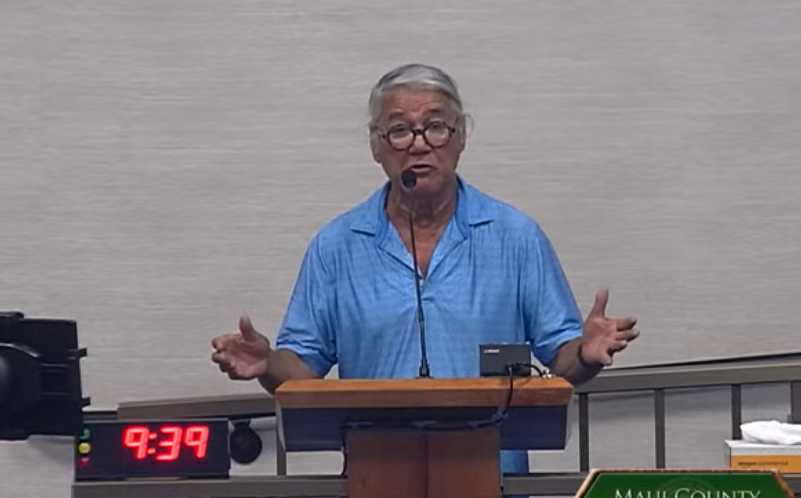
Testifying before the Council’s Water Authority, Social Services and Parks Committee, Tim Orden said: “Please, let’s really get serious about this, try to bust through some of this bureaucracy. And make this happen.”
Karina O’Malley, calling in from Kirkland, Washington, said she has operated a safe parking program for 15 years, serving up to 50 vehicles. When her site became unavailable three months ago, she set up four alternative locations within weeks, including one at a city hall parking lot.
“Helping people can’t wait,” O’Malley said. “Let’s figure out something faster and sooner.”
Graham Pruss, executive director of the National Vehicle Residency Coalition, offered to connect Maui County with a national network of organizations running safe parking programs. He said law enforcement concerns raised by a Maui Police Department captain — about sanitation, call volume, inoperable vehicles and overnight management at a safe parking site — are real but manageable.
“Safe parking does not remove accountability. It creates accountability and connection,” Pruss said, explaining that enrollment agreements, vehicle registration requirements, conduct standards and designated fire lanes are standard components of well-run programs.
“The question is whether Maui will incorporate these shelter spaces safely and productively into the homeless response system, or whether we’ll leave people to survive in scattered, informal and unsupported conditions,” he said.
Maui Police Capt. Nicholas Angell raised concerns about which agency would be responsible for enforcing rules and managing vehicles that can’t be moved. Fire Capt. Parrish Purdy said the department had not yet been given details of any proposed site plan and raised questions about water supply access and vehicle maneuverability for fire apparatus.
A point of confusion arose when it became apparent that some officials and testifiers had come to the committee meeting expecting a discussion of safe parking in county parks — which is what the original ordinance envisions — while the current pilot project is proposed for private MEO-owned land. Willis clarified that no county funds have been spent and that the contract remains with the Kahului-area site for now, though the administration is exploring other county-owned parcels.
Council Member Tom Cook asked whether large vacant commercial properties — citing an example similar to the former Sports Authority at the Maui Marketplace — had been approached. Willis said some had been explored, but property owners were either unresponsive or expressed concerns about the use.
The 2022 campaign proposals
In September 2022 —then, a candidate — Bissen addressed the homeless issue in a candidate questionnaire with Honolulu Civil Beat, suggesting the County explore leasing vacant rental car lots near Kahului Airport from the state Department of Transportation for use as overnight parking. He also proposed renovating an office building to provide showers, restrooms, laundry facilities and access to caseworkers.
On the airport lot idea, the administration said last week that it has been working with the Kahului Airport manager on the feasibility of using part of the former rental car facility for safe parking, but is still awaiting guidance from the state DOT and the Federal Aviation Administration on whether the use would be permitted, and the plan would also require the current tenant to give up its active lease.
The proposed renovated building for a support-services facility, meanwhile, was folded into the broader system-building effort rather than pursued on its own. The administration said it’s now exploring a “managed shelter community model” that could incorporate hygiene facilities, supportive services and case management similar to what Bissen described in 2022.
What’s next?
Willis said the administration is exploring whether it can fold safe parking into a broader initiative that might include safe sleeping as well, which could allow the county to leverage shared infrastructure. She said the administration is also looking at ways to use emergency contracting authority to expedite whatever comes next.
In July 1 letters to the departments of Human Concerns and Parks and Recreation, the committee asks if there’s anything preventing the pilot safe parking program from proceeding at a County-owned parking lot? If so, they request information about what’s preventing the parking lot’s use and what would need to happen to remove the barriers. And, the committee requests a copy of the County’s contract with Aegaeon Security Services Concepts and Services LLC. The letter asks for a response by July 15.
Ultimately, the committee agreed to defer the item. Another committee meeting is scheduled for July 27.
Sponsored Content