Court finds probable cause in murder case involving shooting death of Maui officer
Graphic Warning: This post contains photos and personal accounts that may be disturbing, triggering, or too upsetting for some people to engage in. Discretion is advised.
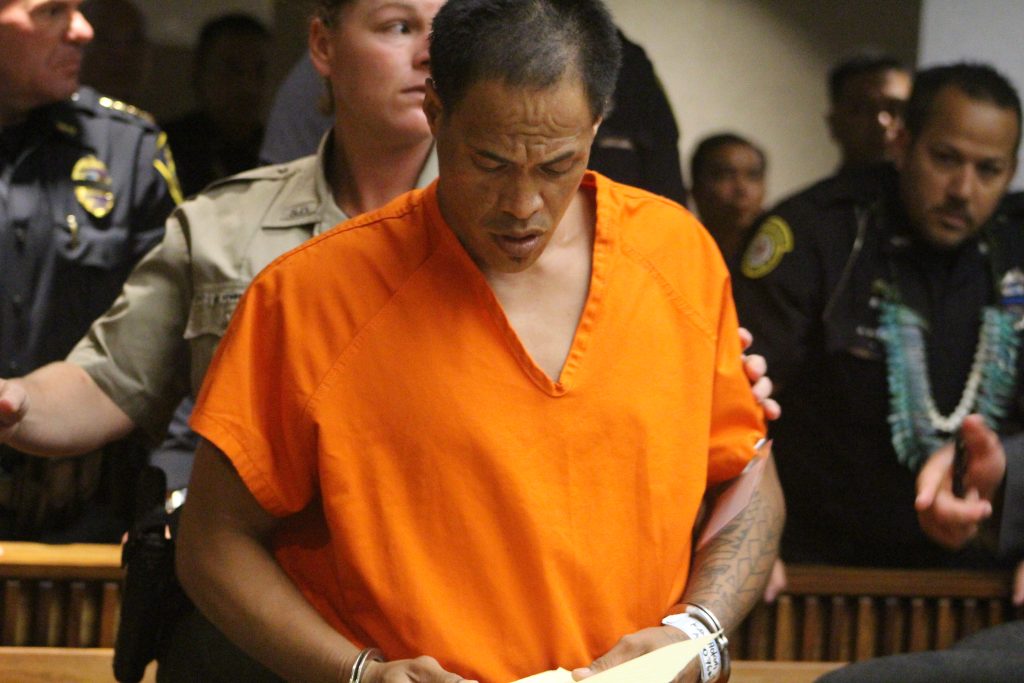
A Maui judge found that the state has established probable cause to try a man accused of murder in the shooting death of beloved Maui Officer Suzanne O, on Aug. 15, 2025 in Pāʻia. The decision came after two days of testimony from five witnesses during a preliminary hearing, with a detective, an officer and a forensic pathologist testifying on Friday.
The defendant, Clembert Kaneholani, 38, is being held with no bail set, as the case moves on to Circuit Court next week.
Kaneholani is charged with first degree murder after allegedly firing the fatal shot at police who were dispatched to the Old Pāʻia Sugar Mill property for what was initially described as a case of terroristic threatening.
The initial call came from a caretaker who reported a trespasser had fired shots at him. By the time responding officers reached the area and got the caller to safety, multiple shots had already been fired, according to earlier testimony. The fatal shot came as police worked to establish a perimeter to ensure the suspect was contained.
The six counts against Kaneholani were all committed to Circuit Court by Wailuku District Judge Annalisa Bernard Lee. In addition to murder, Kaneholani is also charged with: criminal attempted murder in the first degree, carrying a firearm in commission of a separate felony, two counts of ownership or possession of prohibited firearm or ammunition, and ownership of an automatic firearm prohibited detachable ammunition magazines.
Detective Eduardo Bayle Jr., a 20 year veteran of the Maui Police Department said he was assigned response to the officer-involved shooting where he encountered Kaneholani, who was handcuffed and was receiving medical care.
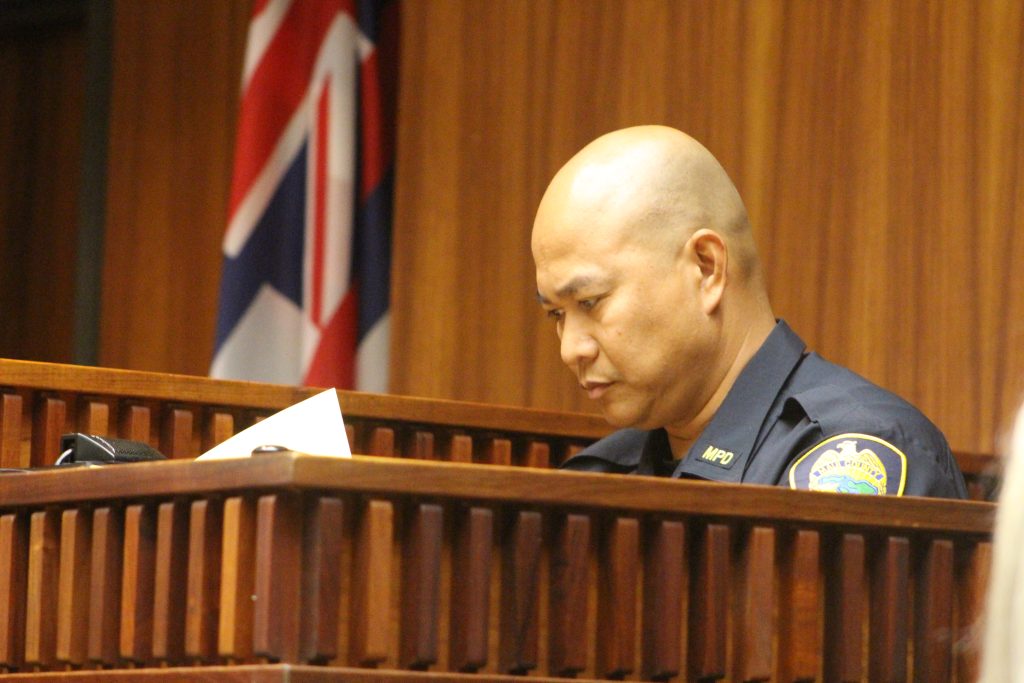
He testified that on the ground in close proximity to the defendant there were several items: a cell phone, a 9mm magazine, a set of keys and a duck call for hunting. According to Bayle, officers on scene said the items were taken out of Kaneholani’s pocket while he was receiving treatment from the Maui Fire Department and two police officers.
While on scene, Bayle said he also examined an area around the concrete block/pillar where Kaneholani allegedly fired the deadly shot. To the right of the block, police found a loaded black pistol with an extended magazine, two live rounds of ammunition that had not yet been fired, and one spent cartridge, according to testimony.
On cross exam, Public Defender Zachary Raidmae asked if there were any firing pin marks on the live rounds. The detective responded saying an ongoing investigation is underway to determine if there’s anything of evidentiary value on those items.
Raidmae also asked if a metal detector was used to locate evidence. Bayle said that it wasn’t used near the concrete block because the area had too much metal and was giving false positives.
A metal detector was, however, used in the area where Officer Mousa Kawas shot his AR15 while advancing toward the suspect, according to Bayle. Detectives initially found eight .223 casings, but came back the next day and found another one, Bayle said.
Bayle testified that through the course of the investigation, he was told that Kawas had shot the AR15 weapon 11 times. He said the department is trying to get a K-9 that can detect the smell of spent cartridges dispatched to the area, in an effort to retrieve any further potential evidence.
During the hearing, prosecuting attorneys Andrew Martin and Chad Kumugai introduced several images including photos of the front and back of Officer O’s department issued vest, a backpack found near the pillar, recovered rounds, a spent casing, area images from the scene, and other evidence gathered during the investigation.
Officer Steven Landsiedel with the Criminal Investigation Division of the Maui Police Department was sent to the scene to assist with processing.
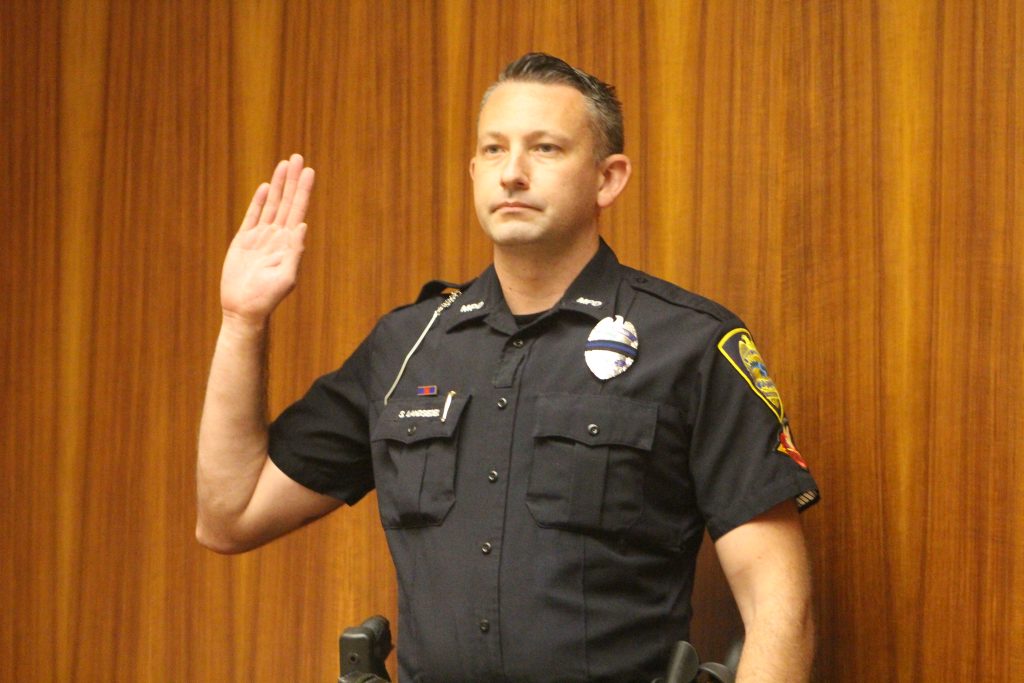
The nine year veteran of the department described the scene as an industrial area with fencing in certain locations and open fields. During testimony he said a black pistol with a red trigger and fiberoptic sights was located in a field area where there was a concrete pillar. He said the firearm had no serial number and appeared to be high capacity with a detachable magazine that was capable of holding 27 rounds of 9mm bullets.
While executing a search on a camouflage hunting style backpack found in the field near the concrete pillar, Landsiedel said police found another weapon—a wooden handle Browning gun loaded with a magazine of .22 LR. Witnesses from earlier testimony described the weapon as a handgun and Landsiedel noted a serial number: 42773T71.
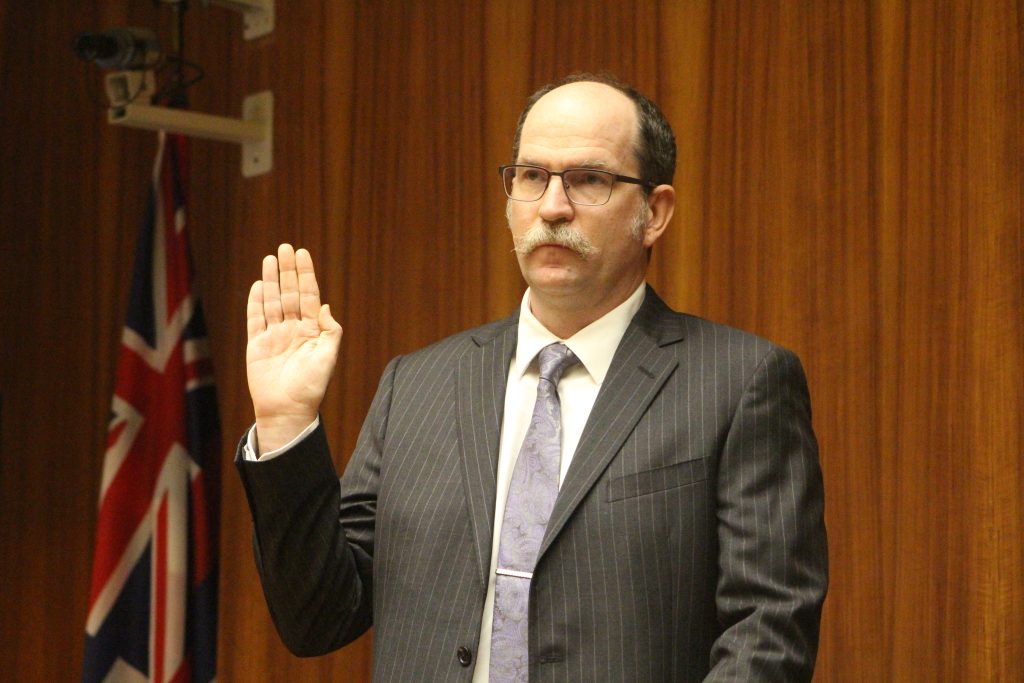
Forensic pathologist, Dr. Jeremy Stuelpnagel, who was contracted to perform the autopsy on the fallen officer, said he observed a circular gunshot wound on the left side of the officer’s chest or torso. “The gunshot wound had come through the chest, injured her heart and lungs, and caused internal bleeding,” Stuelpnagel testified.
He said the path of the bullet was from left to right, and noted the cause of death was a gunshot wound to the torso.
There was no cross exam, and the hearing quickly proceeded to closing arguments from the state.
The prosecution asked the court for a finding that the state met its burden of presenting sufficient evidence to show a strong suspicion that the defendant committed counts 1-6 as alleged.
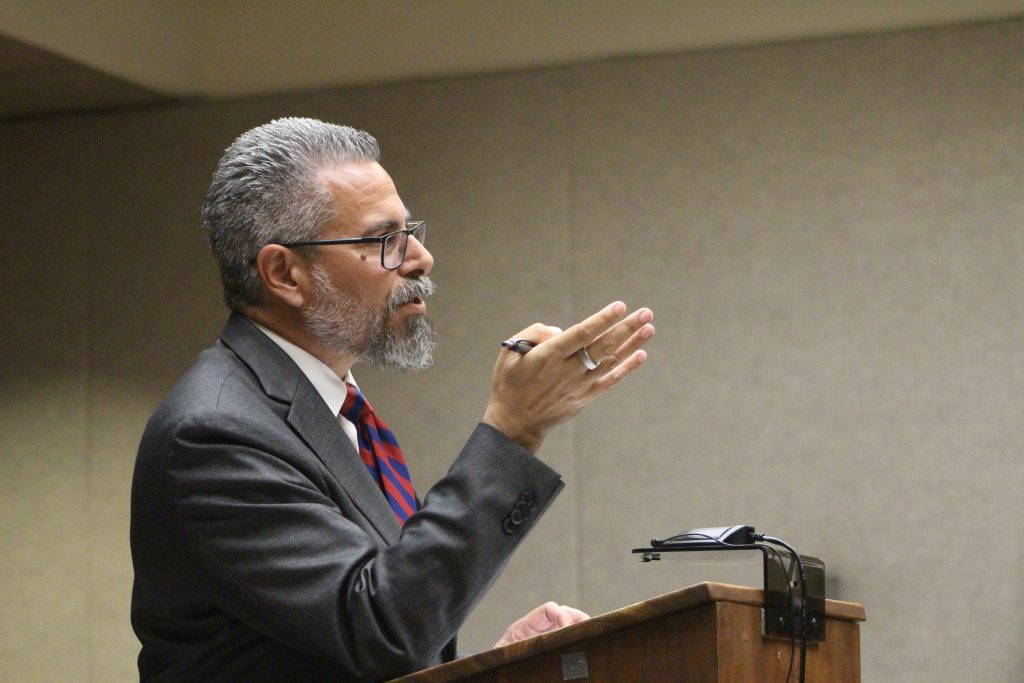
The prosecution argued that the defendant intentionally or willingly caused the death of Officer O, who was estimated to be 10 feet away from the suspect when she was fatally shot.
The prosecution said all 5-6 officers at the site were communicating using flashlights “sweeping back and forth” and were calling out to gauge each other’s position.
He said there’s “no other common sense or logic.” To say the defendant “had no way of knowing the officers were in the area,” made no sense, and said it would be, “ridiculous to suggest it.”
In addition to a finding of probable cause, Martin asked the court to schedule an arraignment and plea within seven days.
Judge Lee said the court found all witnesses to be “credible and articulate” in describing what had transpired. She agreed that the state had presented enough evidence to move forward and bound the case over to Circuit Court for an initial hearing on Wednesday, Aug. 27 before Judge Peter Cahill.
Earlier this week, the Maui Police Department released body camera footage from one of the responding officers, while Police Chief John Pelletier vowed the department would be “relentless in its pursuit of justice.”
The department also held a candlelight vigil on Friday night to offer the public a time of quiet reflection, healing and unity. Meanwhile, a separate blue light tribute runs through Aug. 29 to honor the memory of the fallen Maui officer.
Sponsored Content