
 Hawai'i Journalism Initiative
Political newcomers top fundraising in races to fill critical Maui County Council seats

The top fundraisers in the Maui County Council races are political newcomers who are competing in the upcoming Aug. 8 primary election for two critical seats that will be vacated at the end of the year by the chair and vice chair.
Bobby Pahia, a kalo farmer who is running for the Upcountry seat left open by Vice Chair Yuki Lei Sugimura in her bid for mayor, leads all primary candidates in fundraising with $55,595, according to Campaign Spending Commission reports filed this month.
Retired acupuncturist Alan Lloyd and Maui Airports District Manager Marvin Moniz also are among the top fundraisers with nearly $30,000 apiece in a crowded five-candidate contest to replace outgoing Chair Alice Lee in the Wailuku-Waihe‘e-Waikapū seat.
And, incumbent Council Member Kauanoe Batangan is leading fundraising for the Kahului race as he defends his seat for the first time after being appointed by Mayor Richard Bissen in December following the death of Council Member Tasha Kama.
The three seats are the only ones on the nine-member council that will be contested in the primary in 20 days. Four others seats have only two candidates and are headed straight for the general election on Nov. 3, while two others, the Moloka‘i seat held by Keani Rawlins-Fernandez and the Lāna‘i seat held by Gabe Johnson, are unchallenged.
Ballots have been mailed out. Dropboxes for the ballots opened on Friday and will remain available through the election.
It’s a primary full of political newcomers angling for wide-open seats that could determine the balance of a council that’s often voted on a 5-4 split on major issues. Sugimura is seen as part of the more moderate five-member majority.
Pahia said he “can’t say for sure” why people are contributing, but the overall makeup of the council “may be a reason.”
Two of his donors include current Council Member Tamara Paltin, who gave $312, and Kokua Keani, the campaign of Rawlins-Fernandez, which gave $1,000. Johnson also stood in support of Pahia when he announced his campaign in January. All three are seen as part of the four-member progressive minority.
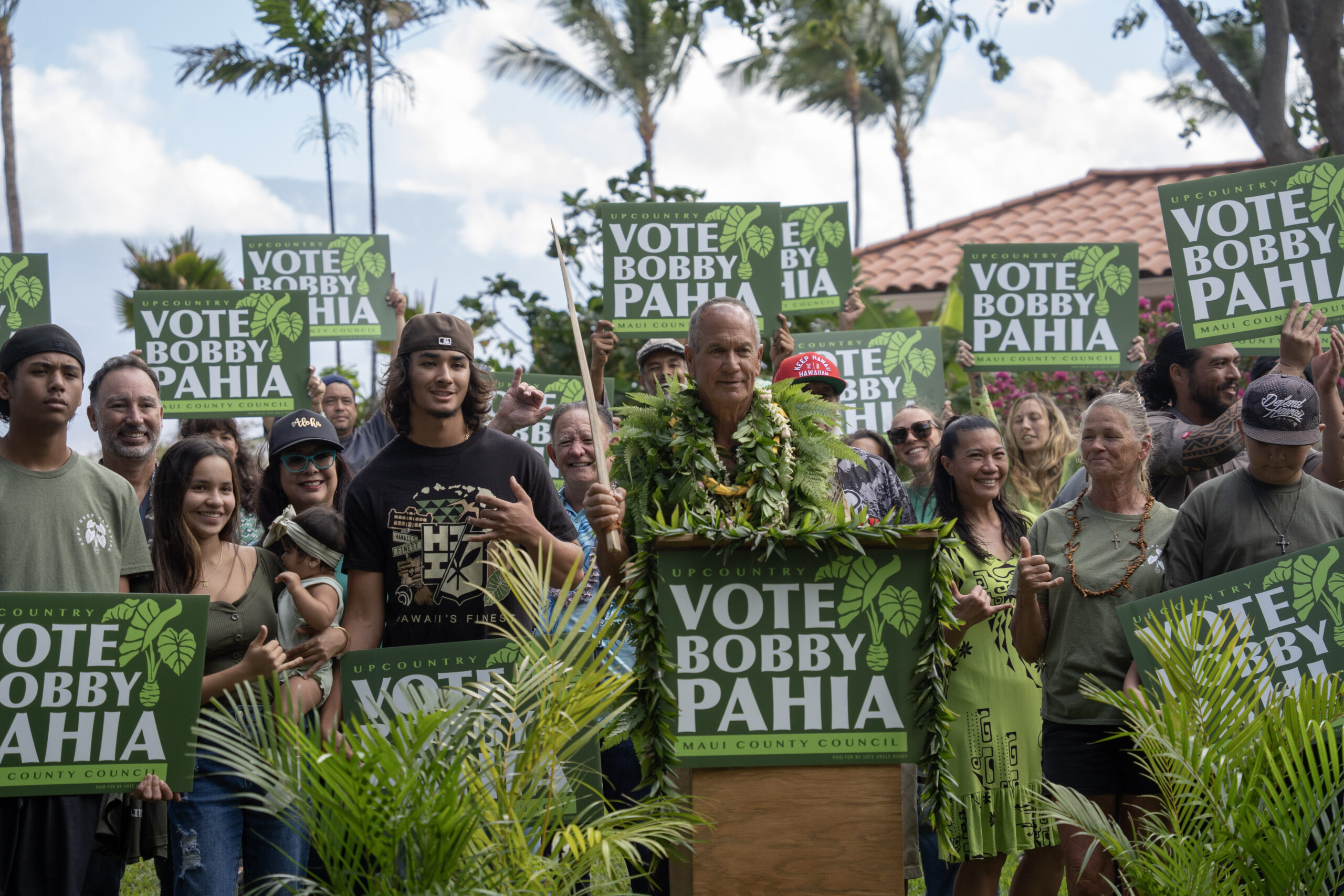
In the primary, Pahia is up against Derrick Cabiles, who has received $7,503 in campaign contributions; Jon Yokouchi, who has raised $2,614; and John Guard, who has brought in $241.
Many of Pahia’s supporters include fellow farmers, such as Vicente Colleado of Ho‘omana Farms, who gave $2,000, and Ha‘ikū farmer Sara Barr, who contributed $1,040. Several other farmers gave donations under $1,000 or provided supplies for campaign events.
Pahia also landed union contributions, including $2,000 each from the ILWU Local 142 PAC and the UFCW Local 480. Other top donors who gave the maximum $2,000 include O‘ahu state Rep. Kim Coco Iwamoto, Wailuku author Sulara James, Honolulu resident Noralei Pahia-Desuacido, Seattle resident Margot Kenly and Seattle resident Donald Cumming.
Pahia also loaned himself $10,000.
Contribution limits vary by race — four-year nonstatewide offices like the Maui County mayor’s race are limited to a total of $4,000 in an election period, while two-year offices like the Maui County Council are limited to $2,000.
“I tell you what — we work hard for that,” Pahia said when told he was the top County Council primary candidate in fundraising.
But Pahia said he’s less worried about how much money he’s getting and more about whether people actually show up to vote in a state notorious for low turnout. He said he thinks people don’t trust the government and feel like their voices are not being heard.
“Normally, the guys with the most money win, and that’s the problem,” Pahia said.
Pahia said he thinks council members and other donors are supporting him because they know his work as a farmer, and social media has helped boost his profile and his platform of food security at a time when the issue really resonates with people.
“I think that people trust me … because I’ve been doing the work in the community for the last 40 years,” he said. “I never do try and do what I do to gain acknowledgement from the community. I just do that because we gotta eat.”
Pahia has spent $24,609, while Cabiles spent $3,949, Yokouchi used up all his funding and Guard spent $24.
Two donors were listed on Cabiles’ report: Everett Dowling, president of Wailuku developer Dowling Co., who gave $2,000, and Robert Stoner, vice president of S&F Land Co., who gave $250. He also put in $100 of his own funds.
All of Yokouchi’s and Guard’s contributions were from their own funds.
CROWDED CONTEST: WAILUKU-WAIHE‘E-WAIKAPŪ SEAT
The Wailuku-Waihe‘e-Waikapū race is the second-most heavily funded of the primary contests.
Lloyd had the biggest campaign chest with $29,420 in contributions, but most of it came from his own funds. Just two outside donors were listed on his report: Michigan resident Peggy Dahlberg, who gave $1,000, and California resident Mary Ochs, who gave $150. Lloyd put $18,100 of his own seed money into the campaign as well as a loan of $10,000. He has spent $7,236 so far.
Lloyd, who moved to Maui from Seattle seven years ago, said he’s been saving money for over a decade to use “for some occasion that I think I feel strongly about, and this is one of those occasions.”
When asked if he was concerned that he hadn’t gotten contributions from other Maui community members, Lloyd said he wasn’t, “because I haven’t tried to go to other community members and ask for dollars.”
“If I went and did that, then I would have more funding,” he said. “But when you’re running a campaign … you have to decide what you’re going to focus on, and so I decided that I would rather use my savings and focus my time on going and talking to people and listening to them.”
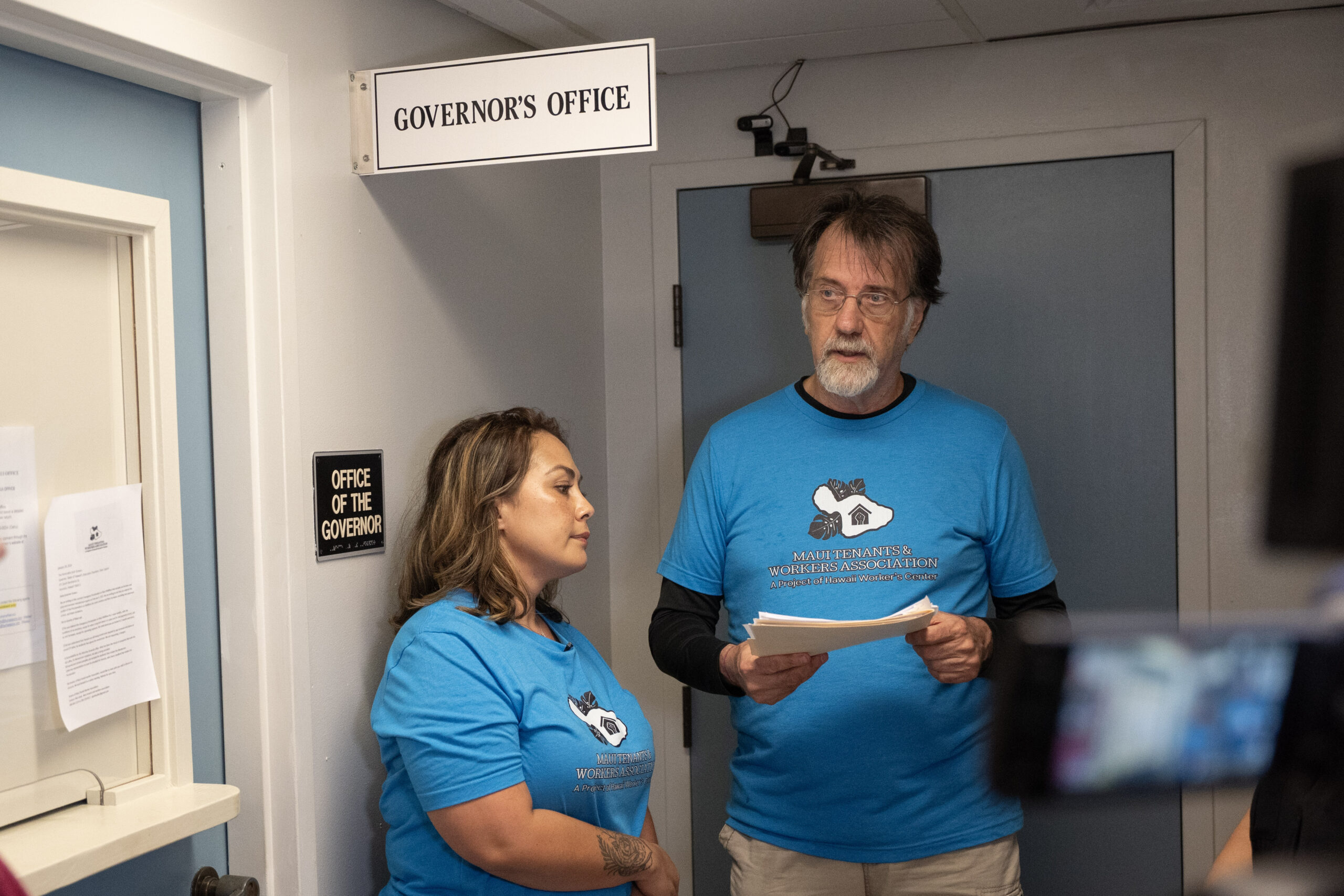
The Wailuku resident said he decided to run after several people suggested he take a shot at the open seat.
“I was just frustrated with the lack of progress, the lack of investment in affordable housing,” Lloyd said.
As part of the Maui Tenants and Workers Association, he’s urged the council to take steps such as rent stabilization and a permanent rental assistance fund for 2023 fire survivors.
In addition to housing, Lloyd said his core issues are improving infrastructure, lowering grocery prices and providing services for kupuna as well as low-cost preschool. As a tutor at Wailuku Elementary, he’s worked with students who are behind on their reading levels, and he pointed out that families who work multiple jobs may not have the time to put in additional education hours before their kids start kindergarten.
Moniz got the endorsement of Lee, the outgoing council chair, but Lloyd said that’s not always an advantage. He thinks it’s anybody’s game with the candidates in the race all political newcomers who are unknown to many of the voters whose doors he’s knocked on.
“I’m going door to door and introducing myself so they have a little familiarity with me,” he said. “So (Moniz) may have been endorsed by Alice Lee, but a lot of people don’t know who he is.”
And, he noted, he doesn’t take political action committee contributions, unlike Moniz.
Moniz, the Maui airports district supervisor, brought in a total of $26,500 and has spent $19,148.
His biggest donors included car dealership owner James Falk, T.J. Gomes Trucking manager Terrance Gomes and Maui Skydiving, who each gave $2,000, while Island Health owner Josette Sullins, Fergus & Company owner Alexander Fergus, Frampton & Ward owner David Ward and MK Advisory Group each put in $1,000.
The ILWU Local 142, Hawaii Realtors PAC and Plumbers and Pipefitters PAC Fund also gave $2,000 apiece.
Haleakalā National Park ranger Ari Wong also was a top donor with $2,000.
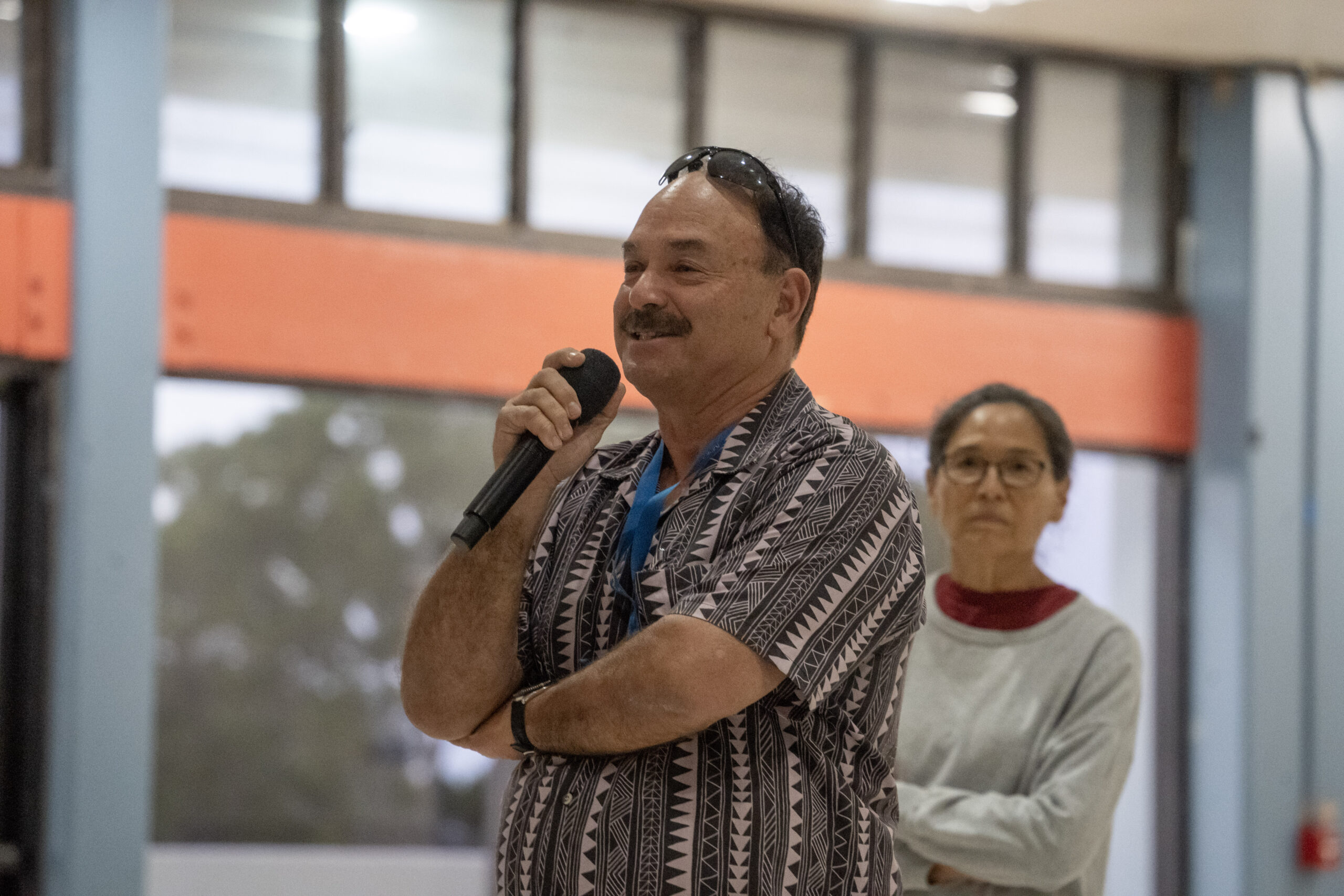
Moniz said the support he’s received from the union political action committees are likely due to the 23 years he spent working his way through the ranks of Hawaiian Airlines and the 20 years he’s spent with the Hawai‘i Department of Transportation.
“I’ve worked with a lot of unions, and hearing union concerns, supporting union wages, and making sure there was fair work environments for employees,” he said. “So I think over the years, you establish that relationship.”
Moniz acknowledged there’s a lot of work to do to get his name out there as a first-time candidate. He thinks that is a reason he’s pulled in some of the most donations in the race.
“I think people realize I’m a new candidate and it takes a lot of out-of-pocket money, so people’s been supportive in making donations and helping me raise money to have a successful campaign,” he said.
He added that Lee’s backing has helped him better understand campaigning as well as serving on the council, and he thinks it also will provide him a boost with voters.
“Being endorsed from her certainly makes it a little easier for the community to know that I’m doing this for the people just as much as she did,” he said. “We were both born and raised here. We love our community.”
In his daily rounds at the Kahului Airport, Moniz said he’s stopped to talk story with people leaving Maui for good because they just can’t afford it here anymore. Moniz said that’s what drove him to run for office. He said housing, infrastructure, food security and services for keiki and kūpuna are among his top issues.
Randy Konohia had the third-most contributions in the race with $12,070, followed by Ashley Lindsey with $4,377 and James Forrest with $3,600.
Konohia’s top donor was Kahului business owner Albert Pelep, who gave $2,000. Ten other contributions were of $500 or less. He also put in $5,371 of his own funds for campaign supplies.
Lindsey had three contributions on her report: $500 from Trisha Watson of Honua Consulting, $250 from Cades Schutte attorney Cal Chipchase and $250 from AREG AC Makena Propco executive Kris Wilhelm. She also loaned herself $3,377.
Forrest also had three contributions on his report: $2,000 from James, $1,000 from his own funds and $500 from Pacific Biodiesel owner Kelly King, who is challenging incumbent Council Member Tom Cook for her former seat in the general election.
INCUMBENT NEWCOMER: KAHULUI SEAT
In his bid for the Kahului seat, Batangan is in an unusual spot — he’s both the incumbent and a first-time candidate for the council.
“Most people get their infrastructure in place for the campaign, run for office, get elected, and then serve in office,” he said. “I’m doing it a little bit backwards. So that’s been challenging.”
Before her death in October, Kama had endorsed Batangan to take her place. But the council deadlocked on a vote, with none of the three applicants — Batangan, Virgilio “Leo” Agcolicol and Carol Lee Kamekona — receiving the five votes needed for confirmation. The decision fell to Bissen, who appointed Batangan.
Despite serving in multiple county roles that included, most recently, executive director of the Maui Metropolitan Planning Organization, Batangan said getting his own name out there is “going to be one of the challenges of this race.” The last time he ran for public office was an unsuccessful bid for the Central Maui district in the state House of Representatives in 2018.
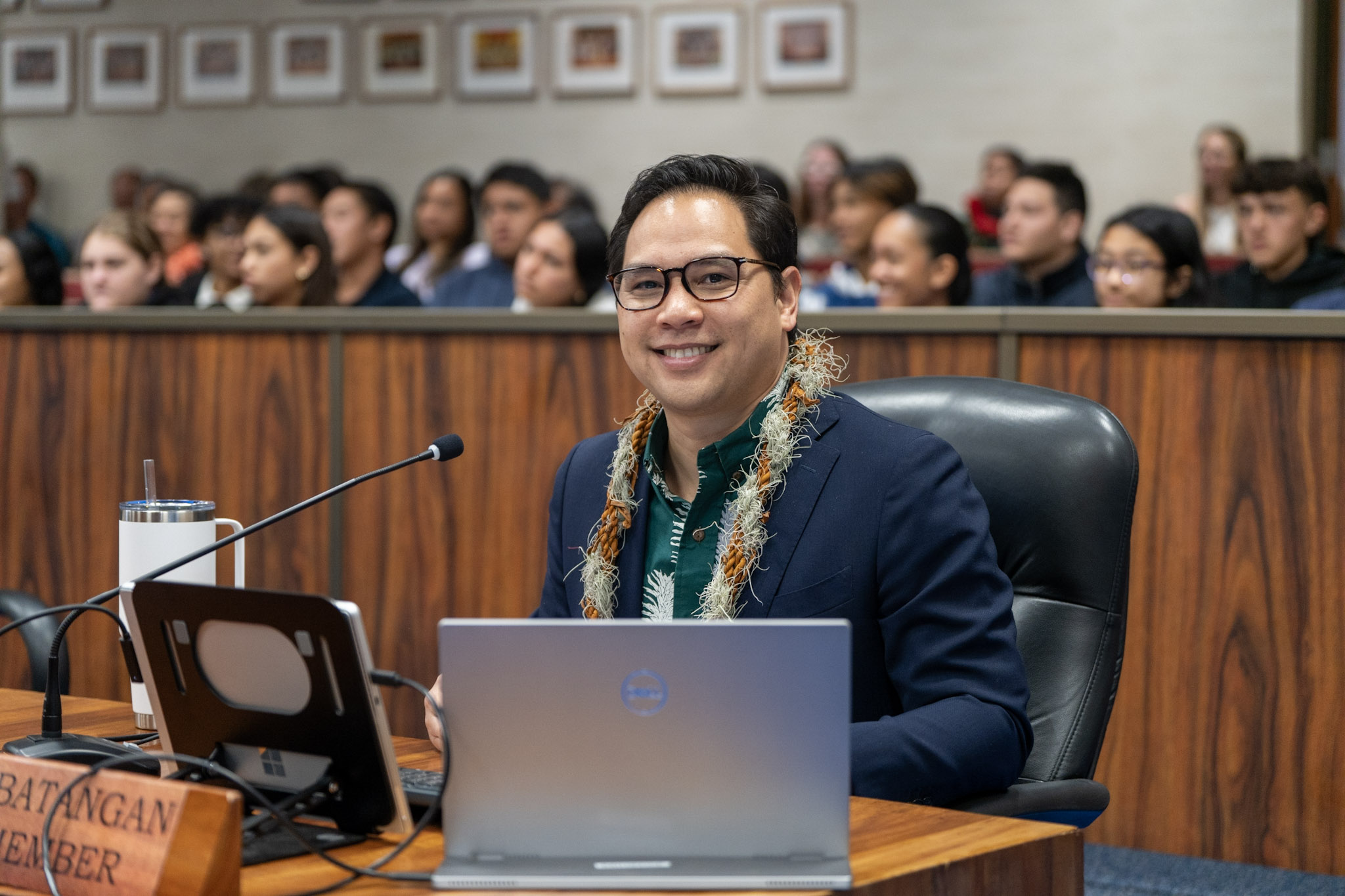
So far, he is leading the pack in fundraising with $22,517. Kamekona had the second-most contributions in the race with $5,700. Jason Ababan brought in a total of $500.
Batangan spent $9,885, while Kamekona spent $2,219 and Ababan spent $343.
Batangan’s top contributors included three members of the family behind the Dowling Company — President Everett Dowling, Project Manager Mei Lee Dowling and Acquisitions Director Jack Dowling, who each gave $2,000.
Batangan said he knows Jack Dowling from the 2024 Ka Ipu Kukui fellows program that aims to develop emerging community leaders.
Some of his top donors were political action committees, including the Hawai‘i Regional Council of Carpenters PAC and the Hawai‘i Realtors PAC, who each gave $2,000, as well as the IBEW Local 1260 PAC, which gave $1,000.
Batangan said the Realtors PAC contribution was not solicited. But he said he did seek endorsements from every union he could contact.
“That’s my approach to governing — you cast as wide a net as possible, you reach out to as many people as possible,” he said.
He said he recognized the “tension” in getting large donations from PACs but noted that most of his donations have been smaller grassroots contributions from family or friends.
Batangan applied for public campaign funding in which the state matches donations of $100 or less as long as candidates agree to certain spending limits, which vary by position. For the Maui County Council, candidates can get up to $24,152 in public funds and spend no more than $161,013 in the primary and general elections.
Batangan said he has reached the threshold of at least 50 donors with contributions of $100 or less, and he expects to get those matching funds from the state soon. Individual contributions of $100 or less are not listed on spending reports, but candidates have to report their fundraising totals, according to spending commission rules.
The two donors listed on Kamekona’s report were Sulara, who gave $2,000, and Douglas Ballard of Kīhei, who gave $750.
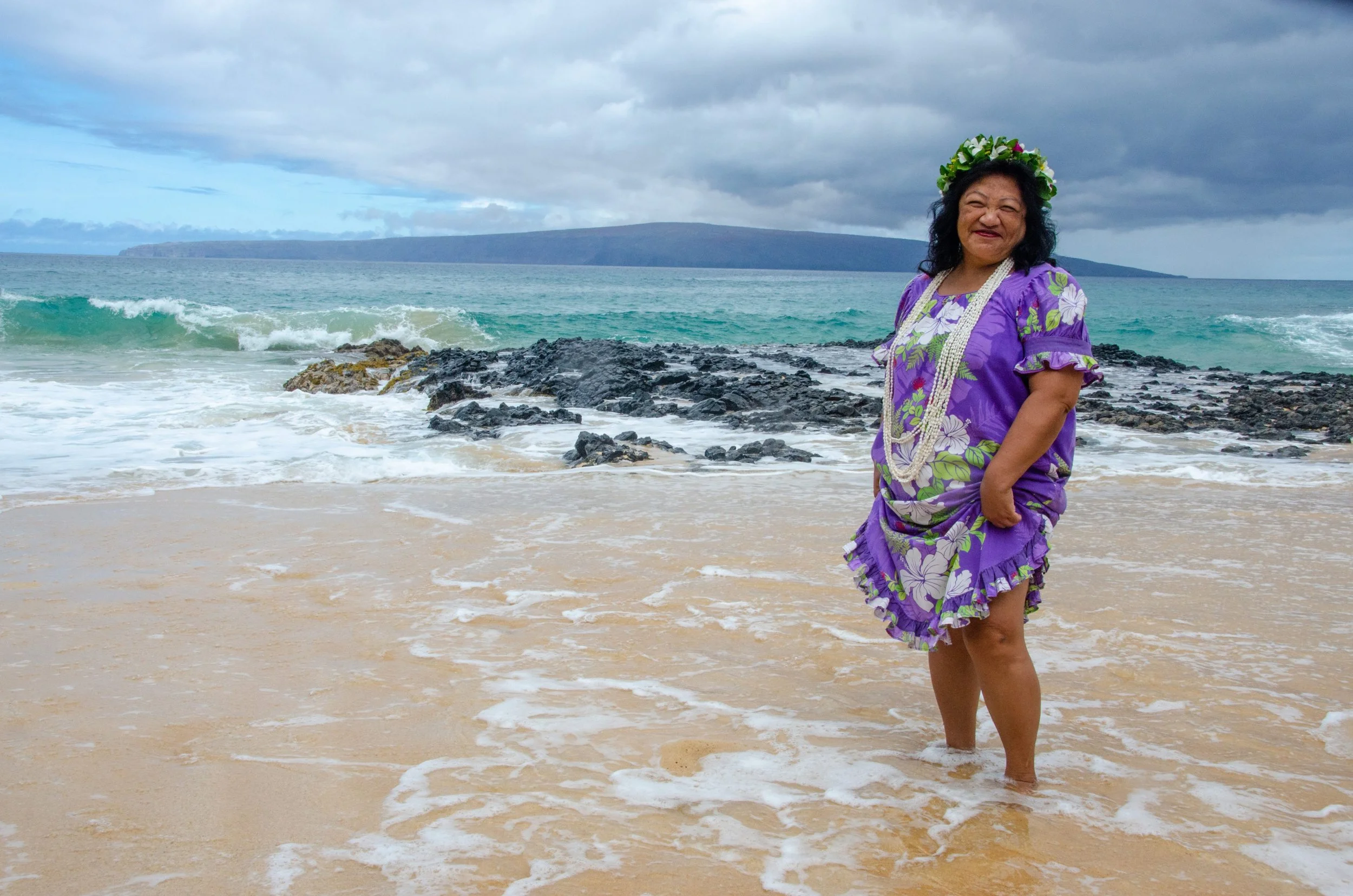
Kamekona said her campaign continues to be a grassroots effort that doesn’t take money from developers or PACs. She said she did seek out an endorsement from the ILWU because her dad was a longshoreman who joined the union in 1956.
She didn’t receive the backing but said voters from past elections recognize her and know that her values have “not wavered.” She said she keeps running for office because she feels like development interests continue to take priority over people who need housing.
“In all the years that I’ve run, my platform hasn’t changed,” she said. “I’m still advocating for the same issues because nothing has been done all these years to address those situations.”
Ababan’s $500 came out of his own funds.
The candidates will file one more report before the election on Aug. 8.