

Mayor Bissen’s 2026 State of the County Address
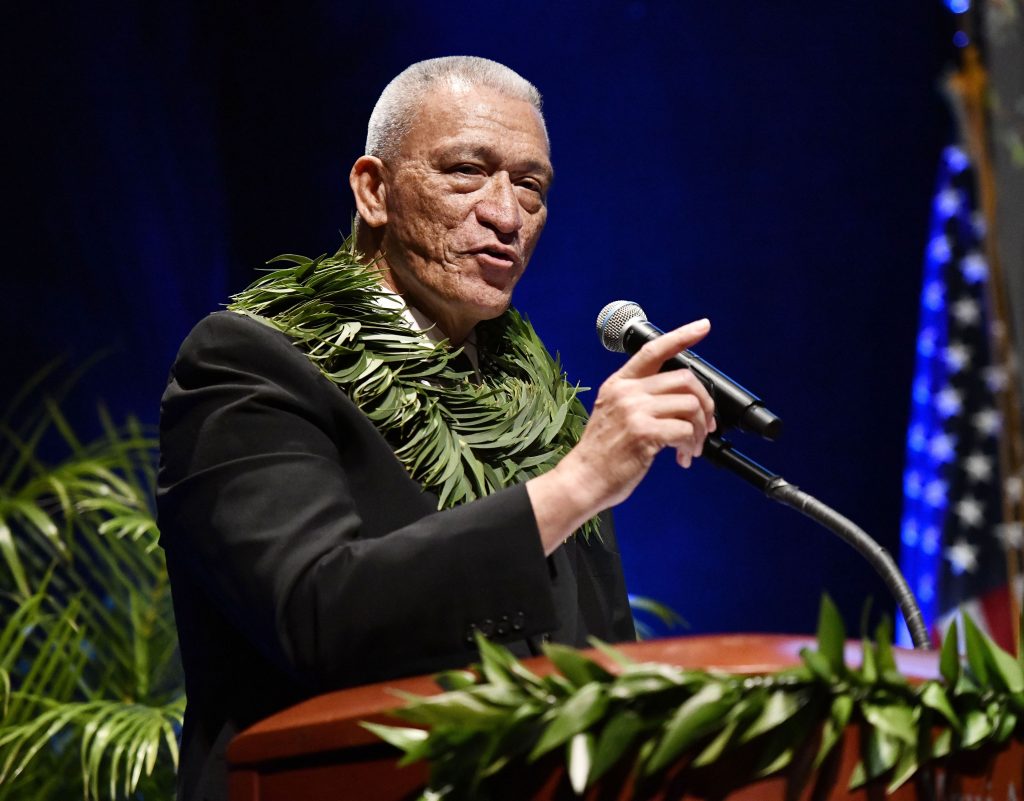
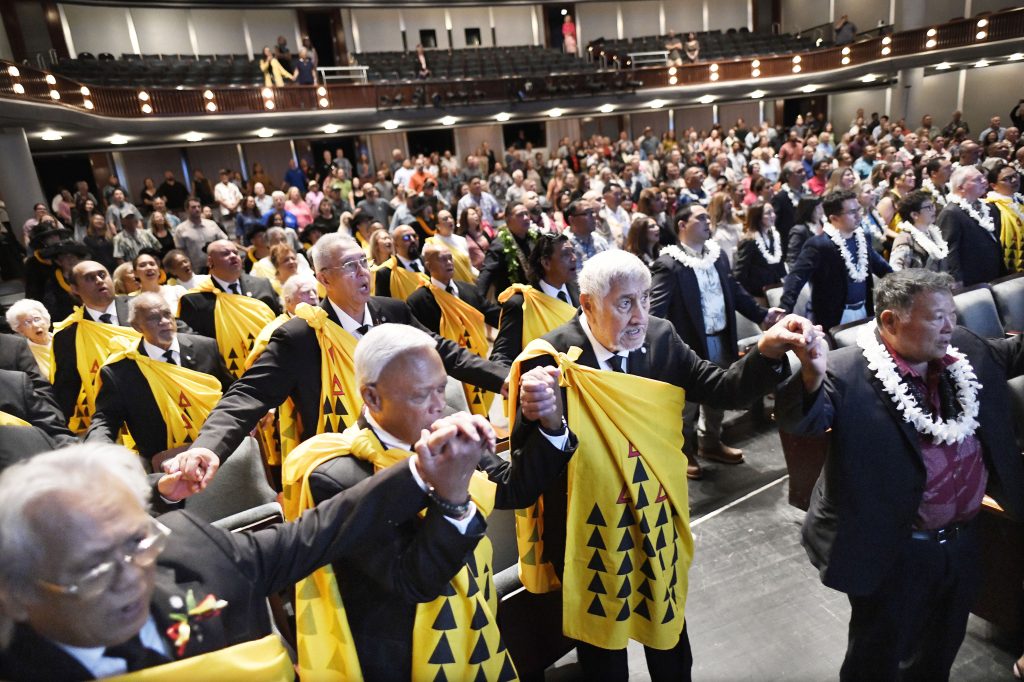
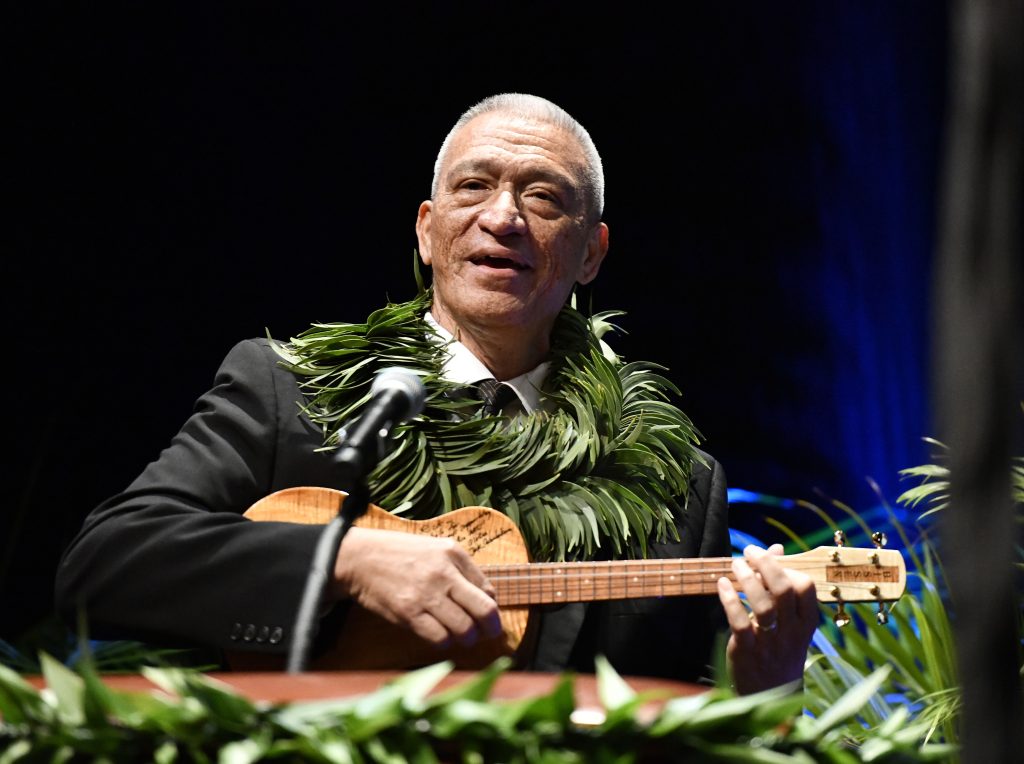
Maui County Mayor Richard T. Bissen, Jr. delivered his 2026 State of the County Address Thursday evening at Maui Arts and Cultural Center’s Castle Theater.
In his address, he highlighted Maui County’s continued progress across housing, recovery, well-being and economic stability, while outlining actions to strengthen communities and build a resilient future.
Kamaʻāina Housing: 190% increase in affordable housing
“My number one priority is to keep our people home. If you are thinking about moving away from Maui County—please don’t,” he said. “Change is not coming. Change…is…here.”
In his ongoing efforts to secure kamaʻāina housing, Bissen pointed toward real property data and a 190% increase in affordable housing delivery in the past three years. “For nearly a decade, affordable housing delivery averaged fewer than 100 homes a year. Since 2023, we have averaged building 293 affordable homes per year… but we are not stopping there,” he said.
Under current plans, Bissen said Maui County is on track to expand on that progress, expecting to produce an average of 414 affordable homes per year over the next five years.
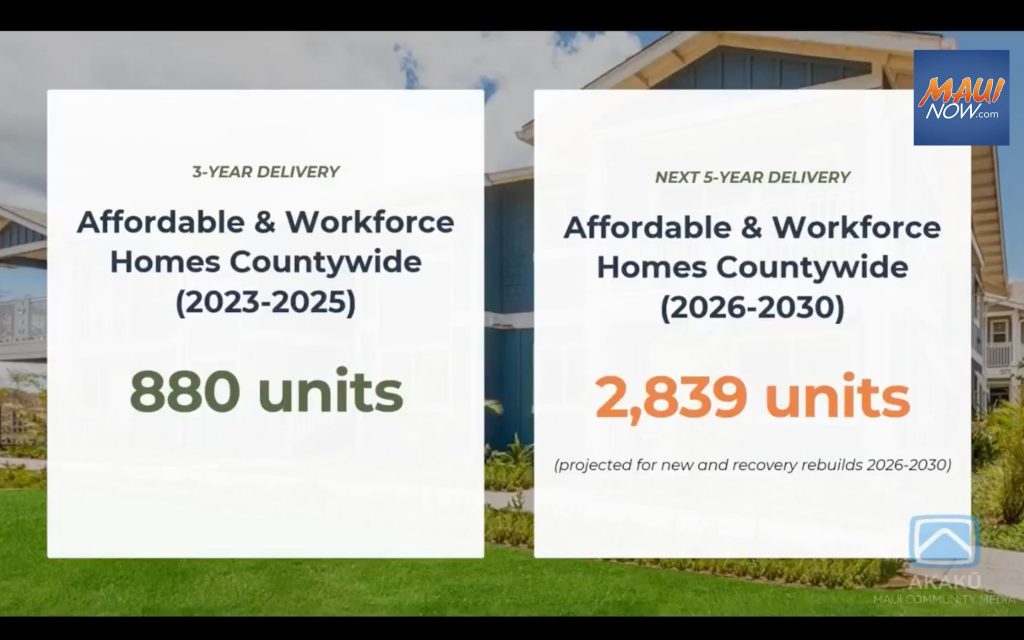
“Over the past three years, Maui County has delivered 880 affordable and workforce homes.
Looking ahead, we are working to deliver nearly 3,000 affordable and workforce homes by
2030,” said Bissen.
“This work is supported by a commitment to invest more than $1.29 billion in housing-related
infrastructure, and another quarter-billion dollars in County investment directly toward
affordable and workforce housing,” he said.
Key projects outlined include:
- Central Maui Regional Wastewater Reclamation Facility – More than $125 million proposed this year to begin construction. The project will expand housing capacity in Central Maui, reduce reliance on the Kahului wastewater plant in a tsunami inundation zone, increase wastewater reuse opportunities and support the new Central Maui School in Waikapū.
- Waiʻale Road Extension (Central Maui) – With more than $80 million already invested, the project will support housing growth in Waikapū, create a key transportation and utility corridor, and improve emergency access and public pathways.
- West Maui Water System Upgrades – The Lahaina Waterline Improvement Project, four new wells, a storage tank, reservoir and upgrades at the Mahinahina Water Treatment Plant will support up to 3,500 additional housing units while aiding wildfire recovery.
- North-South Collector Road (South Maui) – Critical for future housing development and regional connectivity, with construction targeted for bid in summer 2027.
- Upcountry water Improvements – Upgrades at the Kamole Water Treatment Plant and two new wells are expected to support up to 3,000 additional homes.
Resource Protection: Water security in West Maui
Mayor Bissen said “decisive steps” are being taken to strengthen public stewardship of water systems in West Maui.
“Tonight, I am pleased to announce that a commitment made three years ago is becoming a reality. For the first time in our history, Maui County is taking intentional steps toward long-term agreements for water security while protecting the public trust resource,” said Bissen.
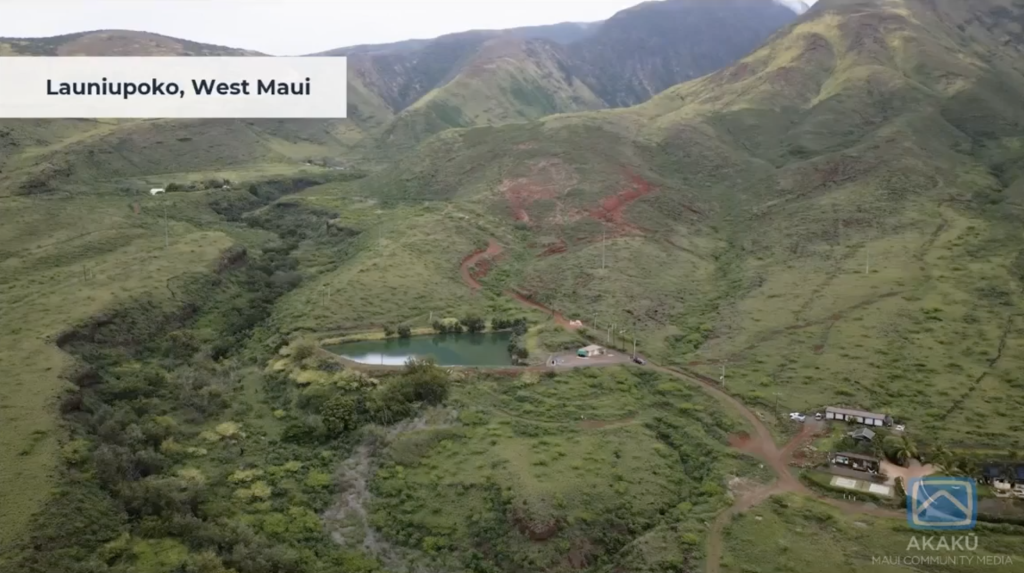
Historically, only 25% of these systems have been publicly owned, according to the mayor.
The County of Maui is currently in negotiations with Kamehameha Schools, Maui Land & Pineapple Company, and West Maui Land to acquire key water system assets, including the Olowalu and Launiupoko irrigation and water companies, the Honokōhau Ditch System, and multiple wells and related infrastructure.
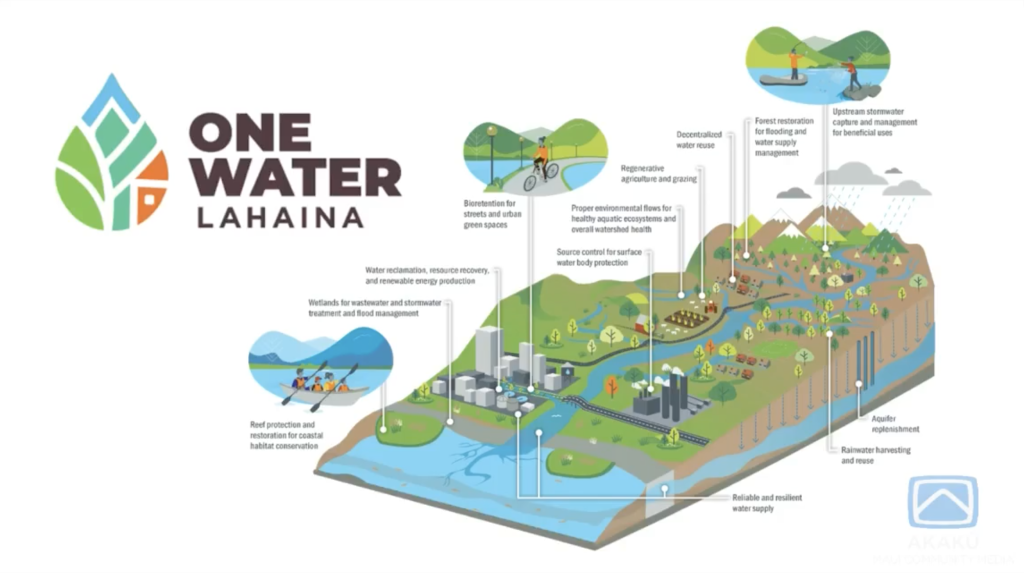
“We appreciate these entities’ willingness to work with us for the public’s benefit, and for Kamehameha Schools’ partnership on our ongoing recovery efforts and generational commitments to our ʻāina and people,” said Bissen.
Once complete, water systems in West Maui, including both drinking and irrigation, will transition from 25% to 65% publicly owned, according to the mayor.
“More importantly, public stewardship of drinking water systems will increase from 45%
to 93%, representing a major step toward restoring balance and ensuring this essential
resource is managed in the public trust,” said Bissen.
From Response to Readiness: Lahaina Recovery
Bissen said that while momentum is building across the county, one place remains at the heart—Lahaina.
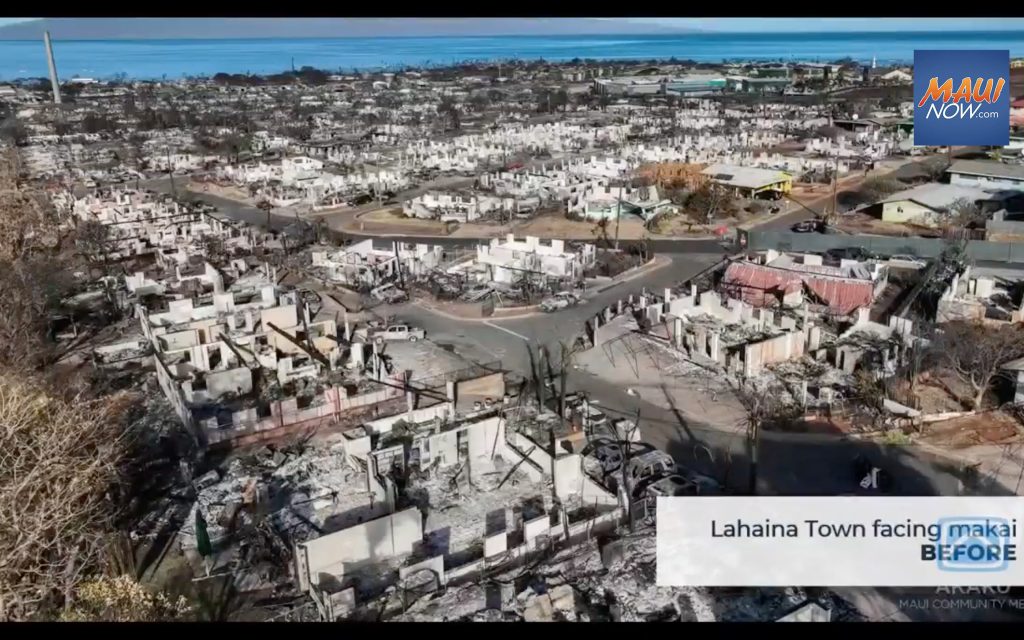
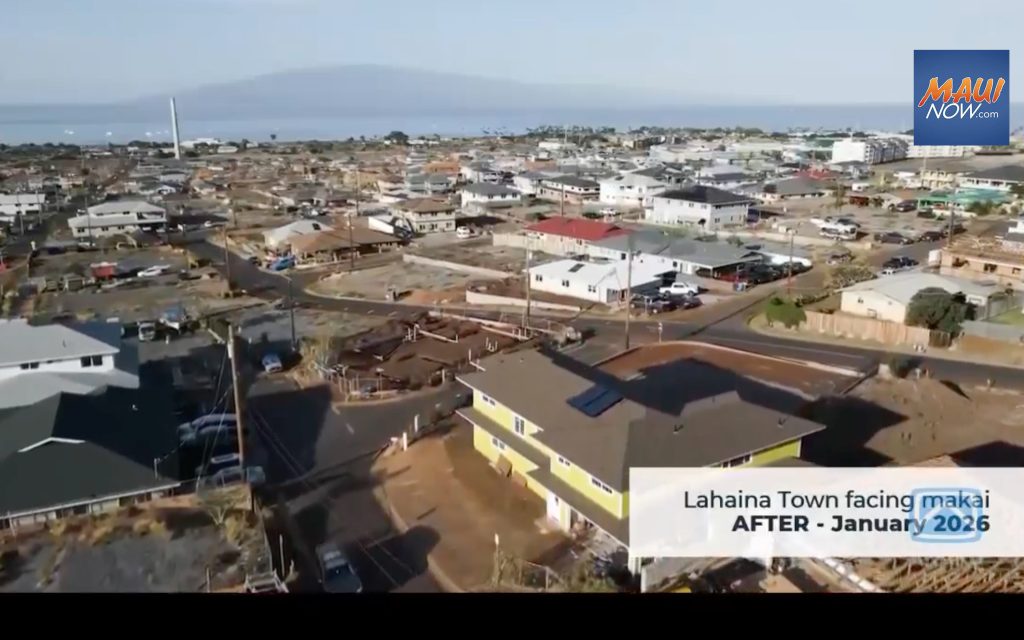
“In 2025, Maui reached a critical turning point as we shifted from response to readiness across housing delivery, public safety, and resilient infrastructure,” Bissen said, identifying key progress made following the 2023 wildfires.
In total, more than 456 residential and multi-family units have been fully constructed in Lahaina Town since the wildfire.
“As recovery stabilizes, the County is shifting additional capacity and resources toward commercial property permitting, and the adoption of design guidelines to support rebuilding,” he said.
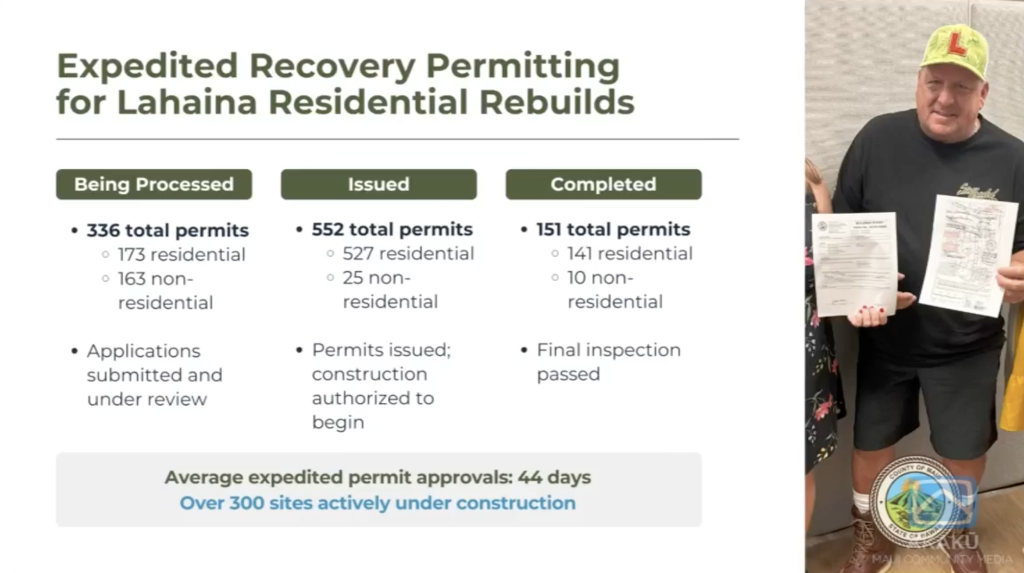
A key milestone in this effort, he said, was recently securing a one-year extension of FEMA’s housing mission, providing continued stability for 946 of approximately 1,400 survivor families.
Bissen pointed to progress in permitting as well saying the average time for permit approvals for wildfire survivors has decreased to 44 days.
“Today, approximately 300 sites are actively under construction. To date, 151 permits have been completed, meaning structures including single, multifamily, and some commercial properties are fully constructed and may be occupied. An additional 552 permits have been approved, with 336 more in the pipeline, reflecting steady momentum from planning to construction,” said Bissen.
With the approval of the CDBG-DR Action Plan in June 2025, Maui County was also awarded $1.6 billion in disaster recovery funding.
Well-Being for a strong community
“All of this work is connected by a simple truth: strong communities begin with well-being,” said Bissen.
Addressing homelessness, he said, remains a shared responsibility, requiring coordination across housing, health and social services.
Over the past year, Bissen said 876 individuals and family household members were placed into housing through Maui County’s Coordinated Entry System, including veterans, individuals experiencing chronic homelessness, and young adults.
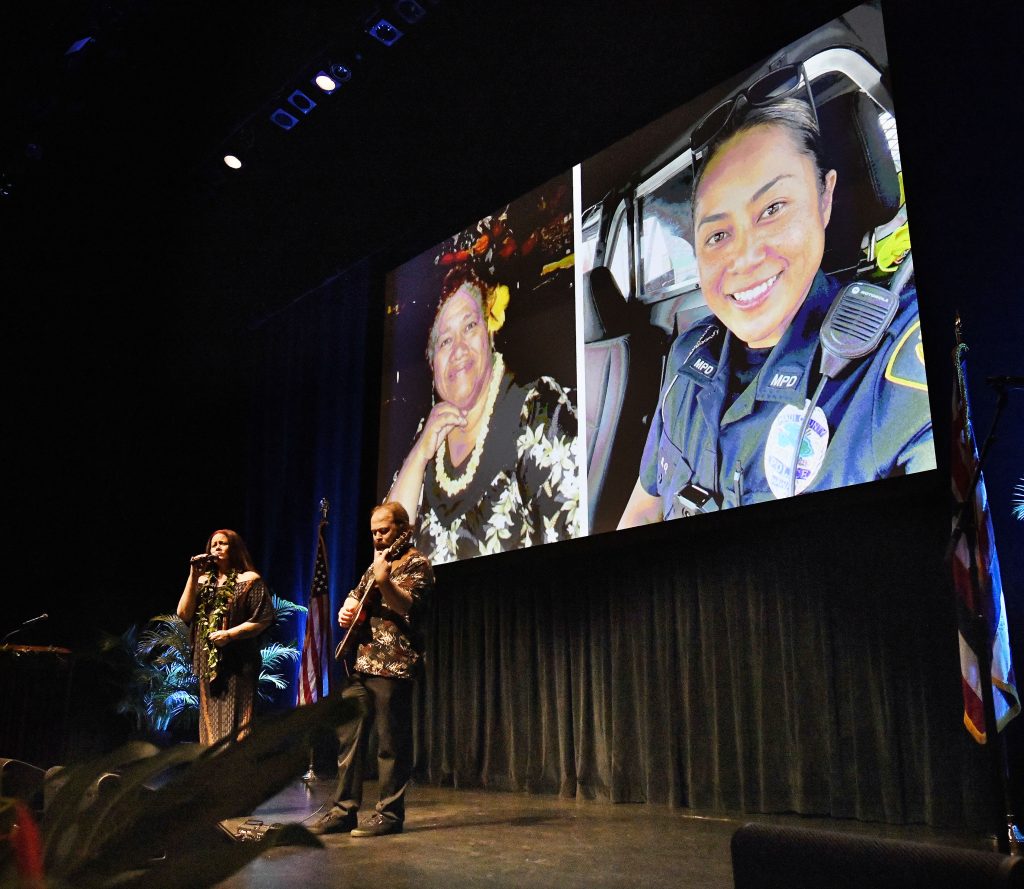
With County support, Aloha House, Maui’s only nonprofit licensed residential substance abuse treatment provider, recently expanded its capacity with a new 12-bed dormitory, representing an approximate 25% increase in treatment availability, he said.
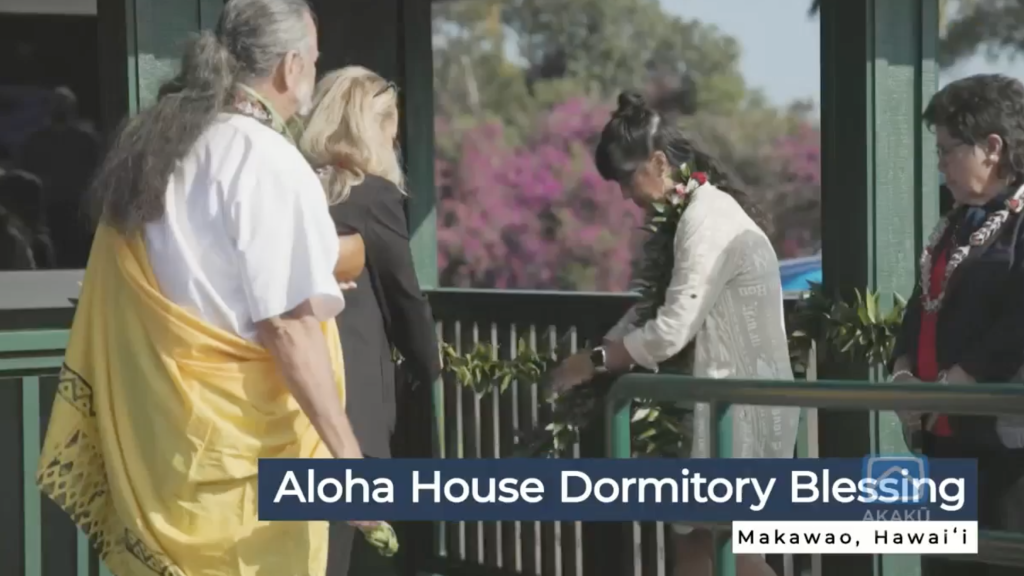
In looking toward additional solutions, Bissen noted that the County has executed a contract to launch the Safe Parking Pilot Program. The program is aimed at providing a safer and more structured option for individuals living in their vehicles.
The historic return of the Maui County Fair last year after a six year hiatus was among the highlights identified in this section on wellness.
The event drew more than 118,000 people over four days, making it the most attended Fair ever, and one of the most memorable gatherings in recent history, according to Bissen.
“The parade was led by our Grand Marshal, [former] Mayor Victorino. It wasn’t just an event—it was a homecoming,” said Bissen, hinting at a hana hou for this year. “See you at the 99th in October,” he said.

Economic Development and Diversification: Kamaʻāina-Centered Economy
Bissen said that a strong economy is characterized by living-wage jobs, local businesses, and giving youth a reason to build their future here.
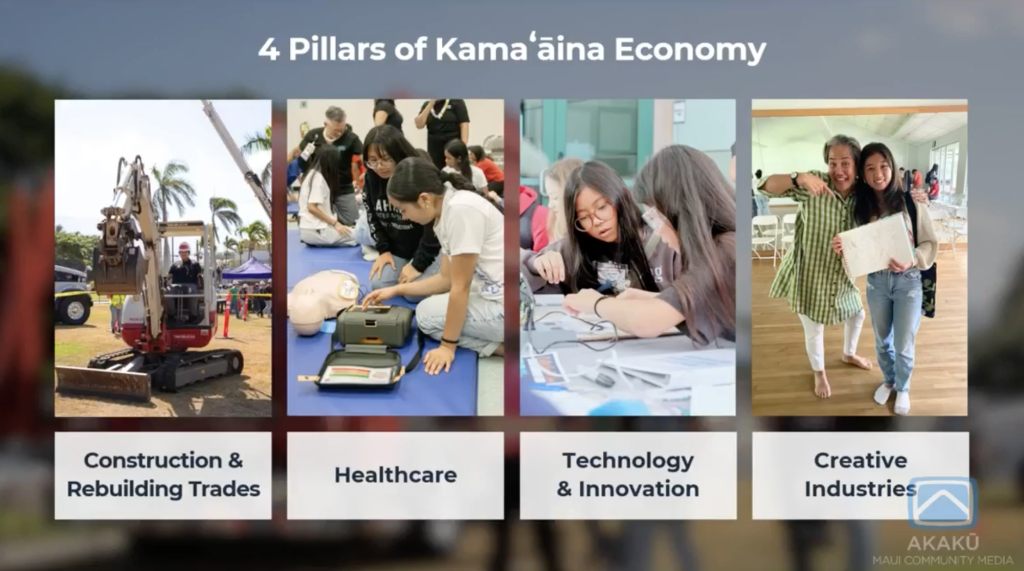
“To deliver this vision, we are transforming the Office of Economic Development from a primarily grant-focused office into a strategic driver of long-term economic resilience,” he said. “Grants remain an important tool, but they are now used strategically to strengthen priority industries, build local capacity, and support a more resilient local economy. Over the past three years, we have invested $75 million in this effort.”
He said the County’s economy continues to show signs of promise.
“Recovery and rebuilding efforts are helping fuel our economic engine, creating jobs and supporting local businesses across Maui County. Our visitor industry is also showing positive growth. According to UHERO’s most recent economic forecast, Maui is leading the state in visitor spending recovery, with real visitor spending increasing more than 9% last year,” he said.
In concluding his thoughts, Bissen said:
“At my core, I’m just a Maui boy. Like many of you, I’m doing my best to help other local people live and thrive here. Everything we have accomplished comes from the talent, care, and mana of this community.”
*This post was updated to add photos and additional details regarding housing and infrasturcture.
Sponsored Content